Beacon Orthopaedics Partners with Flyin’ to the Hoop as Title Sponsor
September 20, 2022
Dayton, OH – Sept. 20, 2022 – One of the nation’s elite prep sporting events is getting a new look. Flyin’ to the Hoop, a staple in the basketball world every January, is pleased to announce a partnership with Beacon Orthopaedics & Sports Medicine as the new Title Sponsor. The Beacon Orthopaedics Flyin’ to the Hoop Basketball Invitational will mark its 20th anniversary this January 13-16, 2023. It will again take place at the Trent Arena in Dayton, Ohio.
This new partnership not only helps to fund the event, but Beacon athletic trainers and medical professionals will also be on site throughout the weekend providing excellent medical direction and coverage to the student-athletes participating.
“We’re extremely excited to be involved in this event as the official orthopaedic and sports medicine provider,” said Beacon Orthopaedics Surgeon Dr. Drew Burleson. “For me, having played basketball locally at Wright State, and attending the Flyin’ to the Hoop Invitational multiple times in the past as a fan, I’m proud to now be returning as the official medical provider.”
Since 2003, the Beacon Orthopaedics Flyin’ to the Hoop Basketball Invitational has featured more than 92 players that have gone on to play in the NBA. The event is consistently ranked as one of the top national high school basketball events in the nation including the distinction of the #2 ranked national showcase per MaxPreps/CBS Sports. Each January over the MLK, Jr. holiday weekend, approximately 35-40 teams descend upon the Dayton area from all over the nation – including past international teams from Canada and Finland – playing in high-level matchups in front 200+ members of the media / college coaches and thousands of rabid basketball fans.
Eric Horstman, President and Founder of Flyin’ to the Hoop had this to say: “I’m excited to start this new chapter with Beacon and their strong reputation in the sports medicine world. We plan to get creative in taking the event to even bigger heights as we continue to give local kids a chance to play on a national stage while drawing the basketball world’s attention to the SW Ohio area every January.”
“We are excited and proud to become the title sponsor for the Flyin’ to the Hoop event,” stated Beacon’s CEO, Andy Blankemeyer. “Beacon’s commitment to supporting and caring for high school athletes is built into the fabric of our organization. We are excited to work with Eric and the entire team to make the event an even bigger success for many years to come.”
A Press Conference to release this year’s schedule of games along with introducing the new partnership will be held on October 11th at 11 am. Stay tuned for location and live-streaming info. A .jpg of the new logo for use by the media is attached to this press release.
About Flyin’ to the Hoop
The Flyin’ to the Hoop Basketball Invitational (www.flyintothehoop.com) is a Top-Ranked National High School Basketball Event that pumps over $1.9M into the surrounding Dayton, OH communities annually. Founded in 2003, the event currently has over 92 alumni in the NBA, NFL or MLB that participated on the FTTH stage. The event is managed by Sports Image® (www.sportsimageinc.com) that was also founded by Eric Horstman in 2002 with the purpose of helping high schools and other grassroots organizations to obtain equipment and revenue for their athletic programs – as well as being an Event Management company. To date, Sports Image® has given over $1,500,000 in cash and over $15,000,000 in equipment to schools/organizations throughout the United States.
About Beacon Orthopaedics & Sports Medicine
Established in 1996, Beacon Orthopaedics & Sports Medicine has helped thousands of patients overcome injuries and improve their quality of life. Beacon Orthopaedics provides medical direction and coverage for over 30 local high schools, five college athletics programs, and professional teams including the Cincinnati Reds. With over 20 locations across Southwest Ohio, Northern Kentucky, and Southeastern Indiana, Beacon offers instant access to comprehensive orthopedic care, including sports medicine, physical therapy, athletic training, imaging services, regenerative medicine, as well as surgical procedures involving neck, spine, shoulder, elbow, hand, hip, knee, foot and ankle repair, reconstruction, and replacement. Beacon is the founding group of OrthoAlliance, a patient-centered, physician-led management services organization designed to help orthopaedic physicians grow and thrive in an evolving healthcare landscape. Since its founding OrthoAlliance has successfully grown into one of the leading platforms in the country.
Cartilage Injuries: A Big Ankle Problem
September 2, 2022
Introduction
Cartilage injuries of the ankle, often referred to as osteochondral defects of the ankle (OCD’s) are all a way of saying that something happened inside the joint of the ankle. They most often come from trauma. Sometimes we don’t know why they occur. It could be as simple as an ankle sprain with pain that resurfaces years later, or it could be a more substantial injury such as a fracture. In addition, foot and ankle pain can happen shortly after the injury, or it can happen several months and even years after the injury with new pain.

Testing
It is often hard to know at first glance that truly a cartilage injury is present. However, if left unnoticed, then they can cause you a lot of pain into the ankle and any location circumferentially around the ankle. They can limit you from running or even performing daily activities making you feel like your ankle gives way. Evaluation is important if the ankle is painful or feels unstable. An evaluation consists of a good clinical exam to identify where the ankle pain is coming from. Dr. Miller would examine the ankle in the office. We also identify your history with ankle injuries that could possibly lead to cartilage injuries. We begin with an x-ray series looking at the bone structure inside. This includes the tibia, fibula, talus and surrounding bones. These bones on the x-ray won’t show cartilage. However, they can show changes in the bone that are subtle, suggesting there might be a cartilage injury present.
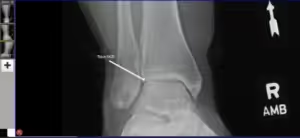
X-Ray showing subtle cartilage injury changing talus bone.

MRI of same ankle showing much more obvious talus OCD. There is disruption of cartilage and underlying bone causing pain.
Nonsurgical Approach
We want to begin by treating this nonsurgical to see if it gets better. We often get more advanced imaging as well. Depending on the patient’s feedback regarding the pain, we often suggest walking boot therapy. Immobilizing the ankle in a walking boot for a few weeks can improve pain for the patient. Boot only has about a 30 to 40% success rate and likely can lead to no improvement. There are also certain injections that can help. If you are older, a steroid injection may be helpful. However, for younger patients, blood injections have become a new treatment. Taking the person’s own blood, we concentrate that down to get the good growth factors and blood products that may help the patient heal more effectively. These are often referred to as platelet rich plasma (PRP) injections.
Surgical Approach
If nonsurgical treatment fails, then you are looking at a surgical option to improve pain. This is usually decided upon largely by an MRI. (we’ve done a blog on MRI, so you can, you can link to that) MRIs are advanced imaging studies that look at soft tissue and cartilage better than just an x-ray. Based upon that imaging, if you do have a cartilage injury and we feel that it correlates to your pain, then you may be offered surgery as an effective way to treat the pain. While non-surgical treatment often varies anywhere from 30 to 50% successful, the surgical outcomes are often much more improved anywhere from 75 to 80% or more. These become an option for the patient when things fail or the pain is too significant. In most cases we can treat cartilage injuries of the ankle, minimally invasively. In other words, through an arthroscopy. Arthroscopy is a surgery where we make small incisions around the ankle to put instruments into the ankle (such as a camera or small cleaning tools) to fix the cartilage injuries. We often add additional grafts of material, such as cartilage or bone graft in the defect of the ankle to help it heal. Generally when you have these surgeries, you’re off the ankle for a short period of time to allow for protection and skin healing. Later we start physical therapy to recreate motion and strength and agility, and the patient is allowed to return to normal activities thereafter.
If you believe you may be experiencing a cartilage injury or know someone he may, Dr. Miller is Beacon Orthopedics’ foot and ankle specialist and is available at several locations around the Cincinnati area. Contact us today for more information! Click here to learn more and schedule an appointment with Dr. Miller for foot and ankle injuries.
Beacon Orthopaedics & Sports Medicine Announces NIL Agreement with Brothers Michael and A.J. Mayer
September 1, 2022
CINCINNATI – Covington Catholic High School graduates and brothers Michael Mayer, pre-season All American tight end for the Notre Dame Fighting Irish, and A.J. Mayer, a quarterback with the Arkansas State Red Wolves, have signed a Name Image Likeness (NIL) agreement with Beacon Orthopaedics & Sports Medicine.
The Mayer brothers – who grew up in Northern Kentucky and who are part of a family that has been treated at Beacon Orthopaedics for three generations – will appear in social media posts and advertisements for Beacon.
“I have been going to Beacon since I was a young kid, so I know they have top notch physicians and quality people,” said Michael Mayer, a junior who last year was a semi-finalist for the John Mackey Award, which goes to the nation’s top tight end.

“I am really looking forward to telling people about all the good work they do,” he said, “When I was offered a chance to work with Beacon, I felt like it was an opportunity I just had to jump on because I believe so much in what they do and how they do it.”
Like his brother, A.J. Mayer was also treated at Beacon Orthopaedics after suffering injuries while in high school.
“I want to tell people how well I was treated at Beacon, as well as how much Beacon gives back to the community by treating people when they are injured or need surgery,” A.J. Mayer said. “I really appreciate Beacon working with me and Michael. It is like we are coming home and telling the community about these great people we know. It is an honor to be part of the Beacon team.”

Beacon Orthopaedics spine surgeon Michael Rohmiller, M.D., also a Covington Catholic graduate and Northern Kentucky resident, has known and treated members of the Mayer family for years.
“They are a wonderful family, and I knew that Michael and A.J. – with all that they have accomplished and with what wonderful young men they are – would be tremendous representatives of what we do at Beacon particularly as they talk about their personal experiences with us,” Dr. Rohmiller said. “The Mayer family is the perfect example of how at Beacon, we take care of people of all ages, helping multiple generations in the same family.”
A relatively new development in the world of college sports, NIL agreements allow student athletes to be compensated for their likeness and sign endorsement contracts.
“NIL is great for athletes because it allows a player to build a personal brand and earn some money while still in school,” A.J. Mayer said. “And the fact that I get to work with my brother through our agreement with Beacon makes this even better.”
Michael Mayer said NIL agreements give student athletes real world experience and opportunities.
“This NIL agreement gives us a great chance to learn more about the business side of sports as well as an opportunity to make some money while we are playing,” he said. “Overall, NIL has been good for student athletes.”
Aligning with accomplished athletes such as the Mayer brothers provides a chance for Beacon Orthopaedics to showcase its expertise in sports injuries as well as promote how it develops long-term patient relationships.
“Beacon is known throughout the region as the premier sports medicine provider,” said Beacon Orthopaedics Co-Founder and Chief Orthopaedic Surgeon for the Cincinnati Reds Tim Kremchek, M.D. “We are eager for Michael and A.J. – two of Greater Cincinnati’s most accomplished student athletes – to tell their stories of being treated at Beacon, but also of how we have treated members of their family for years.”
Beacon Orthopaedics Co-Founder and orthopaedic surgeon Robert Burger, M.D., was an offensive lineman on Norte Dame’s 1977 national championship team and has treated high school athletes in Greater Cincinnati for more than 30 years.
“I am very excited that Beacon and Michael Mayer are working together,” Dr. Burger said. “I watched Michael play in high school, and I’m very proud of him and very happy for his success as a local student athlete who has excelled on as well as off the field. When I first saw him play, I knew he was going places. He is a special kind of player.”
Dr. Burger pointed out that Michael Mayer is one of a long line of outstanding Notre Dame tight ends, including Tony Hunter, a 1979 graduate of Moeller High School, and Newport Central Catholic 1987 graduate Frank Jacobs.
“There have been a lot of great tight ends at Notre Dame over the years – Leon Hart, Dave Casper, Mark Bavaro, Ken McAfee and others – and Michael is one of the best,” Dr. Burger said. “As a former Notre Dame player, I’m excited to watch Michael this season and thrilled that he is part of our team at Beacon.”
Both Mayer brothers will be in action Saturday. Michael and Notre Dame play The Ohio State Buckeyes in Columbus while A.J. – a graduate transfer from Miami of Ohio – and Arkansas State host Grambling State.
The Mayer brothers each had stellar high school careers playing for the CovCath Colonels.
Known for a strong arm and quick feet, A.J. led the Colonels to the 2017 Kentucky 5A State Championship, throwing for 3,114 yards and 40 touchdowns while leading CovCath to an undefeated 15-0 season. He was named MVP of the state championship game and graduated as CovCath’s all-time leading passer.
While playing for the Colonels, Michael was named the 2019 Gatorade Kentucky Football Player of the Year and led CovCath to the 5A State Championship. And, just like his brother, he was named MVP of the title game. During his senior season he caught 49 passes and scored 15 touchdowns; on defense, he recorded 102.5 tackles and had four interceptions, including one for a touchdown.
At Miami of Ohio, A.J. started four games and saw action in seven games. One of his career highlights was coming off the bench to throw three touchdowns in leading the Redhawks to a victory over Ball State.
At Notre Dame, Michael caught 71 passes for 840 yards and seven touchdowns last year as a sophomore. He begins this season as a pre-season All American and is projected as an early NFL draft pick next year.
# # #
Schedule an Appointment with Beacon Today!
About Beacon Orthopaedics & Sports Medicine
Established in 1996, Beacon Orthopaedics & Sports Medicine has helped thousands of patients overcome injuries and improve their quality of life. Beacon Orthopaedics provides medical direction and coverage for over 30 local high schools, five college athletics programs, and professional teams including the Cincinnati Reds. With over 20 locations across Southwest Ohio, Northern Kentucky, and Southeastern Indiana, Beacon offers instant access to comprehensive orthopedic care, including sports medicine, physical therapy, athletic training, imaging services, regenerative medicine, as well as surgical procedures involving neck, spine, shoulder, elbow, hand, hip, knee, foot and ankle repair, reconstruction, and replacement. Beacon is the founding group of OrthoAlliance, a patient-centered, physician-led management services organization designed to help orthopaedic physicians grow and thrive in an evolving healthcare landscape. Since its founding OrthoAlliance has successfully grown into one of the leading platforms in the country.
You’ve Been Diagnosed with Carpal Tunnel. Now What?
September 1, 2022
If you think you think you could have Carpal Tunnel Syndrome, you’re not alone. It’s one of the most common nerve disorders today. Answering ‘yes’ to one or more of the following questions means there’s a good chance you could have it, and you should contact a Beacon hand specialist for further evaluation.
- Are your hands waking you up in the middle of the night with pain, burning, numbness, or tingling?
- Do your fingertips have intermittent or constant numbness and tingling?
- Have your hands become weaker recently, or are you dropping things?
What is Carpal Tunnel Syndrome?
The carpal tunnel is an important area in your hand where the median nerve and tendons pass at the base of the palm and the beginning of the wrist. When the tendons that pass through this confined area become inflamed, pressure is increased on the median nerve and compresses it. That’s when you’ll begin experiencing pain, numbness, and tingling. You may typically notice symptoms at night and often wake up because of them. When left untreated, you can experience a decrease in hand strength and begin dropping things more frequently.
Causes of Carpal Tunnel Syndrome
Carpal tunnel syndrome is sometimes confused with repetitive stress injury because it can be a contributing factor. However, in the majority of cases, the onset of carpal tunnel is brought about by a combination of one or more of the following factors:
- Health: Certain underlying medical conditions can contribute to carpal tunnel syndrome. Hypothyroidism, diabetes, and rheumatoid arthritis have all been linked to it. Pregnancy-related hormone changes can also contribute to occurrences of it in women.
- Heredity: The carpal tunnel is smaller in some people than in others and this basic anatomical difference is often a family trait, making heredity one of the more likely contributing factors.
- Repetitive Hand Motion: Activities that involve prolonged flexing or extension of the hand and wrist can often place undue pressure on the median nerve, which can lead to the onset of Carpal Tunnel Syndrome.
Carpal Tunnel Syndrome Non-Surgical Treatment Options
Many patients respond positively to non-surgical treatments. In most cases, it can even be possible to slow or stop the progression of the disease through conservative means when caught in the early stages. Options include the following.
Wrist Splinting
Reduce pressure on the nerve in the carpal tunnel by restricting the movement of the wrist. Typically worn at night to keep the wrist from bending during sleep. In some advanced cases, a wrist splint can be worn during the day to avoid aggravating the condition.
Medication
Non-steroidal and anti-inflammatory drugs, such as ibuprofen, are often prescribed to reduce inflammation and alleviate pain. In cases that fail to respond to over-the-counter medications, steroid injections can work to reduce chronic pain and inflammation.
Behavior Modification
Carpal tunnel syndrome is often exacerbated by certain activities. Symptoms can be alleviated if temporarily avoided. You can also modify work and recreational habits to avoid aggravating your condition.
Occupational Hand Therapy
Hand therapy is often prescribed as a support for basic carpal tunnel syndrome treatments. Therapy typically includes soft tissue massage, range of motion exercises, and ultrasound or electrical stimulation. While occupational hand therapy can be beneficial as a support to nonsurgical treatment, it is more commonly prescribed following carpal tunnel surgery
Surgical Treatment for Carpal Tunnel Syndrome
While non-surgical treatments work well for many people, for others surgical intervention might be required. The typical surgical procedure involved is called carpal tunnel release. It’s designed to increase the carpal tunnel size and reduce pressure on the median nerve.
If you end up requiring surgery, your specialist will likely use one of two techniques — Open Carpal Tunnel Release or Endoscopic Carpal Tunnel Release. Both options are minimally invasive, tend to be on an outpatient basis, and only require a general anesthetic.
Recovery from open carpal release surgery is a gradual process. Pain and swelling could linger for several weeks after the procedure. You’ll likely need up to three months of occupational hand therapy before pinch and grip strength begin to return to normal. You might also be advised to periodically wear a splint or wrist brace during recovery. Expect to modify your work and recreational activities until your strength and dexterity return to normal. If your median nerve was overly compromised prior to your surgical procedure, recovery could take longer.
Finding an Orthopaedic Specialist
If you’re experiencing carpal tunnel syndrome symptoms, our specialists at Beacon can evaluate your condition and work with you to find the treatment option that best suits your needs and lifestyle. In most cases, non-surgical treatments and moderate physical therapy can get you back to your baseline. If surgery is the prescribed approach, our experts are trained in the latest procedures and work closely with trained occupational hand therapists to you with the post-operative support you need to make a full recovery. Schedule an online appointment today.
Active Athletes Can Find Themselves in Need of Active Injury Care
August 1, 2022
With summer sports winding down and fall sports starting up, we’re taking a close look at active injury care for any acute or chronic injuries rearing their ugly head.
If that hits close to home, it’s time to consult with an orthopaedic specialist. During your consultation, the doctor will want to determine the cause of your injury, and from there, he or she will work with you to create a personalized care plan to get you on the road to recovery. That plan will likely involve active and/or passive injury care with a physical therapist.
First, it’s important to understand what active injury care is and how it differs from passive injury care. While passive and active care and treatment incorporate different approaches, they are nonetheless often used together for patients recovering from injuries, fractures; living with chronic back and neck pain, arthritis; and other conditions and injuries caused while playing sports, working, or from aging.
Active Injury Care for Recovery
An active injury care plan involves a recovery plan that keeps you active and returns you to good health as quickly as possible. Techniques within this plan could involve fitness programs, stretching, joint mobility movements, strengthening and balance exercises, as well as machine use of treadmills or stationary bikes.
Passive Injury Care Eases Symptoms
Alternatively, passive injury care often includes ultrasound therapy, acupuncture, pain medication, and heat and ice. Passive treatments won’t include the movement of muscles or joints. If you still have a lot of pain or discomfort with your injury, your treatment plan will likely start with a passive approach. As your pain subsides, active injury treatment will increasingly be incorporated to your plan.
As sports medicine experts in Cincinnati, we know our athletes want to get back to their sport as quickly as possible. When appropriate, a treatment plan that includes active injury care helps accomplish that. Selecting low-impact exercises and recovery programs allow tissues to heal, strengthens muscles, and supports flexibility and range of motion. Our experienced specialists work with each patient to identify that critical line of returning them to doing what they love while not overextending or further exacerbating an injury.
Find an Orthopaedic Specialist
Ultimately, our patients experience effective recovery experiences thanks to this dynamic approach to addressing both acute and chronic injuries. If you have either type of injury, consult with one of our expert specialists to find out what combination of treatments can get you back out living your life — and playing your sport — to the fullest. Schedule an online appointment today.
Whistle While You (Yard) Work & Avoid Preventable Injuries
July 22, 2022
Did you know the average lawn mower injury can cost a patient $37,000 in medical bills in the United States (Johns Hopkins, 2018)? Moreover, hospital emergency rooms see an average of 875 visits per day related to yardwork injuries (LawnStarter.com, 2020).
As we move into the thick of summer, we’re offering up insight into common yardwork injuries, how to avoid them, and what to do in the event of sustaining one.
Safety Tips for Working in the Yard
Before embarking on any physical activity, it’s important to warm up — especially as adults. Strenuous work demands it. Loosen muscles and get the blood flowing to prevent minor muscle strains or worse. The following includes a few more tips for staying safe in the yard:
- Focus: Don’t get distracted while doing yardwork. It’s easy to be nonchalant or lose focus while trimming hedges, weed-eating, or doing a myriad of things, but that’s when accidents are most likely to happen.
- Wear Proper Gear: Depending on what you’re doing in the yard, it’s important to skip the flip-flops. Wear closed-toe shoes, slip-resistant footwear, long pants, and gloves. Make sure you also invest in ergonomic tools and use proper mechanics when lifting.
- Reach Machine Manuals: Yes, we’re sure you can figure it out, but don’t risk a slip or unnecessary injury by just finding your way with the chainsaw.
5 Common Yardwork Injuries
Many accidents related to working around the house are easily preventable. Common sense goes a long way — particularly when using power equipment. From splinters and blisters to nerve and tendon damage, taking proper care in advance can keep you safe all the way through your honey-do list. That proper care includes wearing pants, heavy leather gloves, and cleaning out wounds as soon as they happen. The following are five common yardwork injuries to avoid:
- Splinters, infections, and blisters
- Fingers and other extremities exposed to the dangers of wood chippers/splitting/hydraulic machines and even hedge trimmers.
- Ladder and roof falls
- Lawnmower burns or cuts
- Muscle pulls and strains
When Yardwork Injuries Happen…
Inevitably accidents happen, so it’s good to have a plan for what to do in the event of one. First and foremost, stop working, clean your wound and bandage it (if applicable), apply ice, and take the appropriate over-the-counter pain relief medication.
Many people will push through the pain of whatever injury they sustained to get the job done, but that can result in worse problems down the road. If your injury is severe, don’t hesitate to seek urgent medical attention at an emergency room. The specialists at Beacon are ready to treat your strains, sprains, tears and breaks with multiple urgent care centers at our Anderson, Crestview Hills, and Erlanger locations. If you have a non-emergent orthopedic injury, you can also schedule an online appointment for a time that best fits your schedule. We specialize in everything from orthopedic surgery to knee replacement surgery and pain management throughout the Cincinnati, Dayton and Northern Kentucky region.
Local athletes get back to competing with the help of Beacon Ortho – Cincinnati Enquirer
July 19, 2022
To access the full published article by the Cincinnati Enquirer, please click here.
“In the moment, I heard two loud pops, and I thought, ‘oh no.’”
When 17-year-old Kings High School (KHS) senior Conner Purcell talks about that football game last fall, he is very matter of fact. He simply describes what happened and how he wanted to keep playing, but the truth was, he was worried.
In many instances, those tell-tale “pops” indicate a serious injury, but he just wanted to support and lead his team (as that night’s senior captain). He wanted to play. And although he did remain on the field for one more play – hoping to play through the pain — it quickly became clear that he needed to come out of that game. It was also clear that the remainder of his senior season was in jeopardy. Not to mention that his hopes to play college football may have also disappeared.
Big Toe Pain: Turf Toe Injury
July 18, 2022
Several things can cause great toe pain: arthritis, injury to the bone, and soft tissue. A turf toe injury is when the bottom of the great toe is injured, and the soft tissue has damage to it. This is accompanied by pain, and it usually is onset by a hyper extension injury where the toe has forcibly moved upwards. Commonly, football is an injury historically with the type of turf it is played on, but this has become less common. Now, this injury is seen in baseball players running around the bases, some soccer injuries, and trauma in general.

The hallmark of a turf toe injury is pain on the bottom of the great toe and is caused by an acute injury. It is associated with swelling and there is sometimes bruising into this area and a general reluctance by the patient wanting to walk on it. This can often lead to a feeling as if you’re walking on the outside of the foot. When you can’t walk on your foot, generally an evaluation should be had, and Dr. Miller can see you and provide a good evaluation. When being seen for a turf toe injury, we will examine the foot in general to make sure there is nothing else going on. But the focus and concerns will be surrounding the bottom of the great toe. This is where the soft tissue could be injured or the sesamoid bones, which are accessory bones that work in conjunction with the soft tissue to provide stability and function to the toe. Think of this as the kneecap to your knee. The kneecap functions as a fulcrum to make the knee move better. It is attached to muscles and tendons which allow the knee to move which is similar to the toe with the accessory bones called sesamoids on the bottom of the toe. When this complex is injured, you have difficulty with pain and push off. People will also have instability where the big toe itself moves abnormally. This creates pain, but the increase in motion is not physiologically motion. This abnormal motion over time causes pain and results in wear and tear in the joint.

In most cases these injuries can be treated non surgically. They often take extensive protection and time. Some patients will start out in a boot and if the toe is stable overall where the soft tissue is injured partially or just a sprain of the tissue, this can be successful and appropriate shoe-ware and protection is provided. Often after the boot the patient will be transferred to an extension or carbon fiber plate insert for continued protection in a normal shoe as the patient starts to get back to normal activities. In mild cases, a couple weeks of protection may get the person back to playing sports. In more significant cases, several weeks can be the appropriate recovery period.


Surgical intervention is usually left for the complete tear or instability of the soft tissue where the turf toe is associated with a complete tear which is called a plantar plate. This is where the sesamoid is completely detached from the soft tissue that attaches to the bone of the great toe. Surgery involved repairing the soft tissue or even reconstructing it with the associated tissues around the toe.
Post operatively the patient is often non weight baring, initially walking on the heel after 2-3 weeks of protection. This is followed by walking in a boot and physical therapy to begin mobilizing the lower extremity. Usually, full impact is not recommended for 2-3 months following the injury.
If you believe you may be experiencing a turf toe injury or know someone he may, Dr. Miller is Beacon Orthopedics’ foot and ankle specialist and is available at several locations around the Cincinnati area. Contact us today for more information! Click here to learn more and schedule an appointment with Dr. Miller for foot and ankle injuries.
Put Your Best Foot Forward: Bunions and Hammertoes
June 28, 2022
Did you know 75% of Americans will experience some type of foot problem over the course of their lifetime? We all want to put our best feet forward, so shouldn’t we all be taking extra good care of them?
If you have a bunion or a hammertoe, you probably have both conditions because how they develop is surprisingly interrelated. In fact, having a bunion means you’re pretty likely to get a hammertoe. Understanding the difference and the relationship between them can be helpful in getting a handle on your specific type of foot pain.
Bunions and Hammertoes — What are They?
That painful bump on the outside of your foot at the base of your big toe? That’s a bunion. It’s one of the most common foot issues. When the joint between the foot and big toe becomes unstable, bunions form.
More technically, a bunion is a partial or complete dislocation of the metatarsophalangeal joint. The issue occurs over time and is often due to abnormal foot mechanics or ill- fitting shoes. Bunions are progressive conditions that worsen over time. They can cause significant discomfort and limit daily activities if left untreated.
Hammertoes can occur with any of your middle three toes. One or more can become misshaped with an inability to straighten. The toe(s) will be held in either a curled or raised position instead of resting flat. the term “hammertoe” comes from the deformed toe’s shape when viewed from the side, which can resemble a hammer.
When a toe is chronically held in a bent position, like with hammertoes, it causes the muscles to lose length. Over time, the muscles are unable to regain their original length (even with stretching or other treatments), and the ultimate result is a hammertoe.
Treatment Options for Bunions and Hammertoes
The good news is that both bunions and hammertoes really can respond well to conservative treatments when treated early. Conservative treatments include taping down your toes or stretching them. Sometimes splints and spacers can help as well, and oftentimes, maintenance is all that’s needed.
However, surgery comes into play when conservative treatments don’t successfully manage the condition. Because not all bunions are created equal, your treatment will be unique to your situation.
In order to fully correct a bunion and/or hammertoe, you need a foot expert who understands that it’s equally as important to correct the boney deformity and determine the forces that caused the deformation, which is what our foot specialists at Beacon are here to do. Schedule an appointment today, so you can put your best feet forward!
Springboro High star cheerleader flies again thanks to Beacon Ortho team – Cincinnati Enquirer
June 22, 2022
Lauren Strahota is graduating from Springboro High School in 2023. She is seventeen years old and has been experiencing hip pain for more than two years. Here is her story.
Since Strahota left all-star cheerleading and is now a member of the National Champion Springboro High School cheerleading team, you might think her pain was caused by “flying” (to the inexperienced eye, that’s the one being thrown in the air by her teammates). However, being a flyer is not so reactive. It is a highly competitive and fully trained position for which Strahota had been preparing for more than a decade.
When the pain began in 2020, she saw Dr. Alberto Maldonado, primary care sports medicine specialist at Beacon Orthopaedics & Sports Medicine in Sharonville. “Initially, I examined her to rule out the most basic things,” he said. “An MRI helped us identify and diagnose a cartilage problem.” They tried physical therapy and steroid injections into the hip, but the pain was not getting better. In fact, it was getting worse. She had pushed through other medical barriers in her young life (like her juvenile arthritis and significant scoliosis), but the hip pain was becoming awful. At that point, Dr. Maldonado referred her to a surgeon. That surgery might keep her from competing….
To access the full published research article by The Enquirer, please click here.
3 Possible Signs You Need a Knee Replacement (and 3 Reasons To Wait)
June 20, 2022
More than a half-million Americans get knee replacements every year. It’s a common procedure that has exponentially improved the quality of life for millions of people around the globe. A common reason for getting a knee replacement is osteoarthritis, which happens when the cartilage that cushions the knee joint is worn down. Rheumatoid arthritis is also a major cause of knee replacements because the disease can cause painful, chronic joint inflammation. In short, it’s safe to say pain is one of the major signs you need a knee replacement.
Regardless of why a knee replacement might be on your radar, there are reasons to get one immediately, but also some considerations for why you might hold off.
Your knee joint specialist will work with you to determine the best care plan for your unique knee condition. To fully evaluate and identify the course of treatment, your doctor will likely begin with an x-ray or MRI as well as discuss your level of pain, mobility, health history, and more.
3 Possible Signs You Need a Knee Replacement
1. Non-Surgical Options Aren’t Cutting It
There’s an entire spectrum of non-invasive or minimally invasive treatment options for knee pain — spanning from anti-inflammatory oral medications to cortisone or lubricating injections, rest, and physical therapy. If you continue to experience ongoing pain, it’s time to consider a knee replacement.
2. Increasingly Limited Mobility and Everyday Activities
A general school of thought is that once something starts to interfere with your everyday activities, it’s a problem that needs to be addressed. The same is true for knee issues. Once your pain is limiting your mobility or ability to do everyday activities, you should see a doctor.
3. Swelling or Deformity in the Knee
If your knee is consistently swollen or has taken on a bowed shape, consult with a doctor sooner rather than later. The more deformed your knee, the more difficult surgery can be, so please seek help before it gets worse. It can also affect other parts of your body because it can change your gait.
3 Signs It’s Not Time for a Knee Replacement
Knee replacement isn’t right for everyone right out of the gate. There are a few reasons that your doctor might hold off on recommending surgery to treat your particular issue.
1. Not All Conservative Treatments Have Been Exhausted and Medications are Helping
From resting to icing to muscle strengthening and more aggressive treatments like pain medications and injections, there are a lot of options that can improve knee pain without surgery.
2. Little to No Impact on Your Mobility and Normal Activities
If you’re able to continue living your daily life without much difficulty, surgery could be more invasive than what is currently needed to manage your condition.
3. Physical Condition: Weak Thigh Muscles or Overweight
Your body potentially might not be able to fully support a knee replacement for a couple of significant reasons: muscle strength and/or weight. If you have weak thigh muscles, they may not be able to support a knee replacement. Furthermore, extra weight can put extra pressure on your knees, which could move parts of the artificial knee joint post-surgery, which can lead to more pain or even more surgery.
Beacon Orthopaedics Is Here for You
Regardless of the state or severity of your knee pain, a Beacon specialist can help you determine the right course of action to have you feeling better so you can get back to doing what you love. Schedule an appointment today!
Crunchy Shoulder? Find Out Why
June 14, 2022
Snap. Crackle. Pop. If you use the names of the Rice Krispies mascots to describe your shoulder issues, this article is for you. While these sensations or even sounds can happen in any joint, the shoulder has its own specific conditions that can lead to them. They are:
- AC joint arthritis or a disc tear
- Bicep dislocation or instability
- Shoulder instability where the ball-and-socket joint either subluxes or dislocates entirely
Of the three, the most common reason is bicep instability. Surprised? You aren’t alone. Biceps are typically discussed in regard to the gym and weight lifting. However, that isn’t the part of the bicep we’re referencing. We’re actually referring to the tendon of the biceps and not the muscle itself.
Could You Have Bicep Instability?
If you’re unsure if that is your issue, let’s take a closer look at the indicators of bicep instability. This may be your issue if your answer is yes to any of the following:
- Does your pain occur around the deltoid, or even triceps, muscles?
- Do you feel pain when reaching in the back seat of a car?
- Does putting on a coat, seat belt, or bra hurt?
- Do you feel pain when throwing a ball — specifically on the release?
The symptoms mentioned could indicate bicep instability. It’s important to remember though that pain of any kind isn’t normal — even if you couldn’t identify with any of those potential symptoms. We recommend contacting a Beacon shoulder specialist if you are experiencing any kind of shoulder pain.
I Know I Feel Shoulder Pain But Why?
Your biceps subluxing or dislocating out of the groove is the most common cause for your shoulder pain. That’s where the biceps instability comes into play. It’s the result of the loose or torn soft-tissue mechanism, which is the biceps pulley or rotator interval. This system can be torn in a traumatic event when the arm is jerked suddenly (like when a dog pulls a leash), or it can loosen gradually as one ages or does repetitive activities — like swimming — over time.
Treating Biceps Instability
One of the most powerful interventions in treating biceps instability is a corticosteroid injection. This can provide between 6-8 months of freedom from your shoulder pain. Ultimately, if the shots don’t provide lasting relief, though, a surgical repair may be necessary.
Repairing the biceps instability surgically is the best option for some patients to restore their quality of movement. The surgery is an outpatient surgery. Patients typically begin rehab within a week of surgery and can fully raise their arms in 4-6 weeks.
The treatment options for shoulder joint arthritis, tears, and shoulder instability have similar care plan protocols. Regardless of the cause of your shoulder pain, a Beacon shoulder specialist can help you determine the right course of action to have you feeling better, so you can get back to enjoying life. Schedule an appointment today!
What to Expect When You’re Expecting (an MRI)
May 31, 2022
Many first-time MRI patients get nervous about what to expect. Even those who have had one before can have some anxiety about the experience — especially if it’s been a while since they’ve had one. All that to say, if you’re feeling nervous, it’s completely normal! Your doctor will walk you through what to expect, but we all also have an overview of the all-mighty MRI.
An MRI is…
The best place to start is to first understand what an MRI (magnetic resonance imaging) is. It’s a diagnostic tool used to confirm the presence or progression of an illness or injury. They use of magnetic fields and radio waves to generate images that show your anatomy and the way different physiological functions of your body.
Why an MRI?
MRIs translate images with a great deal of detail, which provides a high resolution, accurate pictures., especially difficult to image soft tissue injuries and disorders. They also don’t expose you to radiation like other scanning tools, which is a concern of some patients.
MRI Qualifiers
Patients with conditions that may require an MRI typically have a type of injury, disorder, or brain event, which is best visualized with one. A doctor will generally prescribe one for the following reasons:
- Better see and understand an injury
- Map brain function
- Monitor a chronic or degenerative illness
Prepare for Your MRI
First and foremost, trust in your medical professional to ensure you have everything you need for a successful and safe MRI experience. Then keep in mind the following:
- Magnetic fields nor radio waves won’t be physically felt during the test.
- Scans typically last from 45 minutes to one hour.
- Loud clanging noises during the MRI will happen.
- The machine contains lights and a fan in order to reduce discomfort.
- Make sure your doctor knows about any metal objects in your body (e.g. pacemakers, insulin pumps, artificial valves, cochlear implants, prosthetics, and several other types of metal implants).
MRI Nerves
Although you might intellectually understand what an MRI entails, that doesn’t always help assuage our physiological reactions to having to get one. That is why you should absolutely discuss any concerns you have with your doctor ahead of time. Potential solutions are available to help alleviate them.
Noise: With this imaging test, some patients have reported that there is a loud noise that can be distracting or bothersome. This noise is stemming from the small magnets that rotate over a magnetic field to get the best view of the part of the body that needs analysis.
Sedation is an option. If the noise is something you think may concern you, speak with our team of doctors prior to the MRI about medication to help relax you throughout the MRI.
Claustrophobia: An MRI is performed in a small area and can take around 45 minutes, so for some, the small space and length of time can be a concern for some patients as claustrophobia can set in. However, there are solutions to those fears as well!
Sedation, again, is a possible option to help get through the test. An open MRI is also a possibility for those who need an open space; however, a closed is usually the preferred method. The option of an extremity MRI can be explored as well. It allows for only the part of the body affected to be placed inside the machine, which minimizes a claustrophobic reaction. However, this kind is not available for injuries to the spine, hip, or pelvis.
No matter what your expectation may be, particularly if this is your first MRI scan, keep in mind that this form of diagnostic imaging test is safe when administered correctly, and can be incredibly helpful in the diagnosis and treatment of what ails you.
If you want to know more about MRIs at Beacon, please visit our imaging page and schedule an appointment today!
Get the Skinny on Sciatica
May 23, 2022
Many parents have told their kids that they’re on their last nerve. The bolder of those children could ask, “Which nerve?” Because if it’s the sciatic nerve, at least they know they’ve got more time than others — as it is the longest one in the body. For sciatica sufferers, however, they’re already well beyond being on their figurative last nerve. The pain can be debilitating.
It is estimated that around 40% of people will experience sciatica during their lifetime.
What is Sciatica and What are the Symptoms?
Sciatica is a chronic condition that occurs when the sciatic nerve is compressed. Direct traumatic injury, a medical condition, or a spinal condition are the most common culprits. Regardless of the cause, the symptoms can be varied, but always painful.
In addition to severe pain, sciatica symptoms can include a tingling sensation, weakness, and numbness in the calf, foot, or toes. The pain can be so overwhelming it prevents foot movement, bending knees, walking, going from sitting to standing, and in the most severe cases, it can trigger loss of bowel and bladder control.
Most common symptoms include:
- Coughs and sneezes increase pain
- Mild to sharp, burning pain in the affected area
- Muscle weakness
- Numbness
- Pain from the lower back and spine and down the leg and on one side of the body
- Tingling
3 Common Sciatica Triggers and Exacerbators
Footwear: From wearing high heels to shoes lacking cushioning or support like flip-flops, your sciatic nerve takes a beating. The good news is that avoiding footwear like that and getting shoe inserts can help alleviate pain.
Sitting: Too much sitting can worsen sciatica pain. It puts significant pressure on glute muscles, lower back, and the sciatic nerve. Moving around gives the sciatic nerve the chance to recover, stretch and allow blood flow to return. Integrating movement into your workday can help — options at the office include everything from short walks to standing desks. At home, you can get up and move at your leisure.
Also, keeping anything in your back pockets can put unnecessary pressure on your piriformis muscle, which is right next to the sciatic nerve.
Bodyweight: We’re all about being body positive until it starts to interfere with your health. Unfortunately, being overweight can cause recurring sciatica pain, primarily when it’s carried in the mid-section of the body. Stretching, core strengthening, and reducing the amount of weight carried in the core can ultimately reduce sciatica pain.
Getting Sciatica Relief
At Beacon, our specialists can help determine if you have sciatica and can work with you to get to the root cause. It can often be successfully treated without surgical methods. Pain-relieving treatments include medication, steroid injections, and physical therapy. When these methods fail, your doctor will discuss appropriate surgical options with you. Schedule an appointment with a Beacon specialist today.
Further Reading
Dr. Aarti Singla Discusses Sciatica & Non-Surgical Treatment Options
What’s Your Type? Understanding Your Kind of Back Pain
The Case of Acute and Chronic Back Pain: When to Seek Consultation
5 Ideas for Fractured Tailbone Pain Relief
May 18, 2022
When being a pain in the butt goes from figurative to literal, it’s time to see an orthopedic specialist. The technical term for a broken bum is “fractured coccyx.” And while a bruised one is more common than a broken one, older adults and especially women are more likely to suffer from a fractured coccyx.
The coccyx (or tailbone) is a triangular, bony structure situated at the base of the spine. Because of its position, it is highly susceptible to injury during a fall. Unfortunately for broken tailbone sufferers, many pelvic floor muscles go into the coccyx, which can make everyday functions like walking, running, and sitting painful and even defecation difficult. To help, here are five ideas for fractured tailbone pain relief.
1. Sitting and Standing
When sitting, don’t slouch. Keep your head, neck, and pelvis straight and neutral. Use a donut-shaped pillow or V-shaped wedge cushion to reduce pressure on the coccyx when sitting. Lean forward when moving to a sitting or standing position. Avoid sitting for extended periods by taking short breaks.
2. Treat It
Apply ice and/or heat to the tailbone area and gluteal muscles for 10-15 minutes four times a day.
3. Bring Down Inflammation
Take over-the-counter nonsteroidal anti-inflammatory (NSAIDS) medication, like ibuprofen, as needed to reduce pain and inflammation. Your doctor may recommend corticosteroid injections depending on your pain.
4. Work It
Physical therapy can be beneficial in teaching pelvic floor relaxation techniques to get the coccyx into better alignment and relieve the pain when urinating or defecating. Massage the muscles attached to the tailbone to help ease the pain.
5. Adjust Your Diet
Add fiber to your diet to soften stools. That will help bowel movements feel more comfortable while reducing the risk of constipation.
A broken or bruised coccyx will usually heal on its own. Physical therapy, exercises, and a special cushion can help ease the pain and speed recovery. Surgery is needed in fewer than 10% of cases. If you have trouble with bowel movements or urination, see a doctor.
Still In Pain? See a Specialist at Beacon Orthopaedics
Recovery from a broken tailbone takes time. Most fractures can take 6–12 weeks to heal. If you’re well beyond that timeframe and still experiencing pain and issues related to your broken tailbone, consult with your doctor to find out if further tests need to be performed to determine if something like osteoporosis is preventing proper healing.
If you have had recent trauma to your coccyx and are experiencing pain, schedule an appointment with a Beacon specialist today.
Could Your Seasonal Allergies Cause Joint Pain?
May 2, 2022
Ah, spring. Birds are singing, flowers are blooming, and it seems everyone is sneezing from allergies. But why do we, orthopedic specialists, care about allergies? The answer may not be an obvious one, but it is a simple one. As your body tries to eliminate allergens, it triggers inflammation. That inflammation can cause pain beyond just your nose or ears. It can also affect your joints. Furthermore, it takes energy for your body to fight off a constant onslaught of allergies, which leads to fatigue. That’s also known to aggravate joint pain.
The Signs of Allergies
Before we get ahead of ourselves, it’s important to know that seasonal allergies happen when your immune system overreacts to something in the environment that normally doesn’t cause issues for other people. Common triggers of seasonal allergies include grass, pollen and mold. General allergy symptoms are:
- Coughing
- Fatigue
- Hives
- Itchy throat, eyes and/or skin
- Joint, back and neck pain
- Nasal congestion
- Runny nose
- Sneezing
- Watery eyes
- Wheezing
What’s an Allergy Sufferer to Do?
Outside of moving, there are preventative measures that allergy sufferers can take to help ease exacerbated joint pain during allergy season.
- Stay pollen count aware. When it’s high, stay inside.
- If you’ve been outside, hit the showers. Rinsing off as soon as you get home can help you reduce the number of allergens you carry into the house.
- Give Rover a bath, too. Just like you, your pets can carry allergens inside your home with them, so bathe them regularly as well.
- Antihistamines are your friend. As an allergy sufferer, you likely already know that. They usually take about an hour to take effect. Reach for the nasal sprays for severe allergies. If you know that seasonal allergies can get the best of you, get ahead of your symptoms and take your medication early.
- Stay hydrated. When you become dehydrated, your body produces higher histamine levels, which aggravate allergies. Decongestants can also dry you out. All of that combined also exacerbates joint pain because water has a lubricating effect on your joints, so make sure to drink even more water during allergy season.
If Joint Pain Persists or Becomes Unbearable…
We’re here for you. There are a lot of non-invasive or minimally invasive treatments that could be an option for your condition. Schedule an appointment today to find out how we can help you.
Research Publication – Time Matters: Knee Cartilage Defect Expansion and High-Grade Lesion Formation while Awaiting Autologous Chondrocyte Implantation
April 27, 2022
To access the full published research article by Beacon’s Dr. Robert Pettit, please click here.
Objective
The objective of this study was to assess potential risk factors, including time delay until implantation, for knee cartilage defect expansion or new high-grade defect formation between biopsy and Autologous Chondrocyte Implantation (ACI) or Matrix Autologous Chondrocyte Implantation (MACI).
Study design
Consecutive knee ACI and MACI cases by a single surgeon (n = 111) were reviewed. The relationship between time between biopsy and staged implantation and (1) progression in primary cartilage defect size and (2) development of a new high-grade (Outerbridge grade ≥3) cartilage defect were determined with adjustment for demographics, body mass index, smoking status, coronal alignment, initial cartilage status, and prior surgery.
Results
Average size of the primary defect at time of biopsy was 4.50 cm2. Mean time to chondrocyte implantation was 155 days. Defect expansion increased 0.11 cm2 (standard error = 0.03) per month delay to implantation (P = 0.001). Independent predictors of defect expansion were male sex, smaller initial defect size, and delay to implantation (adjusted mean = 0.15 cm2 expansion per month). A total of 16.2% of patients (n = 18/111) developed a new high-grade defect. Independent predictors of a new secondary defect were Outerbridge grade 2 changes (vs. 0-1) on the surface opposing the index defect and delayed implantation (per month increase, adjusted odds ratio = 1.21, 95% confidence interval: 1.01-1.44; P = 0.036).
Conclusions
Patients undergoing 2-stage cell-based cartilage restoration with either ACI or MACI demonstrated long delays between stages of surgery, placing them at risk for expanding defects and development of new high-grade cartilage defects. Patients who were male, had smaller initial defect size, and longer time between surgeries were at greater risk for defect expansion.
To access the full published research article by Beacon’s Dr. Robert Pettit, please click here.
Baseball is Back: Tips to Stay Off the Injured List & On the Field
April 19, 2022
Beware the head, shoulder, knee, and toe injuries of baseball. America’s favorite pastime is back in full swing. As we all prepare to cheer on our favorite teams — from tee-ball to MLB, let’s also make sure to discuss how to avoid injuries this season.
Head: Concussion
For youth baseball, traumatic brain injuries account for 6% of all injuries. Concussions are also among the top 10 injuries that caused players to miss games (Frontiers in Neurology, 2017). This is why wearing properly fitting helmets is crucial.
Shoulder: Rotator Cuff Tear
The rotator cuff is a set of tendons that attaches the upper arm bone to the socket of the shoulder and gives it a wide range of motion. Since baseball requires a lot of overhead motion for players, rotator cuff tears are a fairly common injury. Symptoms can include pain that worsens when lifting the arm overhead, a deep ache in the shoulder, and weakness. Rotator cuff tear prevention starts with using proper throwing technique, exercising all muscles in your shoulder, and warming up.
Knees: ACL and MCL Injury
Tears in the ACL (anterior cruciate ligament) and MCL (medial collateral ligament) are some of the most frequent baseball-related knee injuries. They’re two of the four ligaments in the knee that reinforce the joint and facilitate its range of motion. Tearing either of them tends to result in pain and swelling. ACL tears are frequently accompanied by a distinct popping sound and are likely to be caused by wear and tear over time. MCL tears are typically caused by acute trauma. Proper warm-up, stretching, and strengthening are key to the prevention of these injuries.
Toes: Turf Toe, Achilles Tendinitis, Plantar Fasciitis
(and other foot conditions)
Turf toe is a painful injury to the base of the big toe at the joint when an athlete forcefully jams the toe into the ground or bends the toe backward. The immediate treatment of turf toe is to control the swelling and inflammation with RICE treatment (rest, ice, compression, and elevation) along with anti-inflammatory medications are usually helpful. Wearing a stiff-soled shoe during healing can help, too.
Achilles tendinitis unsurprisingly affects the Achilles tendon. Because it connects the calf muscles to the heel bone, and lower legs get such a workout in baseball, it’s a common problem. For healing, it can require more than six months of rest.
Plantar fasciitis tends to affect more basketball players, but baseball players aren’t exempt from the condition. It occurs when the tendon that runs from the toes to the heel becomes inflamed. It’s generally treatable with physical therapy, stretching, and strengthening. Splinting the foot at night and using arch supports are also helpful. Always make sure you have enough arch support and warm-up.
If the injured list is calling your name…
Overall, prevention for many injuries comes down to proper conditioning, warm-up, and gear; however, life happens. If you find yourself or your favorite baseball player in pain, give Beacon a call. One of our specialists can help. Schedule an appointment today to learn more.
It’s Spring! Let’s Get Physical (and make sure your body doesn’t talk)
April 4, 2022
Spring is here — depending on the day, anyway. On the occasions when the sun is inviting you outside for your seasonally-appropriate sport or activity, are you sure your body can keep up with your plans? Have you checked your range of motion lately, maintained a weight-lifting program, or walked from more than your well-worn path between the couch and fridge?
If you’re a student-athlete, chances are good that you have kept an off-season routine. However, if your competitive sports days are behind you, there’s more of a chance that your fitness motivation has been a little lax.
Don’t sweat it (or do actually). We’ve got you covered with what to do and not to do as you venture back into getting physical.
Slow Your Roll
You don’t jump into the deep end when you’re learning to swim just like you should ease into reactivating. The first step is to get a figurative and literal pulse on where you are:
- Find out your body mass index (BMI)
- Time how long it takes to walk a mile and record your pulse before/after
- Figure out how many push-ups you can do at once as well as sit-ups
- Sit on the floor with your legs outstretched and see how far you can reach
By doing these activities, you can get a baseline for where you are physically and figure out your trajectory from there. Maintain a steady and appropriate base. Push where you can, but don’t go too far. Listen to your body. It’ll tell you what you can handle, which will help you avoid injuries like sprained ankles, injured ACLs, and more.
Tips for Working on Your Fitness
First things first when you start getting active, reduce your activity from what you were last doing. You’re not there anymore, and that’s ok. You will be again. Reduce your reps, decrease the weight you’re lifting, and slow down your run. For a safer workout, gradually work up to get back to where you were before you started taking it easier.
Crucial in all of that, as you likely know but may need reminding, are your warmups and cooldowns. Warmups provide more blood flow to muscles and joints, which reduces injury risk. Cooldowns help you avoid hurting your recently worked muscles. Stretching is key, too. The more gentle stretching you do, the better care you’re taking of yourself by helping to prevent muscle and joint damage. Consider the following exercises to help you get back into shape:
- Biking
- Crunches
- Hip thrusts
- Jogging
- Leg swings
- Lunges
- Planks
- Pull-ups
- Push-ups
- Squats
- Swimming
The previous exercises are the trifecta of helping you stretch, strengthen, and improve your aerobic health. Just remember: taking it too easy won’t deliver the fitness level you want — while pushing too hard can lead to injury.
If You Go Too Hard, Too Fast…
It happens to the best of us. You get ahead of yourself and end up with an injury. Whether it’s an accident or from going too hard, a Beacon specialist can help. Schedule an appointment today to learn more.
What to do about a bunion
April 1, 2022
Do I Have A Bunion?
People commonly notice a prominence with their big toe on the inside of their foot. In many cases this constitutes a bunion (hallux valgus). This can be unsightly and bother the patient. But it also can cause significant pain. Most commonly it causes pain while the patient wears shoes. Some shoes may be worse than others; however, tighter shoes may be more problematic. Historically, orthopedic foot and ankle specialists have often blamed the shoes for causing a bunion. There is some scant evidence for this, but in general we blame genetics for half of bunion formation. Environmental factors as the patient ages make up the rest that we don’t quite understand. In most cases, if your bunion is painful enough that it bothers you, then it is worth having Dr. Miller evaluate the pain and understand your options. 
Orthopaedic Evaluation Of My Bunion:
When a patient comes to the office complaining of bunion pain, the first thing Dr. Miller will do is have the patient stand and examine them. In most cases there is a deformity with potentially some redness from rubbing on the inside of the big toe. This is also met with the big toe sometimes impinging or resting onto the second toe. In more severe cases, the other toes can suffer a deformity over time as well. Additionally, we want to evaluate for any arthritis in the big toe which is where x-rays come in. We check the big toe for arthritis, deformity, and we identify and measure the severity of the bunion. This will help us determine if surgery is necessary and how to fix and correct the pain and deformity.
Types of treatment:
- Non-surgical: Initially, we always try non-surgical treatment and often the patient comes in having already tried what we recommend. Shoe changes and modifications to allow accommodation to the deformity is initially the first option. Sometimes taking the existing shoes and stretching them out or accommodating to the deformity with an insert is helpful. Sometimes it can be as simple as a pad in mild cases. There are several options for shoe protection, and it is something Dr. Miller as your orthopedic surgeon can go over. Sometimes an anti-inflammatory is effective and rarely injections are helpful because these are often temporary measures.

- Surgical: If non-surgical treatment has failed, then you and Dr. Miller may decide that surgery is the best option. This would be decided after discussion with Dr. Miller going over the risks and benefits of the procedure and any medical associated risk involved. Bunion surgery is an outpatient surgery and can be performed successfully in less than an hour and you’ll go home the same day. There are several different ways to correct a bunion. Dr. Miller will go over these options with the patient in detail to ensure they know what to expect. Based upon the examination and the imaging, the patient’s surgery is tailored to the foot and the deformity it presents. As the understanding of this deformity and technology has advanced, most patients can undergo bunion surgery now through a minimally invasive approach. Our patients have experienced early wound healing, early weight bearing, improved range of motion, and decreased post-operative pain when having the bunion corrected with a minimally invasive approach. Most patients can begin walking 2-3 weeks after surgery.


Post-Surgical Care:
After surgery the patient is asked to protect the foot with the dressings placed on the foot, elevate the lower extremity, and modify their activity. They are then seen back in the office within 1-2 weeks where dressings are changed, and further instructions are provided. Is it time to get your bunion evaluated? Contact Dr. Miller for honest expert opinion and advice. If someone you know is needing foot and ankle care, Dr. Miller specializes in foot and ankle orthopaedics and is available at several locations around the Cincinnati area. Contact us today for more information! Click here to learn more and schedule an appointment with Dr. Miller for your foot and ankle issue.
Moeller High School’s Kremchek Stadium is ‘awesome’ for the baseball program – WCPO 9 News
March 31, 2022
To read the full story by Mike Dyer at WCPO 9 News, click here.
MIAMIVILLE, Ohio — Blustery and cold, the late Saturday morning temperature felt more like the end of football season rather than the start of spring in Clermont County.
None of the flurries or windy conditions could chill the spirit of the Moeller High School community at the newly-opened Kremchek Stadium, home to the eight-state champion baseball program.
The entire Moeller baseball team, along with families, administration, fans – and even Mr. Redlegs – brought warm smiles and an optimism about a new chapter in the school’s athletics story.
“It’s just an incredible experience to have all these people out there that have all these Moeller connections and to see this field get built,” Moeller baseball coach Tim Held said near the pitching mound. “It’s just awesome.”
Kremchek Stadium is the first building on the Bucher Athletic Complex site which includes 30 acres of land on Second Street in Miamiville that Barry Bucher donated to the school.
Saturday’s dedication ceremony occurred eight months after a groundbreaking ceremony in late July 2021.
The baseball stadium is named after the late Dr. Edward Kremchek, a former longtime Moeller team physician and his son, Dr. Timothy Kremchek, an orthopaedic surgeon at Beacon Orthopaedics and Sports Medicine, chief medical director for the Cincinnati Reds and Moeller team physician.
 Dr. Timothy Kremchek played catch with one of the Moeller players near third base before the dedication ceremony Saturday afternoon.
“This is not about baseball, it’s not about a baseball field,” Kremchek said. “This is about community. I’ve had more people not only that went to Moeller, alumni, people who live in our community have talked about this facility. What a great tribute to what they are doing at Moeller High School. Not just sports but we are talking about academics – the whole nine yards.”
The Crusaders practiced for the first time on the new field on Friday and the field drew excellent reviews from the players and coaches who took in all aspects of their new baseball home.
Held said he had to pinch himself about three times on Friday realizing this vision of Moeller’s baseball field had been fulfilled.
“During practice yesterday I was like, ‘I pray I don’t roll over, wake up and find out this is a dream,'” Held said. “So to know this is real is just incredible.”
Moeller is scheduled to open this season against visiting Grosse Pointe South (Mich.) at 5 p.m. Tuesday. The Crusaders will host Greater Catholic League South division rival St. Xavier at 5 p.m. Wednesday.
“Feel good about our team,” Held said. “We return a lot of players from last year. Probably one of my most experienced teams in the last 15 years. I think seven hitters return and five pitchers. So to come out to practice this year and have them have the experience they have and all the knowledge they have of how we want to do things – we’re just moving really quick and feel really comfortable. We should hit the ground running.”
In addition to the main baseball stadium, the plans for the complex also include seating areas for spectators, practice fields and an honor wall.

A Literal Pain in the Neck? No Thanks.
March 28, 2022
We’re not trying to start a debate, but literal pains in the neck are worse than the figurative ones. We’d go to the mat on that one. Whether or not that’s an unpopular opinion, we regularly see people who can’t do what they love because of neck pain. A common stiff neck can even be enough to interrupt daily life for anyone.
While we usually discuss more intensive neck injuries and serious conditions, this article shares common causes of stiff necks and what you can do when you have the misfortune of getting one.
Causes
Muscles tend to be the culprit with a sore neck. They can be overused, stretched or strained.
- Minor sprains and strains: stress, falling, poor sleeping position, or bad posture
- Whiplash: car accidents, sports injury, or a fall
- Arthritis: exacerbated by sitting in the same position for long periods of time
- Meningitis: rarer but potentially life-threatening, caused by virus, bacteria or fungi
Symptoms
The resulting pain ranges the spectrum from mild to severe — and often even leading to other aches and pains.
- Headaches
- Dizziness
- Prickling/burning sensation
- Memory loss/trouble concentrating
- Numbness/weakness in arms/hands
- Trouble walking
- Balance problems
- In cases of meningitis: sudden fever, nausea, vomiting, light sensitivity, confusion/irritability, and inability to wake up (seek medical attention immediately if you experience these symptoms)
Precautions
- Be careful with bags as a heavy one (purse, groceries, briefcases, etc.) can cause strain
- Engage in stress-relieving activities
- Exercise regularly
- Invest in a high-quality mattress and pillow that provide the correct amount of support
- Sitting or driving for long periods can test the neck. Take a break.
- Try not to look down at a device for a long time
- Use headphones to talk on the phone
- Use proper ergonomics at work
Treatments
You can often treat a stiff neck in the comfort of your own home. Depending on the cause, the following could alleviate symptoms:
- Ice for swelling reduction and to numb pain. Keep it on for up to 20 minutes and then off for 30 minutes.
- Heat can help relax tense muscles, providing relief
- Over-the-counter, anti-inflammatory drugs can be you (and your neck’s) best friend. Check with your pharmacist on which could help you the most.
- Stretching your muscles slowing and gently can sometimes give the pain a rest.
- Watch what you do when you sleep and when you sit because poor posture/positions during either can lead to neck pain
- See a dentist if you suspect teeth grinding, which is usually indicated by headache or jaw pain
- Get massage therapy from a licensed professional to relieve tense and sore muscles
- Manage your stress which is a major cause of neck and back tension
Neck Pain Not Going Away?
If you continue to experience neck pain or have a stiff neck with little to no help from at-home treatments, it’s time to see a Beacon specialist. Schedule an appointment today to learn more.
Why Stryker is going all in on A.I. in healthcare
March 8, 2022
To access the full video from Fortune On Demand, please click here.
Dr. Andrea Razzano was recently featured by Stryker while CEO Kevin Lobo talks about how Stryker will continue to go more into A.I. for healthcare. Dr. Razzano is on the cutting edge of new technology with Beacon Orthopaedics and Sports Medicine. Dr. Razzano’s special interests include sports medicine and the treatment of knee, shoulder, and elbow injuries. He performs knee and shoulder total joint replacements, as well as minimally invasive treatments for the knee, shoulder and elbow.
Moeller lacrosse player returns after injury, surgery, rehab and recovery – The Enquirer
March 2, 2022
According to the U.S. Centers for Disease Control and Prevention (CDC), 8.6 million sports and recreation-related injuries happen every year. The number may vary during the years of the COVID-19 pandemic, but the injuries did not go away completely. Just ask Zach Wendling, a 17-year-old senior lacrosse player at Moeller High School.
Last year, the team—like many other high school teams in the tri-state — weathered so much disruption due to the coronavirus. One day in May of 2021, with just two home lacrosse games remaining before the playoffs were set to begin, Wendling’s junior season was turning out to be as “normal” as the pandemic allowed. Then, while playing Milford High School, Wendling planted his leg, was pushed and fell. The contact was incidental. That is all part of the sport, but this time when he went down, he heard his knee pop – several times.
“It was the only noise I heard. It was like there was no crowd, outside noise or anything.” Wendling said he heard at least five pops, and then his teammates gathered around him. They were being supportive, saying that everything was going to be OK. While lying on the ground, he just remembered that his knee was “just kind of locked.”
———–
To read the full story on The Enquirer, click here.
What to wear for foot or ankle pain
March 1, 2022
 Your foot hurts and you’re trying to expedite the recovery process? Which brace may work best for you…?
The vast majority of injuries and pains can be treated non surgically. This allows the patient to try to be as active as possible, to continue to work and go to school but at the same time help the patient. However, finding the correct brace to accompany your injury and find the best comfort is most important.
Isolated Foot Protection
If there is pain or injury at the front of the foot starting at the toes or going into the midfoot, one of the easiest ways to support the foot initially is to have appropriate shoe wear with stiffness in the shoe. For example, choose a tennis shoe over a flat or a work boot over a sandal to ensure more support. Additionally, in the shoe one can put an insert that protects the foot to stiffen the shoe or offloads a spot on the bottom of the foot that may be bothersome. 
Sometimes inserts are not enough for the patient or it’s hard to know on your own what to use. In this case you should seek a professional who will provide you guidance on where to begin. Another easy way of giving temporary protection would be to use an orthopedic sandal, also known as a post-operative shoe. Essentially this is a flat stiff surface attached to a sandal on top which does not allow the foot to bend when you are walking. This limits the motion activity of the foot allowing the area to rest and you to still get around. This kind of brace is good for stress fractures, toe fractures, pain on the bottom of the foot, and temporary injuries. An orthopedic sandal can be worn temporarily for several days up to a few weeks.
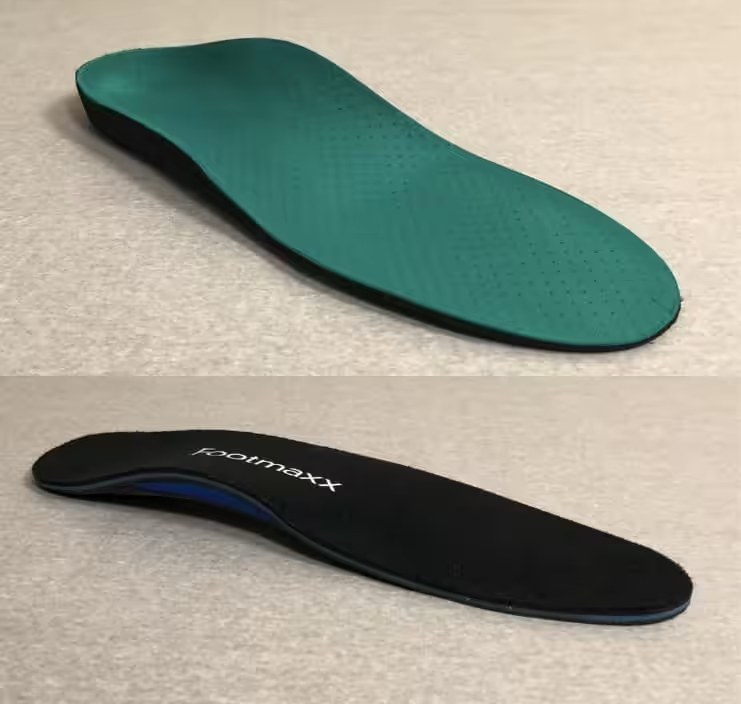
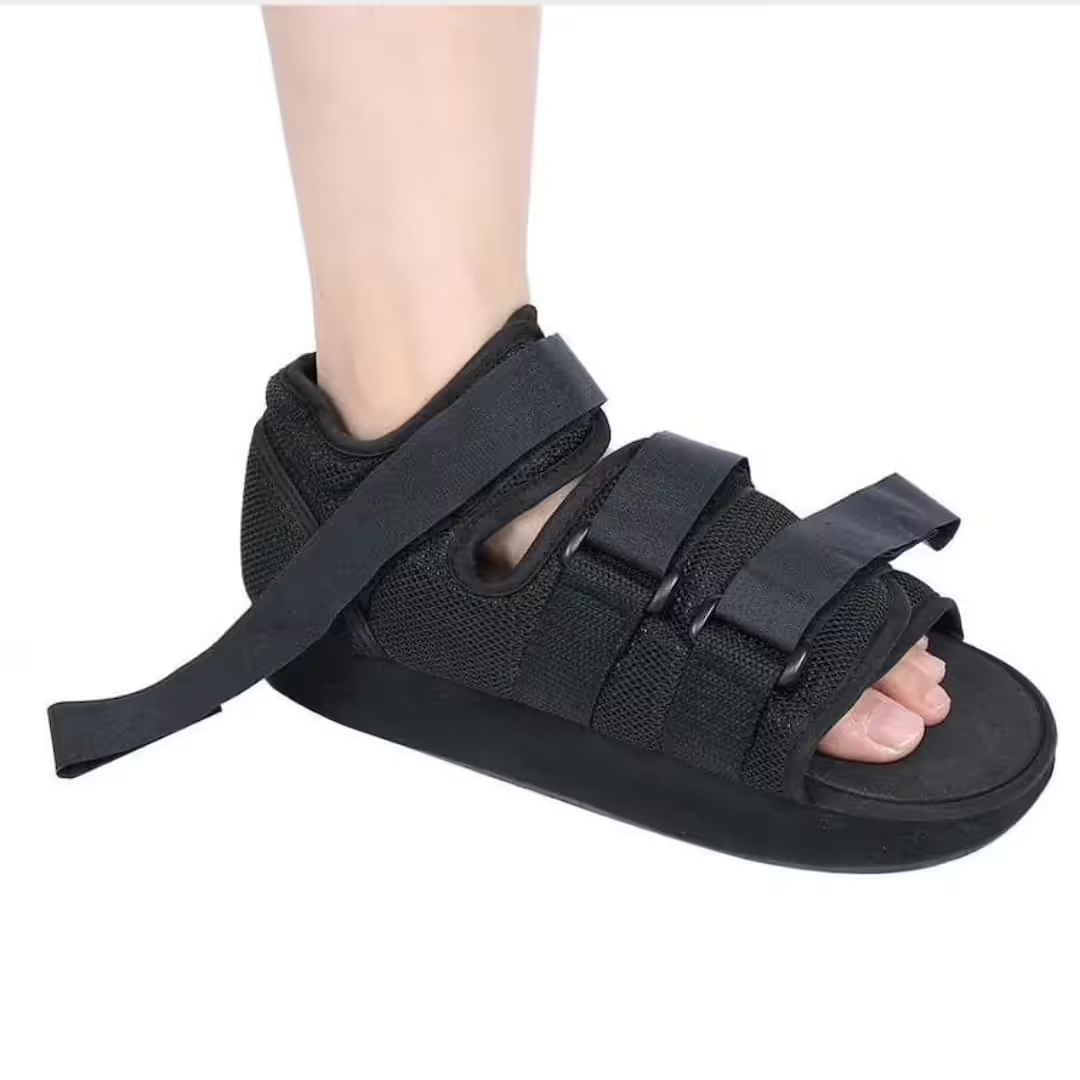
Ankle and Foot Protection
If you need more protection than what the post-operative shoe can provide the next step up would be the boot or walking cast. This does the same job as the sandal, however, incorporates more of your ankle, heel, and some of the lower leg. If you have an injury or worsening pain in this area than the boot may be a better option for protection. This gives more protection because it further immobilizes more joint, especially the ankle. These can be worn for a week to several weeks depending on how bad the injury is. Guidance from an orthopaedic surgeon such as Dr Adam Miller will ensure that you are on the right track towards recovery.
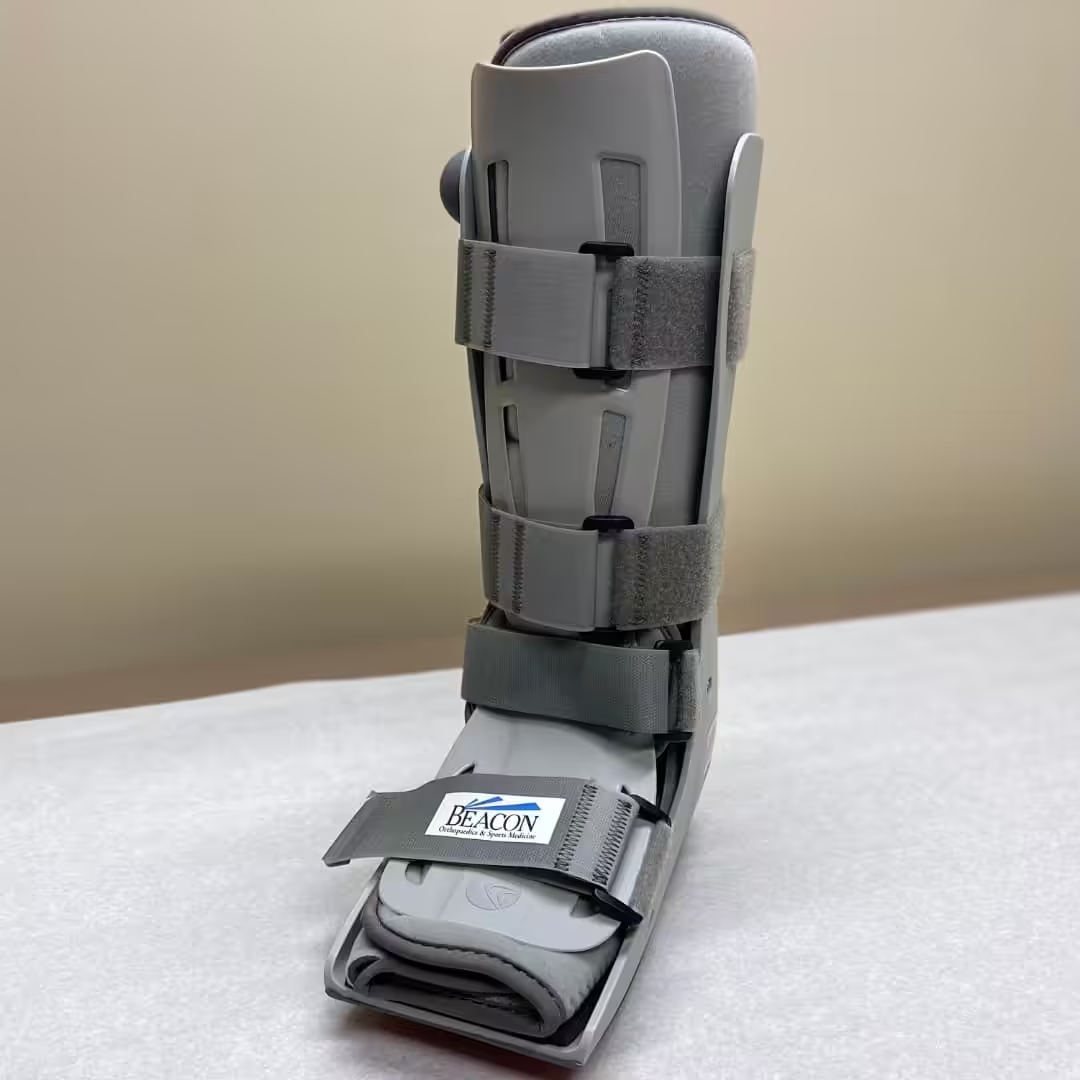
Activity/Sports Related Protection
Another type of injury considered an active injury such as an ankle sprain or rotational injury is where you may be able to get around with support of a brace device. With this you are still able to walk but have pain in the ankle with more aggressive activity such as running, sports, or yardwork on uneven ground. For these dynamic injuries a simple brace may be more effective, and you may not need a boot entirely. This is where the ankle brace would work nicely as it fits right into a shoe allowing the ankle to maintain strength while giving it time to naturally improve! A simple brace can be worn intermittently depending on when the pain occurs and sometimes may be worn up to several weeks. Your orthopedic surgeon can help you decide when and how long that is needed for your injury.
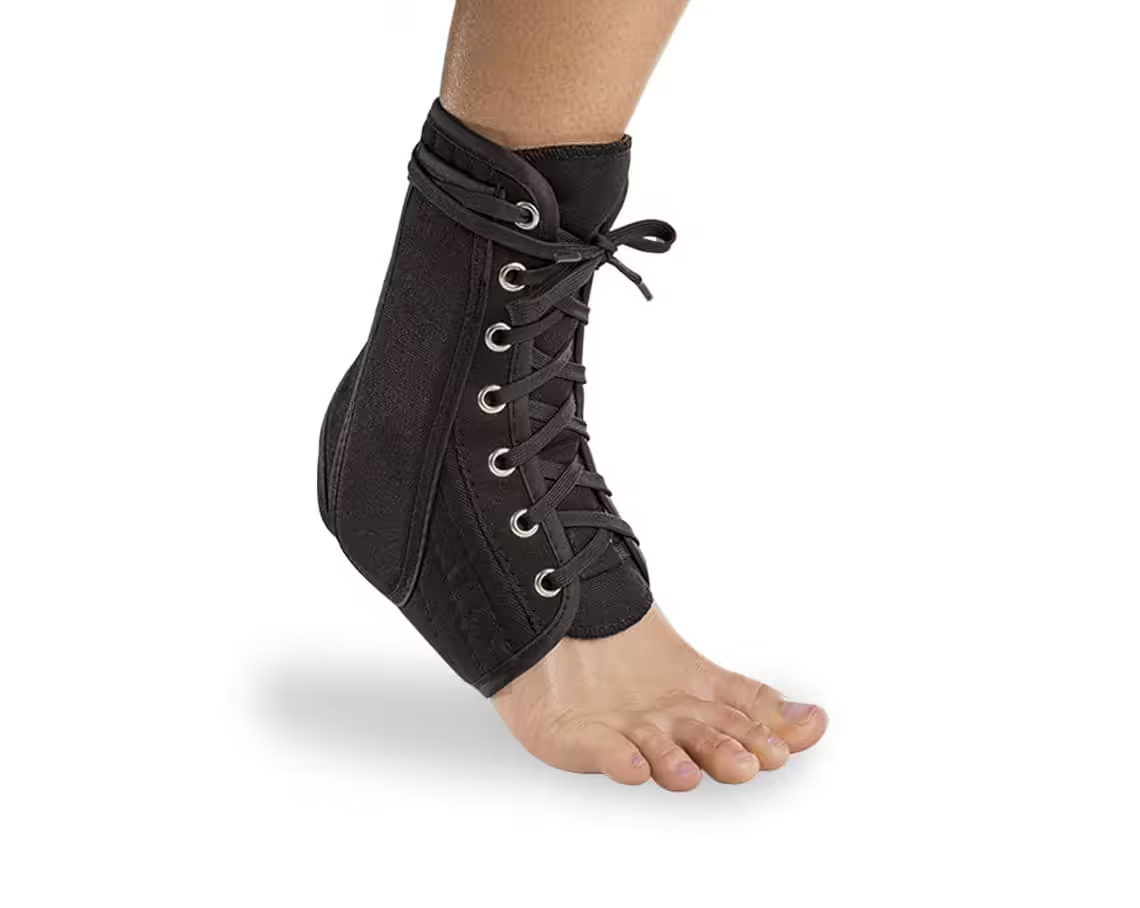
Custom protection
If none of the introductory braces or boots seem to be working for your injury or are not enough for those with arthritis or long-standing problems, there are custom options that can fit into a shoe. These are called orthosis which can be small or large depending on the need for the patient. These are usually applied for long-term use and are typically used as an alternative to surgery. The prescription is written by a physician depending upon the diagnosis, deformity, and pain. You meet with an Orthotist who will make a mold of the lower leg to decide and help fabricate what is needed. Once it is made after a few weeks, the patient will begin to try it out and support it. This will be used and worn for pain protection as a long-term use.
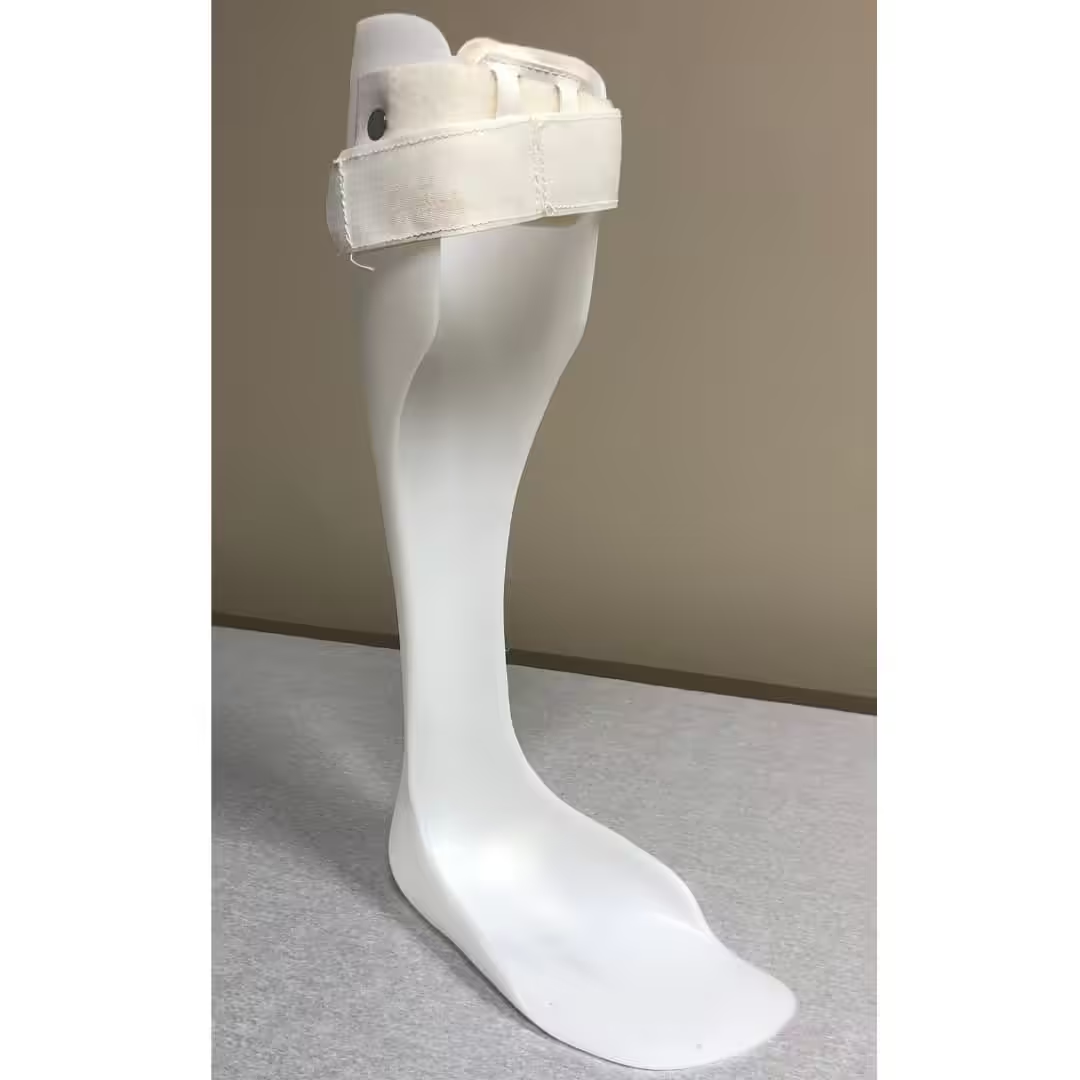
It is often good to start off and try a brace on your own if you’re able to walk on the injury and you are open to trying something protective initially. If injury does not get any better, seek an opinion by Dr. Adam Miller. If someone you know is needing foot and ankle care Dr. Miller is Beacon Orthopedics foot and ankle specialist and is available at several locations around the Cincinnati area. Contact us today for more information! Click here to learn more and schedule an appointment with Dr. Miller for foot and ankle injuries.
Physical Therapy Misconceptions
February 18, 2022
If you need to rehabilitate an injury or recover from surgery, you expect physical therapy to be in your treatment mix. And you might have some very specific ideas about how that part of recovery is going to go. This article explores what physical therapy is and isn’t as well as all the ways it can be used for pain management and more.
Find out what misconceptions you have about physical therapy, and also about what you can say, “I told you so.”
3 Ways Physical Therapy Gets Put in a Box
Enduring pre-conceived notions about physical therapy can create roadblocks for people whose quality of life could greatly benefit from it. Take a look at the following misconceptions you might share about treatment.
MISCONCEPTION #1
Chronic pain can only be corrected by surgery
If you’re living with chronic pain, you may think it can only be improved with surgery. The good news is you have other options. While, yes, surgery is required sometimes, chronic pain can be helped with non-invasive procedures and physical therapy. A Beacon specialist will work with you to determine how physical therapy can play a role in your individual care plan.
MISCONCEPTION #2
Physical therapy is painful but starts working immediately
It is accurate that physical therapy focuses on areas where there is already pain, so it can seem like it causes pain. However, the truth is that you’re working through the pain of an injury, but it should not exacerbate existing pain or cause new pain. Immediately let your physical therapist know if those things are happening. And you’ll have plenty of time to let them know because recovery does not happen overnight. The length of time you’ll need physical therapy depends on your unique situation and how much you adhere to your prescribed program.
MISCONCEPTION #3
Surgery and injuries are the only reasons for physical therapy
Anyone experiencing a broad array of musculoskeletal problems (e.g. arthritis, carpal tunnel syndrome, plantar fasciitis, herniated disc, etc.) can benefit from seeing a physical therapist. Even without an injury, a physical therapist can teach you strategies and proper movement patterns to help minimize injury risk.
What to Expect from Physical Therapy
If you’re getting ready to embark on a physical therapy journey, it may help to know what to anticipate for your treatment. To start, your physical therapist will assess your condition and customize a therapy program to fit your needs. It will aim to reduce or eliminate pain as well as restore your range of motion.
Physical therapy treatment typically includes strengthening exercises, stretches, and even massage. In addition to improving your strength and flexibility, your physical therapist will educate you on changes you can make in how you move doing relevant activities.
Ready to Address Chronic Pain?
If you’d like to know how physical therapy and how our specialists at Beacon can help you return to wellness, schedule an appointment today.
Surgery is Just the Start of Recovery
February 15, 2022
Orthopedic conditions and the pain related to them are life-altering for many. Surgery to correct issues can be life-changing. However, patients should be careful to remember that surgery day is Day One on their road to recovery. Following post-operative instructions are crucial to proper healing and recovering from surgery and a patient’s best chance at correcting whatever issue they may have been experiencing.
Depending on the procedure, the post-op treatment process can include comprehensive care, therapy, rehabilitation, and other means to ensure recovery. Just a few of the things it helps with include:
- Avoiding re-injury
- Monitoring post-op complications
- Preventing infection
- Reducing scarring
- Safe and speedy recovery
Post-op instructions are easy to ignore, but your body won’t let you forget them. And your surgeon knows that, which is why you’ll receive a specific regimen to follow in terms of activity, wound care, and physical therapy. It will be specific to your surgery and your needs. While you may receive advice or tips from a well-meaning loved one, always consult with your medical team before veering from your post-op instructions.
5 Ways to Improve Recovery After Surgery
Just like there are things you can do to impede surgery recovery, you can also help improve your rehabilitation. They’re mostly small steps you can take to avoid creating new issues.
- Cough or sneeze with care: Get precious about new incisions. Take careful precautions when sneezing or coughing. Brace your incision by applying pressure to it with your hand or a pillow.
- Pain management: Pain medication can be a sensitive topic, but when used as prescribed, it plays a critical role in ensuring proper recovery. If you are in too much pain to cough and avoid doing it, you put yourself at risk for pneumonia. If you are in too much pain to walk and refuse to do it as much as possible, blood clots become a concern. It’s also better to keep the pain under control and at a tolerable level rather than waiting until it is severe — then needing to wait for it to take effect.
- Get going: A simple step you can take after is surgery are actual steps. Outside of doctor’s orders, moving after procedures help you avoid serious complications. Walking is a gentle way to get back on your feet.
- Proper incision care: Use gentle soap and water for your wound. Don’t get it “too clean” by scrubbing off scabs or using alcohol or peroxide. Of course, always follow your personal after-care instructions if they differ.
- Drink and eat properly: Appetites tend to wane following procedures. Patients can feel nauseous, constipated, or any manner of things. Ensuring food and water intake promotes healing and minimizes complication risks.
We’re Here for You
If you have questions or feel pain that you aren’t sure is normal, always contact your specialist. If you are ready to meet with a Beacon doctor about a pain that may involve surgery, schedule an appointment today.
Beacon Orthopaedics & Sports Medicine Announces Dr. Robert Pettit to Lead New Fort Thomas Location
February 7, 2022
FORT THOMAS, KY – Beacon Orthopaedics & Sports Medicine as announced that Dr. Robert Pettit – a highly skilled, fellowship-trained orthopedic surgeon who specializes in sports-related injuries – will lead Beacon’s Fort Thomas location, which is scheduled to open in late February.
Pettit is a Cincinnati native from Anderson Township who played on St. Xavier High School’s 2005 state championship football team and who served as an assistant team physician for The Boston Celtics.
“We’re very excited to welcome Dr. Pettit home to Cincinnati and into the Beacon family,” said Andy Blankemeyer, CEO of Beacon Orthopaedics & Sports Medicine. “He is another fellowship-trained expert in orthopedic surgery and sports medicine that we’ll be able to add to our already fantastic and rapidly growing Beacon team of physicians.”
Dr. Pettit trained with leaders in the fields of ACL reconstruction, cartilage restoration, meniscal allograft transplantation, knee osteotomies, mako robotic knee arthroplasty, arthroscopic shoulder surgery, and shoulder arthroplasty. He has a special interest in knee and shoulder preservation utilizing techniques to prolong joint health and delay or avoid joint replacement in young active patients. For those patients that could benefit from joint replacement, he is certified in Mako robotic-assisted knee and partial knee replacements.
Dr. Pettit completed his undergraduate degree in Biology at The Ohio State University, medical degree at the University of Cincinnati, and Orthopaedic residency at The OSU Wexner Medical Center. He completed his fellowship training in Sports Medicine and Reconstructive Surgery at the prestigious Beth Israel New England Baptist Hospital, which is affiliated with Harvard and Tufts academic programs.
During his time in Boston, Dr. Pettit served as an assistant team physician for the Celtics as well as the New England Free Jacks major league rugby team and the Merrimack Warriors Division 1 teams.
As a child, Dr. Pettit’s physical activity and especially sports meant everything to him. He played baseball, basketball, football and soccer. At 12 years old, he was diagnosed with a rare disorder of the subchondral (the bone underneath cartilage) in both knees called Juvenile Osteochondritis Dissecans (JOCD). It is a condition that can lead to cartilage damage and early arthritis. He says he decided then that he wanted to become a surgeon.
“It was my first introduction to orthopaedic surgery,” said Pettit. “After several surgeries and phenomenal care, I was cleared to play football for Saint X.” He even was part of the school’s first state championship team.
Dr. Pettit spends his free time with his wife, Alison, a healthcare worker herself, and their growing family.
The new Fort Thomas location – Beacon’s 25th office in the Greater Cincinnati area – is being developed at 775 Alexandria Pike by Northern Kentucky based-Ashley Development Group just off of the entrance to the Highland County Club. Beacon also has Northern Kentucky locations at 600 Rodeo Drive in Erlanger and 2900 Chancellor Drive (Building 40) in Crestview Hills.
With the new office, Beacon patients will have access to enhanced services that include comprehensive orthopedic care, including orthopaedic urgent care, sports medicine, pain management, physical therapy, athletic training, imaging services, orthobiologics and surgeries at three dedicated surgery centers.
Beacon Orthopaedics & Sports Medicine, is Ohio’s largest orthopaedic practice. Since 1996, Beacon Orthopaedics has helped thousands of patients overcome injuries and improve their quality of life. Beacon Orthopaedics provides medical direction and coverage for over 30 local high schools, five college athletics programs, and professional teams including the Cincinnati Reds.
Spotlight on Orthopedic Oncology for Cancer Prevention Month
February 1, 2022
When someone receives the news that they have a tumor or tumor-like condition, it can be a scary time. That’s why we’re putting the spotlight on orthopedic oncology for Cancer Prevention Month. This particular specialty deals with conditions of the bone and soft tissue, including bone metastases, sarcomas, pathologic fractures, and benign and cancerous tumors of the bone or soft tissue.
What is an Orthopedic Oncologist?
An orthopedic oncologist, like Beacon’s own Joel Sorger, M.D., is a physician and surgeon who specializes in the diagnosis and treatment of primary, benign, and malignant tumors of the bones. Like the disease itself, orthopedic oncologists are rare. There are just over 100 orthopedic oncologists in the United States.
Dr. Sorger specializes in revisionary total joint replacements of the hip and knee constantly continuing his education of these procedures. As the only orthopedic oncologist in southwest Ohio, Dr. Sorger is leading the way in cancer research on benign and malignant bone tumors.
The History of Orthopedic Oncology
Sarcomas were first characterized by what could be discerned by the naked eye in 1804 but then evolved to include examination of tissue specimens under a microscope in 1867. In its infancy, cancer treatment began with local surgical removal and amputation throughout medical history. Limb-sparing resection was pioneered in the middle of the 20th century. Nonsurgical treatments continued to evolve eventually resulting in the introduction of chemotherapy in the 1970s. These advancements continued to pave the way toward improved patient outcomes using cutting-edge, reconstructive techniques, which maintain a focus toward limb-saving surgery and improving survival rates.
What Does Orthopedic Oncology Treatment Plan Entail?
As an orthopedic oncology patient, you should expect to receive treatment and high-touch care from a skilled team that coordinates evaluation and diagnosis through a single point of contact. At Beacon, we discuss options with both your referring physician and you before creating a customized multidisciplinary treatment plan.
While every journey differs, it generally includes:
- Initial bone cancer diagnosis
- A determination of the preferred treatment protocol
- Surgery to remove all cancer cells followed by reconstructive surgery to restore function
- Follow-up treatment with chemotherapy and/or radiation therapy
- Pain management as needed
Ready to Address Chronic Pain?
While the advanced technical skills and expertise required by orthopedic oncology provide for successful diagnosis and treatment of bone cancer, our Beacon specialists are also able to apply specific techniques to treat patients with bone damage as a result of degenerative joint disease, arthritis, and complex fractures. Schedule an appointment today to learn more. We understand how shocking a cancer diagnosis can be. We’re here to help guide you on your journey with orthopedic oncology treatment specific to your needs.
Before and After Surgery
February 1, 2022
Having surgery soon? Here is what to expect throughout the process. We will discuss surgery prep, during surgery, and your recovery afterwards. Click here for our guide and more details for further information on Dr. Miller’s recovery process.
Preparing for the Surgery
 In preparation for the operating room (OR), you will meet with Dr. Miller and go over the risks and benefits of your procedure and exactly what to expect. Patients can ask questions. Next you will go over consent forms and other paperwork needed to prepare you for the surgery. This includes any medical clearance needed from your primary doctor or other specialists. Sometimes lab work or an electrocardiogram (EKG) is needed based on medical history. Safety after the procedure is important; we help you prepare to go home after surgery including assist devices. All these measures are to ensure safety of the patients in the OR and ensure they can tolerate the recovery period. Dr. Miller’s team will then work with you to set up a time, date, and place to perform the surgery.
Day of the OR
The day of the OR will start the night before your surgery. You are not supposed to eat or drink after midnight. Medication you traditionally take is okay with small sips of water. A key to infection prevention starts with cleanliness. If the patient is not in a splint for injury or trauma, they can do a preoperative prep with chlorohexidine scrub and wash to make sure any potential infection is limited. The patient will come to the surgery location usually a couple of hours before which allows the team to check you in, start an IV, meet the anesthesia team and see Dr. Miller. The anesthesiologist will administer any local anesthesia such as a nerve block that needs to be performed for post-operative pain control. Finally, the patient will be wheeled back into the operation room and the surgery will begin by Dr. Miller and his team.
 After surgery is complete the patient will wake up in the post-operative recovery unit with a wrap or splint on the area of surgery. The way the leg is positioned is to be kept for protection. Commonly, patients will have instructions to be non-weight bearing until they are seen back into the office. The patient is seen typically within 10-14 days (about 2 weeks). Further instructions will be given for pain control and medication. Medication includes a form of pain medicine, supplements, potentially a blood thinner, and any other medication Dr. Adam Miller would consider necessary towards the patient’s recovery.
Typically, you can be discharged to home from the surgical location. Sometimes a patient may be unsafe at home and admission is called for. Once discharged from surgery, one must use the various assist devices and recommendations to safely navigate around their home. Sometimes before surgery we may send the patient to a therapy session to ensure they are able to protect their leg and practice non-weightbearing. At this therapy visit, the therapist discusses home routine and safe mobility. Some patients are instructed to be heel weight bearing depending on the type of surgery that they have. These instructions would be provided in their information along with the correct mode of transportation around the home as well.
After the OR
Reading over instructions is crucial to ensure what you need to know. 95% of the questions you may be wanting to know are going to be in those instructions. Typically, the biggest 3 things to remember are:
- Non-weightbearing
- Keeping the area dry
- Keeping your leg elevated to your heart level.
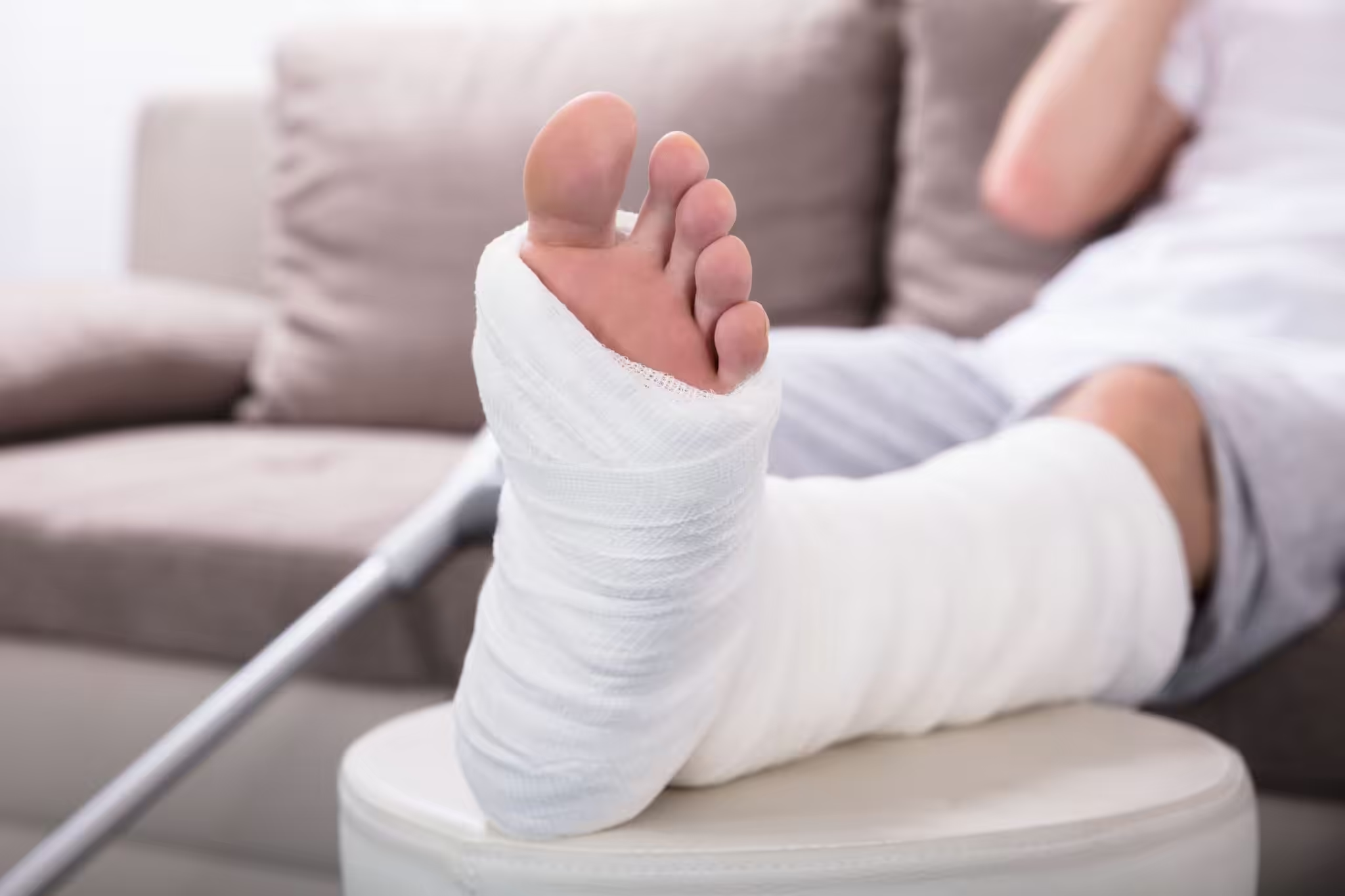
These three things ensure that the surgery and the outcome is kept, and your risk of infection is low. Patients can expect any nerve block administered for pain relief to wear off day 1 or 2 of recovery. Typically, this will come with an increase in pain. The patient may expect to take some of the medication that was supplied for pain relief. They can expect that the worst pain is typically experienced during days 2-3-4 after surgery. Commonly, the patient is to keep the elevation and no weight bearing throughout the first post-operative period. Remember, the more you sit up the higher the leg should go up to maintain elevation at heart level.
Your post-operative appointment is within 10-14 days (about 2 weeks) for your checkup. You will meet with Dr. Miller or his Physician Assistant Kelsey Draper who will take off all the dressings, remove any sutures as applicable, and place you in the next immobilization device. More instructions will be provided with the next steps such as duration of non-weight bearing, physical therapy instructions, what types of home therapy and exercises can be performed, how much further elevation and rest needs to be completed and when you can go back to work. Typically, patients after surgery are off work until they are seen in clinic to ensure that the wound heals appropriately. Kids can typically go back to school a week after surgery if they can elevate their leg in class. 


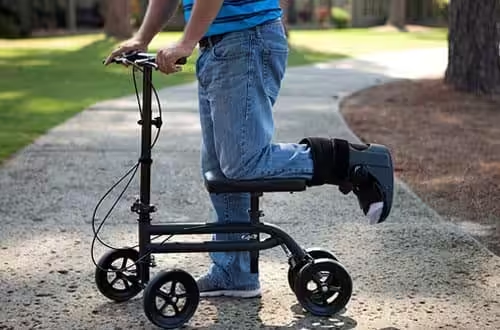
If any other questions, click on our Therapy guide to foot and ankle surgery and recovery. This guide goes into more detail with any other questions and concerns you may have. If someone you know is needing foot and ankle care Dr. Miller is Beacon Orthopedics foot and ankle specialist and is available at several locations around the Cincinnati area. Contact us today for more information! Click here to learn more and schedule an appointment with Dr. Miller for foot and ankle injuries.
Beacon expands physician options in Batesville and Lawrenceburg (2022)
January 31, 2022
Beacon Orthopaedics & Sports Medicine is expanding its physician presence in the southeastern Indiana communities of Lawrenceburg and Batesville.
The expansion includes a total of eight physicians between the two offices, with four physicians visiting Batesville and five physicians holding clinic in Lawrenceburg. This group of physicians includes long-tenured West-side doctors like Beacon’s Dr. Argo, and Dr. Johansen Dr. Rolf, but also, includes newer Beacon physicians Dr. Grime, Dr. Mirkopoulos, Dr. True, and Dr. Wigton.
David Argo, M.D., is a board-certified and fellowship-trained orthopaedic surgeon specializing in sports medicine. He received his undergraduate degree in mechanical engineering from Vanderbilt University, Nashville Tennessee, where he was captain of the varsity soccer team. He earned his medical degree and completed an orthopaedic residency at the University of Tennessee.
Todd E. Grime, M.D., is a board-certified sports medicine physician at Beacon Orthopaedics & Sports Medicine who specializes in primary care sports medicine. After completing medical school at the Medical College of Ohio and his residency at Barberton Citizens Hospital, he went on to complete a fellowship for Primary Care Sports Medicine at the University of Kentucky. He now has over 15 years of experience in nonsurgical treatments and athletic injury prevention.
Matthew Johansen, M.D., is a Board Certified and Fellowship Trained, Orthopaedic Surgeon, who specializes in hip and knee replacements. He is sub-specialty trained in partial knee replacements, total knee replacements, total hip replacements, and revisions. Rather than requiring overnight stays, Dr. Johansen’s patients are frequently able to return home within 24-hours of surgery.
Nicholas S. Mirkopoulos, MD, provides total joint replacement and wider sports medical care to his patients. He is among 20 physicians joining Beacon from TriHealth through a pioneering partnership agreement that agreement includes Beacon and TriHealth combining ambulatory assets.
Dr. Mirkopoulos has treated patients in Batesville for 26 years. He said he loves the tight-knit community and small town charm of the city and is excited that Beacon’s commitment to the area will increase and enhance orthopedic care in the region.
Robert Rolf, M.D., is a native of Cincinnati and a graduate of La Salle High School. He attended the University of Notre Dame where he received a BS in Chemical Engineering. After working as a Sales Engineer for two years, he returned to Cincinnati to study at the University of Cincinnati College of Medicine.
M. Scott True, M.D., is a board-certified orthopaedic surgeon specializing in total joint replacement, sports medicine, fracture care, and knee arthroscopy at Beacon Orthopaedics & Sports Medicine.
Dr. True’s areas of interest are total knee replacement, total hip replacement including anterior approach, sports-related injuries, fracture care in adults and children and arthroscopic knee treatment.
Michael D. Wigton, M.D., is a board-certified and fellowship-trained orthopedic surgeon and hand & wrist specialist at Beacon Orthopaedics & Sports Medicine. In addition to ABOS certification in orthopaedic surgery, Dr. Wigton has subspecialty certification in surgery of the hand. Dr. Wigton has over 10 years of medical experience treating upper extremity injuries, from the brachial plexus to the fingertips. He has special interest in microvascular surgery, traumatic disorders of the hand, wrist and elbow, post-traumatic complications, arthritic conditions, and peripheral neve injuries.
“Beacon has been bringing the best care to patients in the community of Batesville and the entire southeastern Indiana market for years,” said Beacon President Peter Cha, M.D. “With additional physicians, we can serve even more patients by offering quality, accessible, and valuable orthopedic care.”
Beacon’s Batesville location is at 1360 East State Route 46 and their Lawrenceburg location is at 605 Wilson Creek Rd, Lawrenceburg, IN 47025. You can schedule an appointment with any of the physicians who visit these offices by clicking on the icons above or visiting our online scheduling platform here. You can also call our 24/7 call center to speak with a live representative at (513) 354-3700.
Battling Fatigue & Chronic Pain
January 26, 2022
Do you have chronic pain? If so, chances are you’re also in a daily battle with fatigue. We’re talking about the type of exhaustion that disrupts your daily life and doesn’t get better after a good night’s rest. It can really feel like an uphill battle, especially as it typically affects the quality of life for people suffering from arthritis-related diseases, including:
- Fibromyalgia
- Lupus
- Osteoarthritis
- Psoriatic arthritis
- Rheumatoid arthritis
- Spondyloarthritis
Fatigue Triggers
The biggest fatigue triggers are the inflammatory disease process and the chronic pain that goes along with it. There are other contributions, however, that can even further exacerbate fatigue.
- Anemia: Caused by a shortage of red blood cells, anemia causes your muscles to get tired fast. In fact, nearly two-thirds of people with arthritis have anemia of chronic disease, which occurs when inflammatory chemicals impede red blood cell production.
- Depression: Arthritis pain can prevent you from doing the things you enjoy, which is why depression so often goes in tandem with the disease. This is a comorbidity that often leads to more feelings of fatigue.
- Inactivity: The less active you are, the more exhausted you’ll feel. Unused muscles can weaken — causing you to tire more easily.
- Lack of Sleep: Getting into a comfortable position or staying asleep is a challenge with joint pain. Insomnia, disrupted sleep, and sleep apnea can all contribute to poor sleep.
- Medication Side Effects: Some antidepressants, blood pressure medication, narcotic pain relievers, and prescription NSAIDs and DMARDs all have the potential to cause fatigue.
- Obesity: Lack of exercise, using extra energy to move more bodyweight, and metabolic changes can contribute to fatigue.
- Poor Nutrition: Your body needs plenty of water, vitamins, and minerals. If you have more junk food than healthy and don’t drink enough water, your fatigue could be a result of dehydration and vitamin deficiency.
Fighting Back Against Fatigue
Knowing what causes your fatigue is the first step you can take in your fight back against it. Now that we’ve covered potential triggers, fill up your toolkit with the following tips on how to address them.
Get Active
Exercise increases muscle mass, strength, blood circulation, and flexibility. Each of these things is proven to help boost energy and reduce pain. Exercise also generates endorphins, which produce a sense of well-being and vitality and can improve sleep.
Drink Enough Water
You need at least eight 8-ounce glasses of water or more a day, depending on your activity level and how hot and dry the weather is.
Eat Well
Make sure you have a balanced idea full of fruits, vegetables, lean protein, and healthy fats. If you need to lose weight, reduce your portions and limit processed, high-salt, sugary foods. Always start your day with breakfast that includes lean protein and complex carbohydrates for long-lasting energy.
Ease Your Mind
Consider seeing a therapist. Cognitive-behavioral therapy, mindfulness, yoga, and tai chi can help calm your thoughts and boost your energy.
Maintain Good Sleep Habits
Sleep hygiene is an important part of getting a good night’s rest. Make sure you have a good bedtime routine. Avoid alcohol, nicotine, and caffeine. Make your bedroom conducive to rest. Turn off your computer, cell phone and television an hour before going to sleep.
We’re Here for You
Above all, be gentle with yourself. Exacerbating your fatigue and mental state by being hard on yourself will only bring you down more. Don’t be afraid to ask for help. Loved ones can be great support systems, and there are medical interventions that may help you feel better rested. Schedule an appointment today to learn more.
Further Reading
Hand and Wrist Arthritis
Non-Surgical Approaches to Arthritis
Osteoarthritis
Pain Management
Cincinnati Magazine Top Doctors 2022
January 17, 2022
Each year, physicians are selected by their peers in a survey, asking them which physicians they would turn to for their own personal care. Beacon Orthopaedics & Sports Medicine is proud to have 49 doctors listed on the latest Cincinnati Magazine’s Top Docs List of 2022. We are very proud of all of our physicians and thank the medical community for their recommendations. Click on any of the physician’s names below to view their personal profile page, orthopedic specialty and discover why their peers view them as top doctors in the Cincinnati region.
You can schedule an appointment with our physicians online or by phone 24/7 with no referral necessary. Beacon has 26 convenient locations, evening and weekend appointments and urgent orthopedic care clinics so that patients can get the care they need quickly.
SCHEDULE HERE

Family Medicine
Nicole Goddard, D.O.
Foot and Ankle Surgery
Adam G. Miller, M.D.
Robert A. Raines, M.D.
V. James Sammarco, M.D.
General Surgery
Timothy B. McConnell, M.D.
Hand Surgery
Safi Rahman Faruqui, D.O.
Mohab Foad, M.D.
Sam B. H. Koo, M.D.
Daniel G. Reilly, M.D.
Michael D. Wigton, M.D.
Wenjing Zeng, M.D.
Hematology and Oncology
Joel I. Sorger, M.D.
Orthopedic Surgery
Robert Burger, M.D.
Haleem Chaudhary, M.D.
Ronald G. Hess, D.O.
Andrew S. Islam, M.D.
Matthew A. Johansen, M.D.
Matthew A. Langenderfer, M.D.
John J. Larkin, M.D.
Joshua M. Murphy, M.D.
Robert Pettit, M.D.
Andrew J. Razzano, D.O.
Robert Rolf, M.D.
Brian A. Rottinghaus, M.D.
Kevin J. Shaw, M.D.
Michael L. Swank, M.D.
M. Scott True, M.D.
Pain Medicine
Brian A. Braithwaite, M.D.
Atul Chandoke, M.D.
Aarti A. Singla, M.D.
Physical Medicine and Rehabilitation
John Bartsch, M.D.
John Brannan, M.D.
Alberto Maldonado, M.D.
David Sower, M.D.
Spine Surgery
Michael Planalp, M.D.
Ian P. Rodway, M.D.
Michael T. Rohmiller, M.D.
Sports Medicine
David Argo, M.D.
Drew Burleson, M.D.
Peter Cha, M.D.
Emily E. Dixon, D.O.
Todd E. Grime, M.D.
Steve Hamilton, M.D.
Timothy Kremchek, M.D.
George Matic, M.D.
Glen McClung, M.D.
Henry Stiene, M.D.
You can schedule with our physicians 24/7/365 online or by phone at (513)-354-3700.
SCHEDULE HERE
Beacon taps former Boston Celtics physician to lead its newest office – Cincinnati Business Courier
January 17, 2022
Beacon Orthopaedics & Sports Medicine, one of the region’s largest independent physician groups, has hired a former Boston Celtics team physician to head its newest office in Northern Kentucky.
Dr. Robert Pettit, a fellowship-trained orthopedic surgeon who specializes in sports-related injuries, will lead Beacon’s Fort Thomas location, which is scheduled to open in late February.
Pettit is an Anderson Township native who played on St. Xavier High School’s 2005 state championship football team. Most recently, he served as an assistant team physician for the Boston Celtics.
During his time in Boston, Pettit served as an assistant team physician for the Celtics as well as the New England Free Jacks, a major league rugby team, and Merrimack College athletics, a member of the Northeast Conference.
“We’re very excited to welcome Dr. Pettit home to Cincinnati,” Andy Blankemeyer, CEO of Beacon Orthopaedics, said in a release. “He is another fellowship-trained expert in orthopedic surgery and sports medicine that we’ll be able to add to our rapidly growing team.”
 Andy Blankemeyer is CEO of Beacon Orthopaedics & Sports Medicine.
Pettit trained with leaders in the fields of ACL reconstruction, cartilage restoration, meniscal allograft transplantation, knee osteotomies, mako robotic knee arthroplasty, arthroscopic shoulder surgery and shoulder arthroplasty. He has a special interest in knee and shoulder preservation utilizing techniques to prolong joint health and delay or avoid joint replacement in young active patients. For patients who could benefit from joint replacement, he is certified in Mako robotic-assisted knee and partial knee replacements, which uses a 3D CT-based planning software to create a personalized joint replacement surgical plan.
Pettit completed his undergraduate degree in biology at the Ohio State University, medical degree at the University of Cincinnati and orthopaedic residency at OSU Wexner Medical Center. He completed his fellowship training in sports medicine and reconstructive surgery at Beth Israel New England Baptist Hospital, which is affiliated with Harvard and Tufts academic programs.
As a child, Pettit played baseball, basketball, football and soccer. At age 12, he was diagnosed with a rare disorder in both knees called juvenile osteochondritis dissecans (JOCD). It is a condition that can lead to cartilage damage and early arthritis. He said he decided then that he wanted to become a surgeon.
“It was my first introduction to orthopaedic surgery,” Pettit said. “After several surgeries and phenomenal care, I was cleared to play football for St. X.”
Northern Kentucky is a major focus for Beacon, officials have said, and an underserved market in terms of its patient population. Beacon’s Fort Thomas location — its 25th office in the Greater Cincinnati area — is being developed at 775 Alexandria Pike by Ashley Development Group off Highland County Club. Beacon also has Northern Kentucky locations in Erlanger and Crestview Hills.
Beacon‘s new office will offer patients access to comprehensive orthopedic care, including orthopaedic urgent care, sports medicine, pain management, physical therapy, athletic training, imaging services, orthobiologics and surgeries at three dedicated surgery centers.
Sharonville-based Beacon, founded in 1996, is Ohio’s largest orthopaedic practice. Its Greater Cincinnati’s 11th-largest physician group, per Courier research, with more than 700 employees and 60-plus physicians.
Beacon specializes in comprehensive orthopedic care, including sports medicine, physical therapy, athletic training, imaging services, orthobiologics, as well as surgical procedures involving neck, spine, shoulder, elbow, hand, hip, knee, foot and ankle repair, reconstruction and replacement. The group supports more than 30 local high schools, five college athletics programs and professional teams including the Cincinnati Reds.
———–
To read the full story by Liz Engel in the Cincinnati Business Courier, click here.
Meet Your Physician: Dr. Robert Burger
January 17, 2022
Full circle.
These two words define Dr. Robert Burger’s career — and life. The bedrock of his calling is: to whom much is given, much is expected. In answer to that creed, he approaches life with a lens of purpose, gratitude, and dedication to the community. Qualities that he in turn inspires in those who come into his circle. He’s the type of person who makes his community better by learning from it and investing back into it.
Raised on Cincinnati’s West Side, these revered values were instilled in him as a child and during his time as a student at LaSalle High School. While there, he played football and received top marks that subsequently earned him an academic scholarship to his dream school, the University of Notre Dame. While he was recruited to play football at a number of Ivy League schools, he enrolled at Notre Dame in August of 1977 and joined the football team as an invited walk-on.
“I was a walk-on center. We had seven centers on the team, and I was seventh on the depth chart. I used to get a healthy serving of humility every day trying to block All-American (and future NFL defensive tackle for the Patriots, Browns and Raiders) Bob Golic*,” remembered Dr. Burger. “We had a phenomenal team, so loaded with talent, that as the season started, our third team quarterback was a guy named Joe Montana. As the season progressed, Joe became the starting QB, Notre Dame walloped USC after coming onto the field wearing green jerseys for the first time, and we beat an undefeated Texas team in the Cotton Bowl to win the 1977 National Championship.”
From Chemical Engineering to Medicine
Success at Notre Dame didn’t just happen on the football field for Dr. Burger. He also enjoyed achievements in the classroom as a chemical engineering major. Taking his academic feats into consideration, an uncle of Dr. Burger’s saw him on a different path and asked if he’d ever thought about going into medicine.
“I didn’t have an answer. I had never given it much thought, but once I did, I realized he might be on to something,” recalled Dr. Burger. “I like people. I like taking care of people. I thought it could be a path for me. I went and spoke to my advisor, and he helped me stay in chemical engineering while also fulfilling the prerequisites for medical school.”
Dr. Burger did not dismiss chemical engineering as a career path immediately, and he worked in a summer internship with Procter & Gamble in 1980, was offered a job by them, and considered this a most valuable learning experience. However, the desire to impact people more directly as a physician compelled him to pursue medicine as a career.
Dr. Burger enrolled in the University of Cincinnati College of Medicine in 1981, and after completing medical school, he began his Orthopaedic Surgery residency in 1985, also at UC.
Coming from a sports background, Dr. Burger was drawn to the field of Sports Medicine, and he considers himself privileged to spend a year as a Sports Medicine Fellow under the direction of Dr. Jack Hughston in Columbus, GA. Dr. Hughston was a pioneer in this emerging field, and he served as the original editor of The American Journal of Sports Medicine and the first president of The American Orthopaedic Society for Sports Medicine.
“My mentor, Dr. Hughston, was a kind of wise grandfatherly-type guy. He was an engaging, intuitive, challenging guy, and I learned a lot from him,” said Dr. Burger. “Following his tutelage, I came back to Cincinnati in 1991 and worked with a group called Queen City Sports Medicine during my first three years in practice.”
Ironically, during Dr. Burger’s first year in practice, he began seeing patients at a newly opened medical office at the Cincinnati Sports Club, which is now a Beacon office. During that time, he met a young, talented chemical engineer, who at the time was working at P & G, named David Argo. While David was highly regarded by Procter & Gamble, Argo was also considering changing careers and pursuing medicine. The two shared a common bond and background, became friends, David spent time with Dr. Burger in the office and in surgery, and ultimately he changed careers himself and enrolled in medical school.
As they say, “The rest is history.” A generation later, Dr. Argo now works as an orthopaedic surgeon/sports medicine physician at Beacon, where he has been one of the key drivers in spearheading the organization’s growth and success over the past 20 years. “I’m delighted and most proud that Dr. Argo is now a trusted partner at Beacon. It’s very gratifying to watch someone evolve like that,” said Dr. Burger.
The Start of Something New: Beacon Orthopaedics
Dr. Burger left Queen City Sports Medicine in 1995 and opened his own practice in Orthopaedic Surgery/Sports Medicine, and he was blessed to hire a talented young woman named Nancy Hugentobler as his office manager –and more than 25 years later, Nancy still works with Dr. Burger as his administrative assistant. “Nancy has been an absolute pillar and a godsend, not only to me but to my patients as well, “ stated Dr. Burger.
Shortly after Dr. Burger opened his own practice, Dr. Tim Kremchek did the same, and the two frequently collaborated in complex surgical cases, team coverage, and sports medicine conferences. This provided the initial foundation for Beacon. As the two worked together more regularly, they began to meet, along with the other founding physicians, exploring the possibility of coming together as a new group.
This was both an exciting and unsettling time for the original founders of Beacon. They would meet to discuss how they might come together as a group. Would they be able to work together? What would it look like? The doctors met weekly, starting on the ground floor as they assumed the various essential tasks necessary to build a group practice. Along with Drs. Burger and Kremchek, Nancy Hugentobler, Jayne Walker, and Jetta Anderson played key roles in the formation of the group. They decided to call their new group “Beacon Orthopaedics & Sports Medicine,” and Dr. John Wolf became the first president in 1996. From there, the team kept building, piece by piece. They recruited talented doctors who were well trained, bright, willing to work hard, and had a similar patient care philosophy, along with skilled and committed administrators.
“The healthcare environment that spurred Beacon’s founding in the 1990s was evolving. The term that was becoming more prevalent was ‘capitated care.’ As we were getting feedback, people would say that they really liked what we were doing for patients, but we needed to be in a group, that we needed to be a bigger entity to manage care for larger patient populations,” Dr. Burger remembered. “We needed to balance our organizational structure while also responding to the anticipated and future needs of our patients, all while providing state of the art care that met or exceeded patient expectations. The concept of consolidating physical therapy, MRIs, and even an ambulatory surgery center in the same location began to provide real synergy and more integrated care.”
As Dr. Burger now reflects on Beacon’s beginning over 25 years ago, he is both proud and amazed by the organization’s growth. He believes that integral to Beacon’s success has been an unwavering commitment to patient care, dynamic creativity in responding to the health care needs of the community, and a persistent commitment as physicians to stick together through the challenges that inevitably come with a growing medical practice. Dr. Burger hopes to continue seeing Beacon’s evolution, including growth, without losing its foundation of providing high-quality care and doing what’s right for patients. The way to do that isn’t just by being content with the way Beacon did things yesterday. It’s constantly evaluating how things will be done tomorrow.
“I’ve worked as a physician for more than 30 years. I’m at a place in my career where while I am proud of our legacy, I am more interested in what Beacon will become over the next 20-30 years. I want Beacon to continue to thrive and still be vibrant and available,” said Dr. Burger. “The patients in our community will include me and my family, and I want people to feel like they’re treated like my family. I do for my patients what I do for my family.”
Everything Comes Full Circle
This is the point where Dr. Burger’s full circle really begins to crystallize. He and his wife, Felicia, have raised four boys together. They now range in age from 27 to 33. His youngest son Joe played football for The Ohio State University, was also a member of the 2014 National Championship team, and is currently in medical school at Ohio State. Dr. Burger’s oldest son, Bobby, played football at Notre Dame. Suggesting again that life comes full circle, Dr. Burger’s father had graduated from Xavier in 1960, and almost 50 years later, two of Dr. Burger’s sons,
Chris and John, both enrolled at Xavier and played college golf there. Dr. Burger has also served as the Medical Director and head team physician for Xavier athletics for more than 20 years. He’s now enjoying the blessing of five grandchildren — all age 4 or younger.
“I’ve been fortunate and blessed by my entire family, and I am most proud that my son Joe at OSU is also on a path similar to mine. He played on a team that was good enough to win a National Championship, too. Not many people can say that. It gives us a rather unique bond —
from the football field to medical school.” Dr. Burger continued with a laugh, “Not our championship rings though. Mine looks like it came out of a bubble gum machine compared to his. Of course, I don’t treasure mine any less. It’s the accomplishment and memories it represents that matter.”
Besides having the support of family, professional colleagues, and mentors along the way, Dr. Burger has been blessed with a loyal staff, and several current Beacon employees started with him over 25 years ago, including Shelly Bingle, Sherri Roesel, and Bev Gavin, as well as Sarah Snyder, who has worked with him for 20 plus years as a physician assistant.
“I really am eternally grateful to all the people who work with me. I’m just blessed with a lot of really good people who take great care of patients. From my staff to partners like Dr. Argo, Dr. Robert Rolf (Dr. Burger’s nephew and who he helped with his college applications), and Dr. Steve Hamilton (who Dr. Burger first met when Steve was a 5th grader and a patient),” said Dr. Burger. “When you reflect on those kinds of experiences, you start to feel like an old man. In all seriousness, it is tremendously gratifying to witness the maturation and success of so many outstanding individuals at Beacon, and I hope that I have made a positive contribution to their careers and their lives. It has been a challenging but fun journey for me, and I am extremely proud as I witness so many good people flourish at Beacon.”
And to bring everything fully full circle, Dr. Burger imparts the following words, “Give back to get back. Help support people in the community. Because to whom much is given, much is expected.”
*Millennials may know Bob Golic equally as well (or better) as Mike from Saved by the Bell: The College Years.
New Year, New You… No New Injuries
January 10, 2022
Hitting the gym with a brand new, sparkling New Year’s resolution is something of an American tradition. You’re ready to work off that holiday weight and have a healthy new year, but before you start slaying, remember this saying: slow and steady wins the race doesn’t end up in a knee brace.
Not to be too on the nose, but when it comes to starting a new workout, it really is not “no pain, no gain.” If you’re feeling discomfort beyond your standard post-workout sore muscles, you might be going a little too hard, too fast. Consider these tips to help recognize and prevent common gym injuries as you start your healthy new routine this January.
Common Gym Injuries & How to Avoid Them
Elbow/knee/shoulder injuries
Elbow injuries are often caused by lifting too much weight while moving too quickly. Tennis elbow is the most common injury. The best way to prevent an elbow issue is to keep them in a neutral position while lifting weights and doing reps at a steady pace.
Caused by a variety of movements, knee injuries happen most often when the knee is kept in a constant, stressed position. To prevent these injuries, maintain proper posture when doing squats and deadlifts so your legs are properly aligned. Wear supportive shoes, and use knee braces to help prevent injuries.
Rotator cuff problems are the most common shoulder injury type. Overhead movements cause shoulder pressure that can lead to tears. Prevent a shoulder injury by incorporating shoulder movements into your workout routines to keep your upper body strong. Above all, only lift what your body can handle.
Equipment-related injuries
As you likely are aware, gym equipment includes large, heavy weights and machines. Exercise that same awareness when putting down those free weights so you don’t hurt your toes and avoid tripping. Read instructions and safety guides on the equipment. Even simple things, like checking shoelaces before getting on a cardio machine, require a good reminder.
Lower back sprain
This is another issue caused by incorrect posture. If you put too much pressure on the muscles surrounding the lower part of your spine, you can injure your back. The best way to prevent back injuries is to keep your spine neutral while working out. Lifting belts can help with that.
Pulled groin
Exercises like squats and lunges can overwork the muscles on the inside of the thigh, which can result in a pulled groin. Stretch, warm up, and use good form to avoid this uncomfortable injury.
Shin splints
At the gym, the treadmill is the most common culprit of shins splints, especially when it is slanted. Jumping on hard surfaces can also cause them. A proper warmup can help mitigate the issue as well as limiting your time spent running on slanted surfaces.
When to Call Beacon
Injuries happen. When they aren’t alleviated with self-care at home, it’s time to see an orthopedic specialist at Beacon. Our expert doctors have the experience and compassion to get you back to the gym to help you keep your New Year’s resolutions while keeping you healthy. Schedule an appointment online anytime.
Go to the emergency room or call 911 if:
- A bone could be broken.
- A joint seems out of position.
- You experience chest pain during/after exercise.
- You hear a popping sound and have immediate issues using the joint.
This one exercise is the key to gain muscle and avoid injury, according to sports medicine orthopedic surgeon Dr. Ian Rice
January 1, 2022
By Dr. Ian Rice
As many individuals commit to a healthier lifestyle and improved physique in the new year, weight resistance training is often a component of the regimen. Weight training has numerous benefits including gains in muscle mass and strength, increased metabolism for burning calories around the clock, and increased bone mass to avoid problems like osteopenia and osteoporosis.
Unfortunately, weight training can also result in significant injuries such as biceps, Achilles, and hamstring tears, among other injuries commonly seen in the orthopedic office. Some patients are unaware there is any risk of these injuries with weight training, and others assume it is an unavoidable risk inherent in reaching their fitness goals. Neither perspective is accurate.
Thankfully, there is one exercise that has been proven to increase strength and reduce the risk of tendon rupture injuries: eccentric exercise, often referred to in weight-lifting parlance as “negatives.”
For any exercise, there are two phases: concentric, or shortening, phase of muscle contraction; and eccentric, or lengthening phase of contraction. For instance, with heel rises to strengthen the calf muscles and Achilles tendon, the concentric phase starts with the heels at their lowest point, and finishes with the heels at the highest point (the heels furthest from the floor). The eccentric phase in this case is the lowering phase, controlling the force of body weight and gravity bringing the heel from the peak height back down to the floor.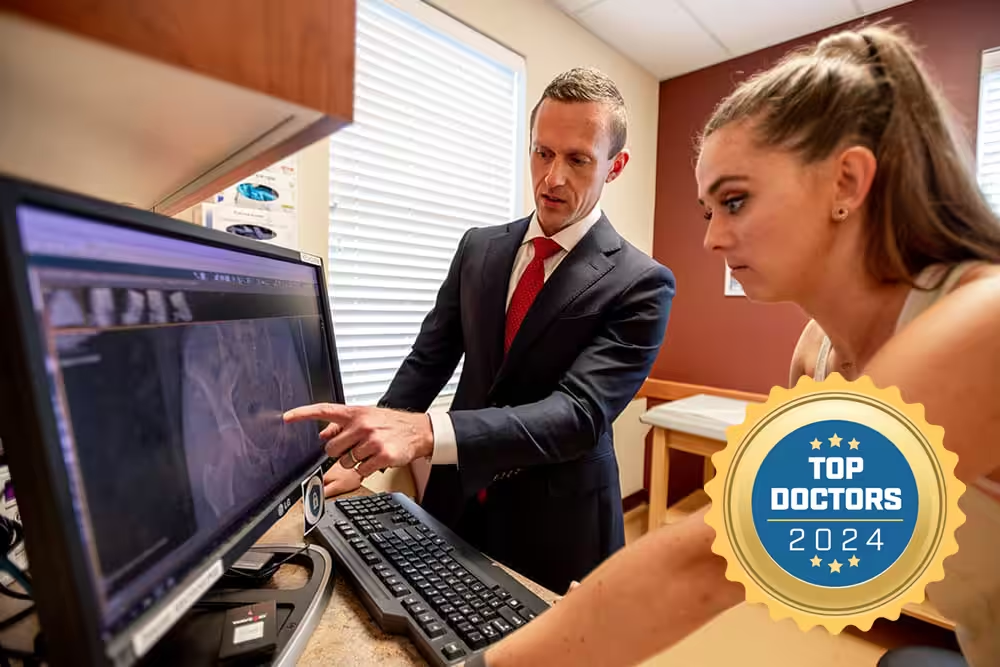
Another example is bicep curls, or arm curls. The concentric phase begins with the elbow extended and the dumbbell near your waist or hip, at the low point, and finishes with the elbow flexed or maximally bent and the dumbbell finishing near your shoulder. The eccentric phase involves the bicep muscle firing as it lengthens and controls the weight as it is lowered from the shoulder back down to the waist level.
These eccentric exercises, or negatives, are best performed with a slow, gradual arc of motion over at least a three-count (one one-thousand, two one-thousand, three one-thousand), or as slow as a ten-count. Generally the amount of weight, or resistance, is lower than you would perform with a traditional concentric contraction. For instance, if you normally perform bicep curls with 30lb dumbbells, 25lb may suffice for negatives.
Not only will eccentric exercises help develop strength and muscle better than concentric exercise alone, but research evidence suggests they are the best defense against tendon rupture, tendonitis, and other injuries. While your entire weight-lifting regimen could comprise eccentric exercises, another reasonable compromise is to combine a blended approach: 2 or 3 sets of concentric exercises, 1 or 2 sets of eccentric exercises, depending on your goals.
Make 2022 your fittest year, and do it the right way with eccentric exercise, so 2022 isn’t the year of post-surgical rehab.
If an injury does occur, Beacon Orthopaedics is here to help. You can schedule an appointment with Dr. Ian Rice, sports medicine physician, by calling (513) 354-3700 or scheduling by clicking the link above or here.
Winter Sports Blog
December 28, 2021
As colder weather approaches, we start to transition into the Winter months which brings in our winter athletes! This time of year, is very busy in the orthopaedic office where Dr. Miller sees many of his athletes participating in various sports including: hockey, basketball, wrestling, and gymnastics. Here we talk about many of the common injuries these athletes may endure during their Winter sports season.
Ankle Sprains:
Rotational injuries to the ankle or what we call an inversion injury, where the heel moves inside the leg, are the most common in Orthopaedics. Rotational injuries are most susceptible to athletes landing awkwardly and jumping in sports such as basketball and gymnastics. Also commonly seen in wrestling due to the number of awkward positions and manipulations of the extremities by the opponent. This injury is the third most common in wrestling following behind knee and shoulder injuries.
High ankle sprains:
In Ice hockey, due to the ankle being in a hard skate, the ankle is not able to roll (or invert) as much. We see rotational injuries where both the skate and the foot rotate externally, leaving the leg behind resulting in a high ankle sprain. A high ankle sprain is the injury to the ligament that goes up the leg connecting the big bone the tibia and the small bone the fibula. High ankle sprains can occur in any type of athletic activity but are seen most often in ice hockey. If seen in basketball, we recommend wearing high tops to increase the susceptibility to rolling the ankle.

Symptoms and treatment:
If an athlete believes to have rotated their ankle, lookout for signs such as swelling. If the swelling is coming on gradually and mild, the injury is likely an ankle sprain. With a more severe ankle sprain you may see significant bruising over the region of the injury. If the level of pain is severe, the athlete may get an evaluation with Dr. Miller to perform x-rays and determine the best healing process. To learn more about an ankle sprain refer to a past blog “Is it a Broken Ankle or a Sprain?”
Over-use:
An over-use injury is seen most in gymnastics with younger females who may not be fully skeletally mature or haven’t completely aged. Generally, females stop growing around 14 years old and males around 16 years old. Many teens will get pain along the growth plate in the calcaneus (heel) and it often comes on with impact, over-use, and repetitive activities. This may lead to growth pain/injuries known as Severs disease. The athlete may feel pain in the back of the heel, but after several hours of resting it begins to feel better. This is a repetitive injury as the athlete remains active. The only cure to this is aging however, along the way we recommend a lot of flexibility in the calf. This allows the Achilles tendon to pull less on the growth plate. Another option is offering a silicon cushion, heel cup as an additional protective layer. One recommended proactive measure would be giving the athlete an anti-inflammatory such as Motrin before their game or meet.

Sometimes pain does not go away with overuse and repetitive activities result in stress fractures. This type of pain may take weeks to improve with the right amount of protection. Appropriate immobilization includes boot therapy or brace.
Sesamoid injury:
Another repetitive injury is sesamoid pain which is common in wrestling and gymnastics with the athlete being barefoot. This causes lots of focused pressure on the ball of the foot under the big toe. This affects two little bones that are underneath the big toe, causing lots of swelling and pain in the area. To accommodate the injury, we try and offload this in a shoe. Also encouraging calf stretching to gain mobility while going up and not so much when the athlete lands and is coming down. More severe pain is amenable to temporary boot.

Accessory navicular bones
Has your athlete noticed a bump on the side of their foot getting irritated? Very common in ice hockey due to hockey skates being so unforgiving, the bump or accessory bone on the inside of the foot may be experiencing lots of pain due to exhaustion. Pain along the inside of the foot is often an issue with overuse in ice hockey due to the skate. Usually this can be accommodated by a custom skate fit if the athlete is consistently playing. If pain does not resolve, removal may be necessary for pain relief.

Trauma to the foot:
One very common injury Dr Miller sees is a Lisfranc injury. This is caused by an awkward landing when coming down, disrupting the axile impact. When athletes land, many times seen in basketball and most commonly gymnastics due to lack of shoe protection, the awkward landing causes the middle of the foot to twist inadvertently, potentially tearing the ligaments in your foot.

Symptoms:
What to look out for in potential injury is swelling, pain along the top of the foot, bruising seen on the bottom of the foot, and difficulty walking. A Lisfranc injury can be mild or more severe. Sometimes we refer to them as a mid-foot sprain and we declare as being stable which would require a boot therapy for treatment and improvement. Some we consider unstable after evaluation would need surgery. It is important to get a Lisfranc Injury looked at to prevent future collapse and arthritis. Tough to know without an evaluation! To learn more about a Lisfranc injury check out the Fall Sports Injuries blog. 
If you’re an athlete seeking for care do not wait, we are here to help! Dr. Miller is Beacon Orthopedics foot and ankle specialist and is available at several locations around the Cincinnati area. Contact us today for more information! Click here to learn more and schedule an appointment with Dr. Miller for your foot and ankle injuries.
Step Into Winter… Without Slips and Falls
December 28, 2021
This year, let’s step into winter while sidestepping its pitfalls. Literally. Your specialists at Beacon are here to help you prevent dangerous slips and falls — the most common causes of accidents that happen this season. And they aren’t as funny as slapstick comedy would have you believe, especially when it happens to you.
3 Things You Can Do Now to Prevent Falls
Avoiding accidents this winter is possible. While some incidents are unavoidable, take the proper precautions to prevent issues wherever you can. There are three things you can do now to help keep you on your feet this season.
- Wear shoes with winter-worthy traction and grip
- Take your time and move with smaller steps
- Avoid carrying big and hefty items while walking on slippery surfaces
These are just a few things you can do. Closely evaluate your surroundings and monitor the weather so you can be prepared for your unique needs. Salt sidewalks, paths and driveways when temperatures drop. Have the shovel ready when snow is in the forecast. Or better yet, just stay home by the fire and avoid going outside altogether.
If You Start to Fall…
Try to tuck and roll. Relax your muscles and tuck your chin to avoid hitting your head on the ground. This position allows the force of the fall to be more evenly distributed throughout your body, which reduces the possibility of serious injury.
Most Common Winter Injuries & How to Treat Them
Despite your best efforts, a slip and fall can still happen. Ice is the biggest cause of falls, which can result in the following injuries:
- Broken bones
- Concussions
- Sprains and strains
Treating Slip & Fall Injuries
If your injury is minor, it’ll resolve itself with a cold compress and rest. If the pain is serious and doesn’t go away, contact your Beacon Orthopaedics specialist. Depending on the type of injury, anything from physical therapy to non-invasive treatment to surgery may be recommended. Getting treated sooner rather than later is ideal for the best chance for recovery.
We’re Here for You
Injuries happen. Whether it’s slipping on ice in the driveway or getting a little too bold on the ice-skating rink while showing off in front of the kids, the specialists at Beacon are here to help you when accidents strike. Same-day appointments are available when the unexpected happens. Schedule an appointment online anytime.
Hall of Fame Health Designates Beacon Orthopaedics as 1 of 25 ‘Elite Care Centers’ in the Country
December 22, 2021
FIRST FOCUS AREA – JOINT REPLACEMENT – PRODUCES INITIAL LIST OF 25 TOP CARE GIVERS ACROSS U.S.
CANTON, OHIO – Hall of Fame Health, an entity the Pro Football Hall of Fame formed in early 2020 to assist former NFL players address health-related issues, today announces the launch of a new designation it is placing on select health care providers, giving them the distinction of becoming a Hall of Fame Elite Care CenterTM.
Plans include certifying these centers within specific areas of focus – such as joint replacement, cardiovascular care, neurosciences, women’s health, and behavioral health – and follows significant research and due diligence into these providers in their outcomes data, patient experience and clinical leadership.
 “The brand of the Pro Football Hall of Fame stands for the very best to have played the game, so as we assist our football community determine where they can get the very best care, we do significant homework,” said Jeremy Hogue, CEO of Hall of Fame Health. “And in addition to being elite in-patient care, these providers also have been so generous in working with us to vet their credentials and allowing us to take them through our criteria, we think the least we can do is designate them as Hall of Fame Health Elite Care CentersTM.”
The designation will allow providers to use trademarked badging that Hall of Fame Health has developed and also will include an online campaign and other promotional efforts.
“We have so many people ask us which doctors, hospitals and facilities we work with, as they often want to access the same care as our former NFL players,” said Hogue. “These are the best caregivers in the country, so we should celebrate them and make them easy to find for the general public who can trust that we’ve done the diligence.”
The first service line to roll out with this designation is in the area of orthopedic joint replacements, a natural fit for former football players. The initial group of Hall of Fame Elite Care Centers announced today includes 25 locations and represents more than 100 physicians and includes such names as the Carrell Clinic in Dallas, NorthShore Orthopedic & Spine Institute in Chicago, Flagler Health+ in Florida and North Valley Surgery Center in Scottsdale. An emphasis has been made on sites that emphasize outpatient care when appropriate.
Earlier this year, Hall of Fame Health announced a relationship with Smith+Nephew to become the Pro Football Hall of Fame’s Official Joint Replacement Technology. Smith+Nephew provided resources and third-party studies that have helped Hall of Fame Health in its selection of centers, but whether certain doctors or facilities are customers of Smith+Nephew had no bearing in the decision. In fact, Hogue makes it clear this is not a marketing relationship, and facilities cannot buy their way onto this list.
As a resource to former players and their families, Hall of Fame Health has created a website to assist those trying to navigate to these Elite Care Centers. The site can be found at www.rediscoveryourgame.com and can be accessed by the general public as well.
Hogue said Hall of Fame Health would continue adding locations within the joint replacement category. He said the total could reach 50 or more locations around the country, as there are many doctors and cities that they have simply yet to reach. And while that work continues, Hall of Fame Health is setting its sights on other focus areas and specialties it intends to roll out in the near future.
The initial list of joint replacement providers to receive this distinction is below:
· Advanced Orthopaedics & Sports Medicine – Houston, TX
· Advanced Surgery Center of North Country – San Diego, CA
· Andrews Institute – Gulf Breeze, FL
· Azalea Orthopedics – Tyler, TX
· Aultman Health – Canton, OH
· Beacon Orthopaedics – Cincinnati, OH
· Carrell Clinic – Dallas, TX
· Emory Orthopaedic & Spine Center – Atlanta, GA
· Flagler Health+ – St. Augustine, FL
· Fondren Orthopedic Group – Houston, TX
· Midwest Orthopedics at Rush – Chicago, IL
· North Central Surgical Hospital – Dallas, TX
· North Valley Surgery Center – Scottsdale, AZ
· Northshore Medical Group – Glenview, IL
· Proliance Surgeons – Seattle, WA
· Rothman Orthopaedic Institute – Philadelphia, PA
· Tampa General Hospital, Orthopedics Institute – Tampa, FL
· Texas Orthopaedic Associates – Dallas, TX
· Texas Orthopedic Hospital – Houston, TX
· Texas Orthopedics Surgery Center – Austin, TX
· Texas Orthopedics Sports & Rehabilitation Associates – Austin, TX
· Texas Spine & Joint Hospital – Tyler, TX
· Twin Cities Orthopedics – Minneapolis, MN
· University of California San Francisco Orthopaedic Institute – San Francisco, CA
· Vanderbilt University Medical Center – Nashville, TN
###
ABOUT THE PRO FOOTBALL HALL OF FAME
Located in Canton, Ohio, the birthplace of the National Football League, the Pro Football Hall of Fame is a 501(c)(3) not-for-profit institution with the Mission to Honor the Heroes of the Game, Preserve its History, Promote its Values, & Celebrate Excellence Together.
The Pro Football Hall of Fame is accredited by the American Alliance of Museums. AAM accreditation is national recognition for the museum’s commitment to excellence and the highest professional standards of museum operation and public service.
Hundreds of thousands of fans from across the globe travel to Canton annually to experience an inspirational, interactive museum that chronicles America’s most popular sport. Fans can also enjoy the Hall of Fame Store at the Hall, and online at www.profootballhof.com/store, for merchandise from all 32 NFL clubs plus the Hall of Fame. Proceeds from the Store support the Hall’s Mission. Gridiron Glory Myrtle Beach opened in South Carolina this summer, giving fans another opportunity to experience “The Best of the Pro Football Hall of Fame.” For more information, go to HOFMyrtleBeach.com.
Construction on Hall of Fame Village Powered by Johnson Controls, a mixed-use development project, is under way in Canton to transform the Hall of Fame’s campus.
ABOUT HALL OF FAME HEALTH
Hall of Fame Health is an affiliate of the Pro Football Hall of Fame. Its mission is to provide former professional football players and their families with concierge-level access to world-class resources for all aspects of the health care system, from obtaining health insurance and other benefits, to navigating to the best doctors and health systems, and including resources in behavioral health across the various levels of care, including a crisis help line. While serving its football community, it also aims to impact communities across the country. More information can be found www.hofhealth.com.
Tips to Deal with Cold Weather & Joint Pain
December 15, 2021
9 Tips to Deal with Cold Weather & the Joint Pain That Comes with It (Plus a Bonus Tip You Didn’t See Coming!)
Season changes are rarely kind to joint pain sufferers. That’s most especially true during the cold and blustery days of winter. When stiffness sets in and the familiar aching pain returns, your team at Beacon is here to help. While we always advise seeing us first to see if there’s something we can do to alleviate or eliminate your pain, there are things you can do at home to help minimize your suffering.
1. If You Settle In, The Pain Could Begin
For a variety of reasons, we, as humans, are inclined to be more sedentary during the winter months. Staying active is key to warding off joint pain. Low impact activities can help keep your muscles loose, strong, and better able to protect and maintain mobility in your joints. Give indoor swimming, yoga, weight training or even just walking a try.
2. Layer, Bundle, Repeat
Dramatic shifts in temperature can really flare up your joint pain. That’s why we recommend layering and bundling when you venture out. Keep a stash of extra gloves and socks in convenient locations in case you find yourself in the middle of an unexpected temperature drop. In short, be prepared.
3. Water Does a Body Good
We say this so much that it feels cliché, but water really is the answer to staying healthy in all respects, especially for joint pain sufferers and even more especially during dry winter months. Don’t love water? You have options! From warm tea to broth and soup, you can work in more liquid that can also help keep you toasty. Just watch the sodium count on the latter two.
4. Stay Weather Aware
Barometric pressure changes can be linked to pain, according to the weather service, Intellicast. The service’s further explanation states that “low pressure is generally associated with cold, wet weather and an increase in pain; clear, dry conditions signal high pressure and a decrease in pain.” To help people who are sensitive to these changes, the Weather Channel offers an Aches and Pains Index Map to show how weather patterns in your area might affect pain levels.
5. Take Meds in Bed FTW
A warm bed is hard to leave. Add in joint pain and it might feel impossible. Consider keeping your medications on your nightstand, so you don’t have to get up to take them. Go a step further, and give your arthritis pills some time to kick in before moving out of bed to enjoy an even easier way to rise.
6. Flex Your Tech with a Programmable Thermostat
Sometimes it isn’t the cold that negatively affects joint pain and arthritis sufferers as much as dramatic temperature fluctuations do. To combat that, you can invest in a programmable thermostat. It monitors the current temperature and adjusts accordingly, which ensures a much more consistent environment.
7. Bring the Heat
Nothing soothes arthritis pain like heat. Consider strategically placing heating devices around your home and work space. Heated mat in the bathroom while you get ready for the day? Absolutely. Heated blanket by your favorite tv-watching spot? Yes, please. Heating pad in your work chair? Why not?
8. Massage Away the Pain
The cold can cause muscles to tighten, which leads to increased pressure and pain. Self-massage is a quick way to release the muscles surrounding aching joints. Learn simple techniques that you can do at home. Ask your doctor or a physical therapist who specializes in arthritis to show you how to target specific joints causing you pain.
9. When in Doubt, It’s Compression Gloves and Splints to the Rescue
Wear compression gloves to help you deal with the cold in two ways — the gloves help keep your hands warm while the compression provides pain relief to your joints.
Using a resting splint during arthritis flare-ups helps offer much-needed relief. These devices temporarily immobilize the joint, which allows time for it to rest. You can find splints designed to fit any joint in your body, including fingers and hips. Ask your Beacon specialist to point you in the right direction.
BONUS TIP: Sip a Mug of Golden Milk
Golden milk plays double duty by comforting you while its turmeric spice has been shown to reduce arthritis pain with its anti-inflammatory properties. While you can take it as a supplement, use it to make golden milk for a health-centric treat.
If you aren’t familiar with golden milk, it’s a traditional hot Indian drink made from milk, turmeric, ginger, cinnamon, pepper, and a dash of maple syrup.
Experience the Beacon Difference
We’re here for you, our joint pain sufferers. Whether it’s from an old injury, arthritis, or something else, our physicians have the expertise and experience to help bring you much-needed relief. Schedule an appointment today.
Beacon Orthopaedics & Sports Medicine Opens West Chester Locations
December 13, 2021
WEST CHESTER, OH– Beacon Orthopaedics & Sports Medicine – which is celebrating its 25th anniversary – is expanding its presence in West Chester with the Dec. 13 opening of a new Butler County location. The new location is at 9100 Centre Point Drive, Suite 150, in West Chester.
“This new, updated clinic space will allow us to continue to serve fast-growing West Chester and surrounding communities with the same quality care Beacon has been providing since our founding in 1996,” said Beacon President Peter Cha, MD. “In early 2022, our services at this location will be expanded to include imaging services, MRI and physical therapy to compliment the physician office.”
With the new office, Beacon patients will have access to enhanced services that include comprehensive orthopedic care, sports medicine, pain management, physical therapy, athletic training, imaging services, orthobiologics and access to surgeries at three dedicated surgery centers.
Seeing patients at the new West Chester office are the following Beacon physicians:
- Ronald G. Hess, DO, an osteopath, exercise physiologist and board-certified orthopaedic surgeon with an expertise in sports medicine and knee and shoulder treatments.
- Brian A. Rottinghaus, MD, a board-certified and fellowship-trained orthopaedic surgeon with over 10 years of medical experience.
- Aarti A. Singla, MD, specializes in providing comprehensive non-surgical care for spine-related issues, joint pain and a wide variety of pain syndromes.
- Scott True, MD, a board-certified orthopaedic surgeon specializing in total joint replacement, sports medicine, fracture care and knee arthroscopy.
“With 25 locations across the region, we are committed to providing convenient access for our patients. Our two locations in the West Chester-Liberty area provide high-quality orthopaedic care closer to our patients in this fast-growing suburb,” said Beacon orthopaedic surgeon Brian Rottinghaus, MD.
Beacon Orthopaedics & Sports Medicine, is Ohio’s largest orthopaedic practice. Since 1996, Beacon Orthopaedics has helped thousands of patients overcome injuries and improve their quality of life. Beacon Orthopaedics provides medical direction and coverage for over 30 local high schools and youth teams, five college athletics programs, and professional teams including the Cincinnati Reds.
# # #
About Beacon Orthopaedics & Sports Medicine
Established in 1996, Beacon Orthopaedics & Sports Medicine has helped thousands of patients overcome injuries and improve their quality of life. Beacon Orthopaedics provides medical direction and coverage for over 30 local high schools and youth teams, five college athletics programs, and professional teams including the Cincinnati Reds. With 25 locations across Southwest Ohio, Northern Kentucky, and Southeastern Indiana, Beacon offers instant access to comprehensive orthopedic care, including sports medicine, physical therapy, athletic training, imaging services, orthobiologics, as well as surgical procedures involving neck, spine, shoulder, elbow, hand, hip, knee, foot and ankle repair, reconstruction, and replacement. Beacon is the founding group of OrthoAlliance, a patient-centered, physician-led management services organization designed to help orthopaedic physicians grow and thrive in an evolving healthcare landscape. Since its founding OrthoAlliance has successfully grown into one of the leading platforms in the country.
This is the most important question to ask your surgeon, according to Dr. Ian Rice
December 10, 2021
By Dr. Ian Rice, Beacon Orthopaedics & Sports Medicine Orthopaedic Surgeon
Patients naturally have many questions when I counsel them on treatment options and especially when I recommend surgery. Among the most common include:
“Are there any other options I should try before surgery?”
“Where do you perform the surgery?”
“Do I go home the same day?”
“How much pain will have after surgery?”
“Is it a minimally invasive surgery?”
“How long will I be home from work/school?”
“How many of these surgeries have you performed?”
These are good questions about important aspects of surgery. Understanding the logistics of the day of surgery helps alleviate stress and uncertainty prior to the big day. Understanding the recovery afterwards, from medications and wound care to limitations and total recovery, help mentally prepare the patient and ensure the proper social support, including family and friends, are well-positioned for success. But they wouldn’t make my short list for the most important question. Below are what I believe to be the two most important questions:
Runner-up: “What risks of surgery should I be aware of?”
The benefits of surgery often consume much of the time, and both the patient and surgeon want to be positive and optimistic with an emphasis on what can be gained or improved with surgery. There is a natural tendency to focus on the best-case scenario. Even with best-in-class quality flawless technique, complications can and do happen in a very small percentage of cases. While it can be uneasy to discuss for both the surgeon and the patient, it is important to be aware of some of the possible complications. With the safety and quality protocols in place, the meticulous work of the surgeon, and the professionalism of the entire care team from top to bottom at Beacon Orthopaedics, ultimately those very small chance complications should prove to be irrelevant.
Most-Important Question: “If I was a family member or loved one, what would you recommend?”
This question cuts to the heart of decision-making, and it serves as the guiding compass in serving my patients. If this patient sitting before me is my mother, brother, uncle, wife, or child, what would I do? What would I recommend?
When I envision that I am treating my own family member, it helps me be more conscious of cost, the investment of time and energy required out of the recovery, and the incremental benefit of surgery compared to the next best alternative. It also helps me recognize when a patient would benefit from a nudge to overcome their reluctance and pursue surgery, such as when sleep quality is consistently compromised, or when a patient can no longer participate in the sports and active hobbies that make life fun. When the stakes are getting one’s life back, even a major investment of a months-long rehabilitation are worth it.
When I envision I am treating my own family member, I sleep well knowing I am recommending the right treatment for the right reasons, to the extent that technology and current evidence-based medicine will allow.
The next time you or your loved one are considering surgery, ask your surgeon: ““If I was a family member or loved one, what would you recommend?”
Schedule an appointment with Dr. Ian Rice today. Dr. Rice is accepting new patients with no referrals necessary. You can schedule online or call our call center 24/7 at (513) 354-3700 to speak with a live representative.
Imaging in Orthopedics: What’s the right image for you?
November 30, 2021
When you go to an Orthopaedic doctor for foot and ankle care it is very likely you will be getting some sort of imaging done. When evaluating a patient, aside from the patient’s history and exam, an Orthopedic surgeon uses imaging to guide treatment. In most cases, doctors can tell a lot from basic plain films or radiographs (X-Rays). These tests help the doctor in their guidance with the next step for the patient.
The vast majority of patients can be treated without advanced imaging and use radiographs to treat them appropriately and successfully. Specifically in lower extremity orthopedics, it is important to get weight bearing X-Rays. These will help show the alignment of the leg, ankle, and foot, while guiding the doctor towards the process of how to treat the patient and what they may need to correct. In some cases, advanced imaging may be recommended to help determine the nature of the problem. These include: magnetic resonance imaging (MRI), computed tomography (CT), ultrasound and bone scans. Below are many of the imaging techniques used by foot and ankle specialist, Dr Adam Miller, to help determine the next step in his patient’s journey. Here is what you can expect.
X-Ray: The most common imaging technique. X-ray uses small amounts of radiation to detect the mineral in bone. This image is captured for the orthopaedist to view. They help detect fractures and more specifically the type of fracture. Fractures can have different characteristics based on the timing. This helps Dr. Miller determine if the fracture is healing and how old the fracture is. With these findings there are certain hallmarks to look for in determining what the fracture looks like. In some more rare diagnoses such as oncology or cancer, there are specific characteristics we look out for to make sure there is nothing abnormal going on that would be of concern. X-Rays are sometimes helpful to determine metal foreign bodies.

In orthopaedic foot and ankle care, X-Rays help evaluate the alignment of the patient’s bones. One can also determine the amount of chronic changes such as arthritis. These X-Rays are then used to set a plan with the patient. Follow up X-Rays subsequent visits are used to check on a surgery outcome or to check on healing of an injury. The time continuum of the X-Rays at each visit helps us know how the healing is going.
MRI: The second most common study is an MRI or Magnetic Resonance Imaging. No radiation is required. Instead, this uses magnetic fields to create detailed images on a focal part of the body. MRI’s give very detailed imaging of essentially everything: bone, soft tissue and can determine the difference between tendons, ligaments, bone, fluids, and solids. These are very helpful with subtle injuries but also soft tissue injuries that the X-Rays can’t pick up. For example, if you were to have the following: sprained ankle, cartilage injury, subtle bone injury such as a stress injury, or different changes of arthritis. All these injuries can be picked up on an MRI much more accurately. For example: an X-Ray may not be able to show a stress fracture for 2 weeks before any subtle changes occur. But on an MRI within a few days, it is over 95% accurate for a stress injury. These are often obtained to make a diagnosis or plan for a surgery.

CT: A CT Scan (Computed Tomography Scan) is a 3-D scan of bone and soft tissue which uses radiation instead of magnetic imaging. Orthopaedists use CT’s when they’re trying to see very fine bone detail. Certain bone specific diagnoses require a CT to see more bone detail than what an MRI can give you. A CT is also best used in cases where a patient already has metal in their body that limits the field of view on an MRI. Sometimes we use CT to determine healing and if a certain bone healed completely.

Ultrasound: An Ultrasound is a dynamic study. Unlike other imaging studies, the imaging is obtained in real time allowing the ultrasonographer to have the patient move and react to what they see. This allows us to check if anatomy is moving correctly and how structures look in different orientations. Usually ultrasound is performed when the patient is active in the office, and is used to look at anatomy while the patient is moving. It also allows us to look at different areas on the patient at one time. This can help to really see the movement of the anatomy such as a tendon or bones coming together. It is helpful to perform injections in certain joints that are difficult to identify skin deep. We use these for different steroid injections and other types of injections.

Bone scans are a group of studies using an injection in the body through a vein. This fluid spreads throughout the body and pools in active areas of the bone. How the fluid acts gives clues to various diagnoses. There are several uses in orthopaedics such as periostitis, stress fractures, inflammation, infection, and cancer.

If you think you may need imaging done do not wait, we are here to help! Dr. Miller is Beacon Orthopedics foot and ankle specialist and is available at several locations around the Cincinnati area. Contact us today for more information! Click here to learn more and schedule an appointment with Dr. Miller for your foot and ankle injuries.
Meet Your Physician: Dr. Jim Muccio
November 4, 2021
Completing the mission
Not everything takes a rocket scientist, but when it does, James Muccio, MD is your guy. Whether you need an aerospace engineer, a NASA flight instructor, or an orthopedic surgeon, Dr. Muccio has done it.
Space was a passion for Dr. Muccio for as long as he can remember. That passion was only matched by his interest in medicine. So much so that while attending college at Notre Dame for his undergraduate studies, he mentioned wanting to go into medicine to the Chairman of the Premed Program. He was colorfully, and not so gently, told to stick with aerospace engineering. Like the shuttles he would someday come in close contact with, he heeded the priest’s advice and stayed the course.
“Space Was My Goal”
 Many kids talk about being astronauts. Few actually become an aerospace engineer, but Dr. Muccio did.
“Medicine was always in the back of my mind, but I grew up in the space era. I got to experience the Apollo Program. The landing on the moon. It was quite an inspiring time,” Dr. Muccio reflected. “Space was my goal.”
Following graduation from Notre Dame in 1983, the Niles, Ohio-native went to work as a National Aeronautics and Space Administration (NASA) flight instructor at the Johnson Space Center in Houston. The young aerospace engineer helped train one of the first shuttle crews on guidance, navigation, flight controls and propulsion systems.
Everything was on track for Dr. Muccio at NASA. Until it wasn’t. The fateful day that changed everything was January 28, 1986. He and his colleagues joined the nation to watch the Challenger take off — their eyes were glued to a television as they eagerly awaited the 8-minute launch. Excitement quickly turned to horror as the space shuttle exploded, killing all crew members on board.
“I was there on the frontline. As soon as the Challenger blew up, the whole room went silent. And it stayed silent for about 15 minutes. Finally, one of the commanders said ‘that’s it.’ And everyone quietly walked out of the room,” remembered Dr. Muccio. “It was a very emotional time and very personal. I had worked closely with the Commander & Pilot, Dick Scobee and Mike Smith. The whole organization went through a grieving process. I’ll never forget it.”

With the shuttle program grounded, Dr. Muccio took the opportunity to go to work on the space station program. NASA was interested in focusing more on what space does to the body, so with his new role, he also went to Georgetown University in Washington, D.C. to pursue a master’s degree in biophysics and physiology.
“That’s how I got the second bug. Some of the classes overlapped with medical school courses, and I did really well,” said Dr. Muccio. “I had thought about going into medicine years ago and now I was thinking about it again — it was time to make a change.”
Dr. Muccio’s New Mission: Medicine
Closing the chapter on his aerospace engineering career didn’t come easily for Dr. Muccio. He still loved everything about it, but he saw better opportunities for him in medicine. His journey led him to the University of Virginia School of Medicine. After graduating from there in 1995, he went on to a complete a residency in orthopedics at the University of North Carolina, Chapel Hill.
“When I got into orthopedics, it felt like home to me,” said Dr. Muccio. “While you don’t have to be an engineer to be a good orthopedist, it does help in understanding the biomechanics of the body.”
During his time with NASA, Dr. Muccio was in operations, which required a very system-oriented approach to how the vehicles work. If something within those systems failed, it was his responsibility to determine how to fix it.
“There’s a clear correlation between the kind of thinking and approach required in my role with NASA that was directly transferrable to medicine. The body is just a series of different systems: cardiovascular, musculoskeletal, nervous, GI, endocrine, etc. They all work in harmony to keep the human body functioning properly,” divulged Dr. Muccio. “As physicians, that’s what we do. We try to understand what goes wrong and how to fix it.”
For the engineer-turned-doctor, orthopedics was a more tangible discipline with a clear path yielding definitive results. “When we see someone with knee pain from arthritis, we can replace the knee, and that person will get better. Usually, a lot better. Not that there aren’t potential complications and risks, but they truly heal. In orthopedics, our patients get to see significant progress quickly. We’re not necessarily saving lives, we’re enhancing them. We get to improve our patients’ quality of life.”
The Final Frontier for Dr. Muccio — Or Is It?
 Now, as an orthopedic surgeon, Dr. Muccio practices general orthopedics including fracture care, arthroscopic, reconstructive and joint replacement surgery. He has a special interest in shoulder and knee injuries, sports medicine, and osteoporosis prevention and treatment, which is a true reflection of his passion for the field. “The human body is an “engineering” marvel. The rest is history. That’s my story, and I’m sticking to it.”
Of course, that’s his story for now. Space X, Virgin Galactic and Blue Origin’s advances in civilian space travel may just have Dr. Muccio seeing stars again. “I would go tomorrow if someone just gave me a ticket.”
Learn more about Dr. Muccio or schedule an appointment with him today.
3 Common Hand Conditions (and How to Tell them Apart)
October 27, 2021
DID YOU KNOW? The origin of modern-day hand surgery is directly rooted in the casualties of WWII? Soldiers with severely wounded hands were in dire need of specialists. This unprecedented demand demonstrated the significance of specialty care and “was probably one of the most remarkable advances in surgery during World War II.” (AMA Arch Intern Med., 1958)
Hand surgery is an area specialty requiring training in three surgery disciplines: orthopedic, plastic, or general surgery. Such specialists were rare at the time and led to surgeons pioneering a new field of surgery by conclusively demonstrating that reconstruction of hands could be successfully undertaken.
Today, it’s easy to forget that routine procedures were at the forefront of the field in the not-so-distant past. Since the field has expanded to deal with a wide range of conditions and injuries from arthritis to trigger finger, tennis elbow, and newest to that list: texting thumb.
For those experiencing hand or wrist pain, the cause can be difficult to nail down because many of the symptoms of the various possible issues can mirror each other. That’s why it takes trained specialists to truly understand the cause. Three common conditions that can present very similarly are hand arthritis, trigger finger and carpal tunnel syndrome.
1) Carpal Tunnel Syndrome
By far the most common condition a hand surgeon treats, carpal tunnel syndrome is compression of the median nerve at the wrist. Sensations in the thumb, index and long finger are all impacted when that happens. This can cause pain, numbness, tingling, and weakness. Depending on its severity, treatment consists of wearing a brace up to and including surgery.
2) Hand Arthritis
One of the biggest and earliest symptoms of hand arthritis is pain at the base of the thumb when gripping or grasping an object. Thumbs and hinge joints in fingers feel it the most. The mainstay of treatment is often nonsurgical, and consists of bracing, anti-inflammatories, and injections. However, if these conservative measures fail to improve your pain, surgical reconstruction is always an option.
3) Trigger Finger
Do you have painful “clicking” or “popping” when you try to bend your finger? You might have a trigger finger. It happens when a tunnel in your finger gets thick and narrow, preventing the tendon from gliding smoothly through it. We often see it in people who have diabetes or rheumatoid arthritis, but it is very common and can affect many people in the general population.
Treatments for trigger finger also start with splinting. If that doesn’t work, an injection of corticosteroids might be recommended. It has a 70% success rate of cure, but less in patients who have suffered symptoms beyond six months. Long-term pain may lead to a treatment recommendation of surgery.
Additional Common Hand & Wrist Conditions
- Boxer’s Fracture
- Carpal Tunnel Syndrome
- Cubital Tunnel Syndrome
- De Quervain’s Tendonitis
- Distal Radius Fractures
- Extensor Tendon Lacerations
- Flexor Tendon Lacerations
- Fractures and Dislocations
- Ganglion Cysts
- Hand and Finger Arthritis
- Kinnock’s Disease
- Mallet Finger
- Nerve injuries and lacerations
- Scaphoid Fractures
- Strain or Sprains
- Tennis Elbow
- Texting Thumb
- Thumb Arthritis (CMC Arthritis)
- Trigger Finger
- Wrist Arthritis
Treatment can include everything from surgery to home therapy, hand therapy, or medical management.
Beacon Orthopaedics is Here for You
At Beacon Orthopaedics & Sports Medicine, we have expanded our hand & wrist team to include 10 fellowship-trained hand & wrist surgeons. We offer the most comprehensive treatment options, now including consultations, hand therapy. Beacon physicians’ first priority is to get you back to doing what you love as quickly as the healing process allows. There are no shortcuts when it comes to hand or wrist recovery. If you have pain and need to embark on your own recovery journey, schedule an appointment with our team of hand and wrist experts today.
Are your flat feet causing you pain?
October 26, 2021
Many people think they have flat feet, but how do you really know? Do you feel like you are having a lot of foot issues but you’re unsure of what to blame? Maybe the shape of your foot is part to blame for your pain. Here is how to tell if you have flat feet and learn about commonly related pain.
How to know you have flat feet:
Let’s first look at a few characteristics of a “planovalgus deformity” or flat foot for short. The initial evaluation for the leg should look at the alignment of the foot in a standing position. One of the most important factors in orthopaedic surgery is the alignment and mechanical access of your leg. This means that in neutral alignment the ankle and heel rest underneath the lower leg. If this alignment is off, that can be a reason why you have pain on one side of your foot. Imbalance in the leg adds excess stress to either side of the foot. This results in pain and structures working overtime to compensate.
Early on while evaluating a patient, Dr. Adam Miller wants to see the position and alignment of the leg. This allows him to narrow down the potential issues that the patient could be facing. There are specific characteristics to the shape of the foot that determine the foot alignment and position. One thing Dr. Miller looks for is if he can see the inside of their heel. If the inside of the heel is visible, this means that the foot is higher arched. If he is not able to see the inside of the heel, then their feet are either straight or displaying out to the outside which would be more of a traditional flat foot characteristic.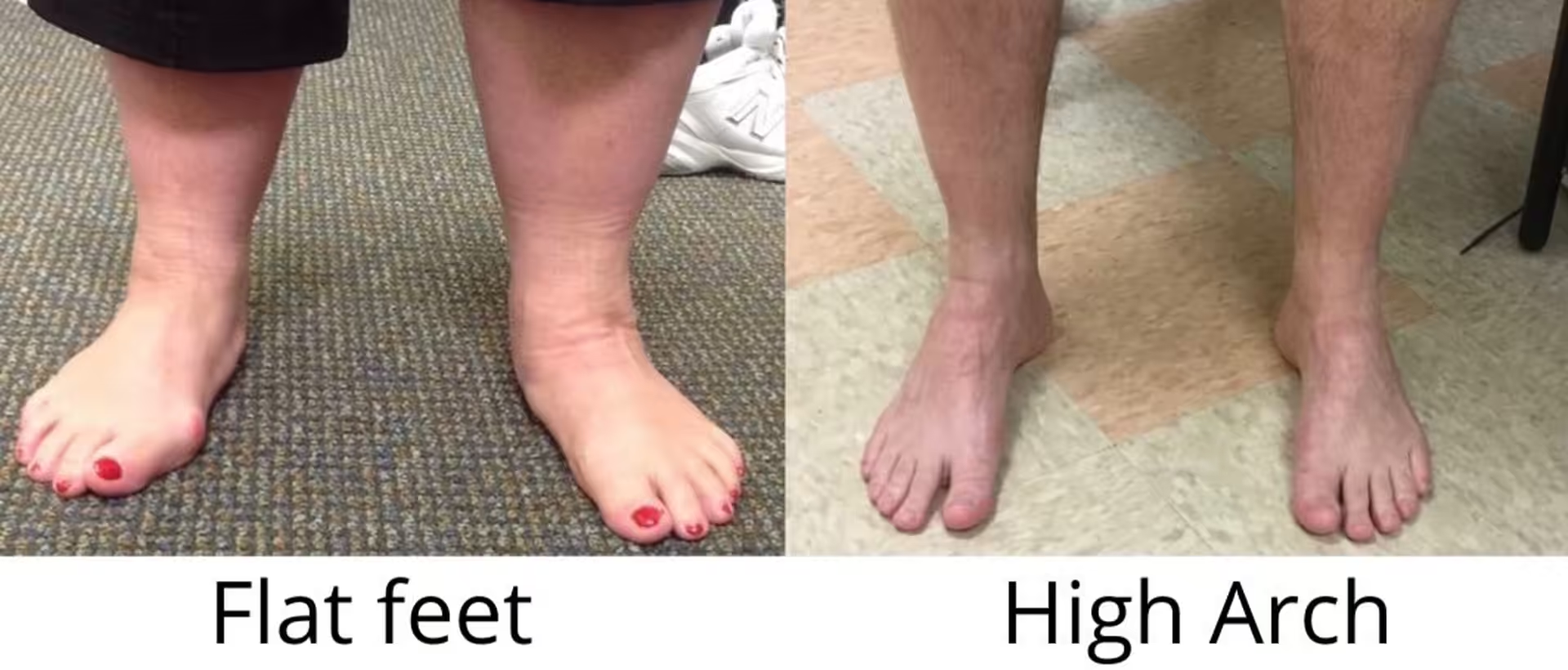
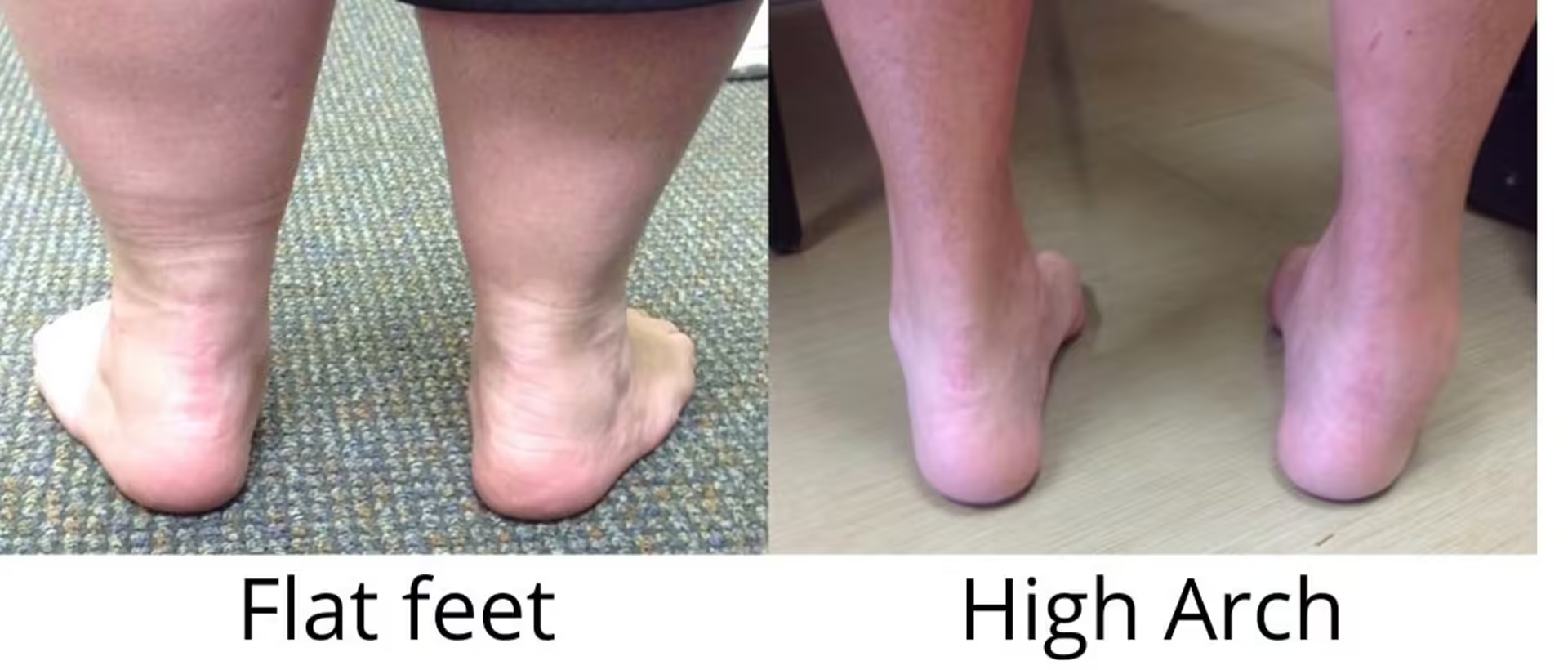
Next, he looks at them standing from the back side to assess how the heel lines up. This poses the question “Is the heel underneath their leg or is it to the outside?” If it is towards the inside, the patient is more of a high arched individual.
The last thing the doctor will look for is the “too many toes” sign. This means the patients foot rotates out externally or to the outside and a lot of the forefoot is showing even from behind. Here you can see this as well as the heel position in the flat foot.
All these assessments are general tests you can try right at home in front of your mirror! When you try it, stand parallel to the mirror, and let the feet relax at shoulder’s width apart. This will allow you to gauge the general characteristics of your foot. If you start to realize you are trending towards flat foot characteristics, this may be just the issue if you’re experiencing pain.
Common areas of pain with flat feet
There are a few beginning places to look when a patient is experiencing pain and they have some flatness or “valgus” alignment issues in their foot. This will trigger that the foot is the problem in relation to the alignment. The most common area of pain is on the inside of the ankle and foot. 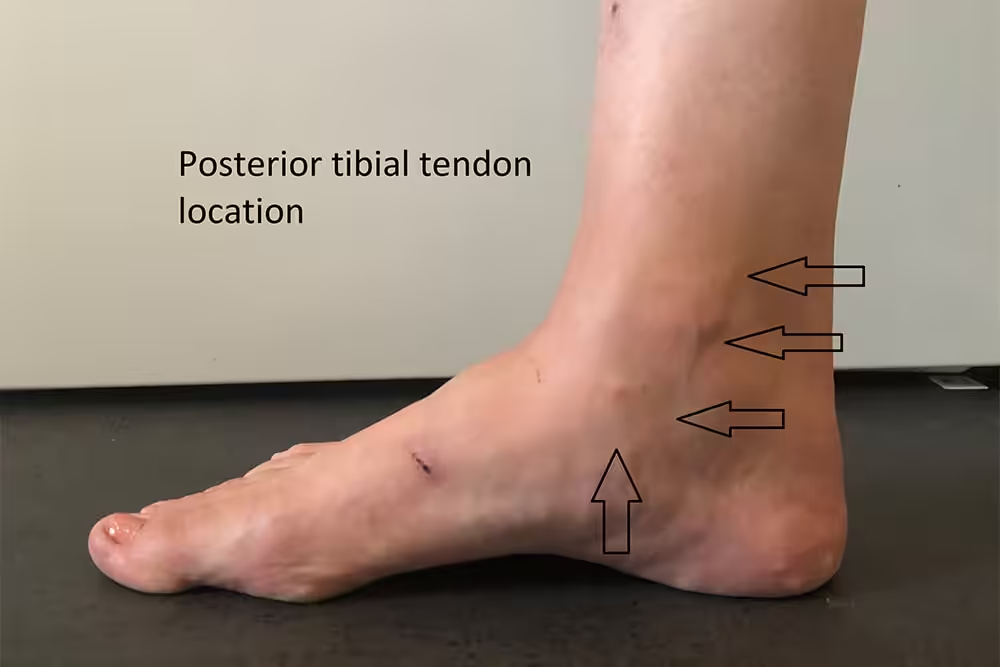
This pain can be isolated to the inside of your arch or be felt behind the ankle going up the lower leg. This is caused by the posterior tibial tendon on the side of your ankle that holds up the arch and controls the foot arch. This is a very large tendon (tendons are like ropes that attach muscles to bones to make your body move.) that essentially controls your arch. When the foot is flatter and sags to the inside, the posterior tibial tendon must “work harder” and is more susceptible to tearing, degenerating, and pain.
The second most common place of pain is on the outside of the foot, right underneath the ankle (fibula) bone which is what we call impingement.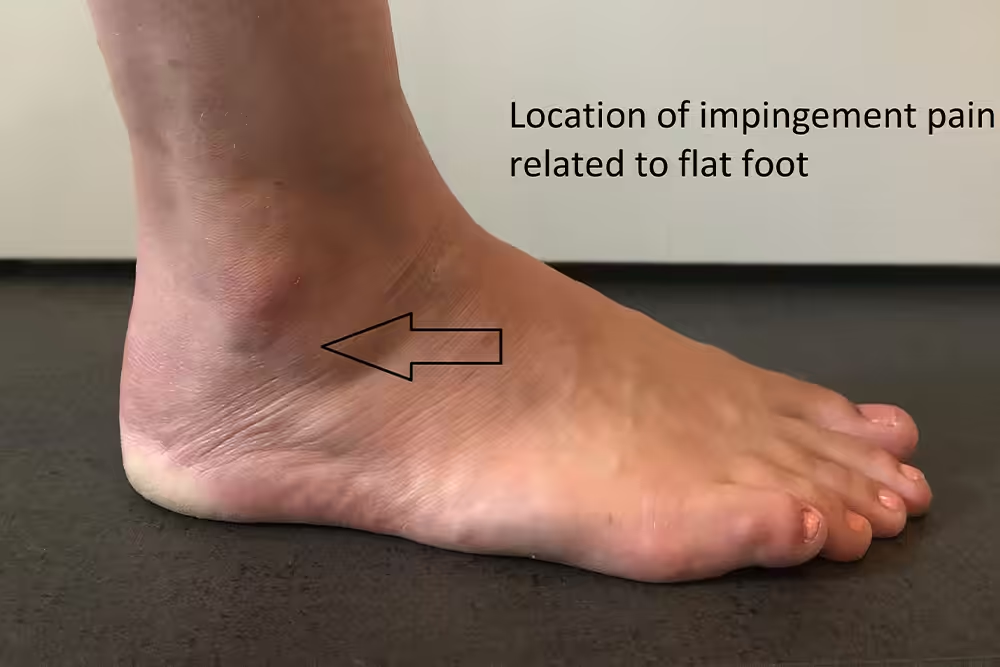
Patients who have more severe flat feet develop this pain. Their foot starts to swing out from underneath their leg such that the heel bone starts to hit one of two ankle bones incorrectly. Instead of your heel bone being underneath your leg, it starts to impinge and hit your ankle bone (fibula). This can become very painful over time.
Another thing often painful for someone who is flat foot is when they go to stand on one foot and raise their heel off the ground. This single heel rise can recreate pain on the inside of the ankle. This maneuver activates the posterior tibial tendon and is common in flat foot related pain.
Many younger patients may have pain and prominence on the inside of the arch on their foot. This may be caused by accessory bones in that area where the posterior tibial tendon inserts. This focal area on the inside of your foot can then again become very painful. 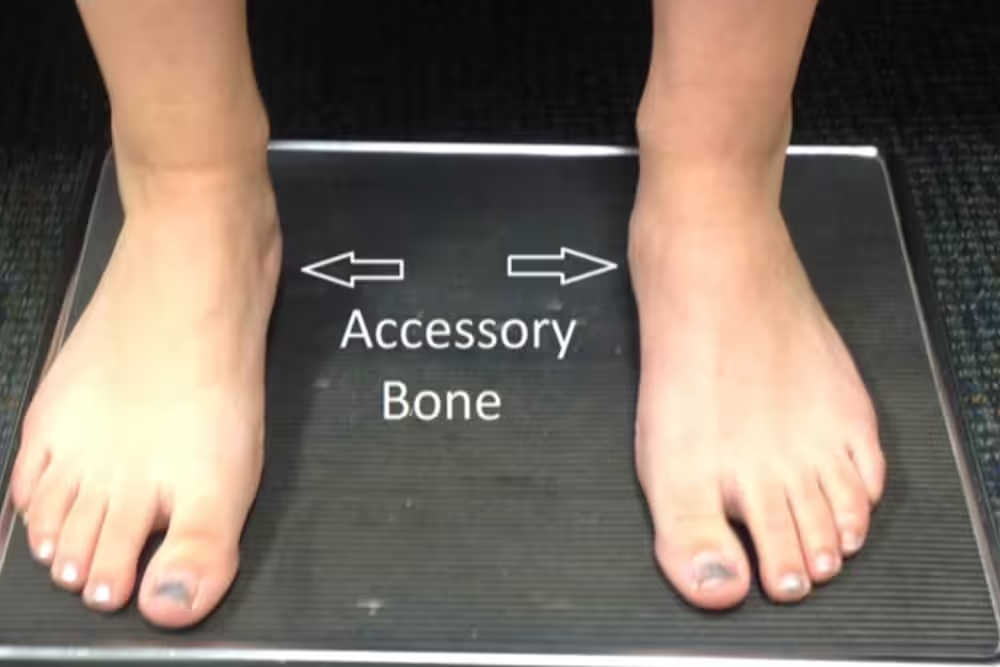
It is important to note that flat feet don’t always have to be painful. It is perfectly normal to have a flat foot. There is a bell curve of normal…. some people are high arched, some people are in the middle, and some people just have flat feet. We try to focus on the individuals experiencing pain. We can’t predict whether people are going to have pain with flat feet, nor can we do anything to prevent the foot from becoming flat. However, the shape may predispose someone to developing pain in certain areas. You can wear your choice of arch support, but this has never been proven to change the natural progression of your arch or alignment.
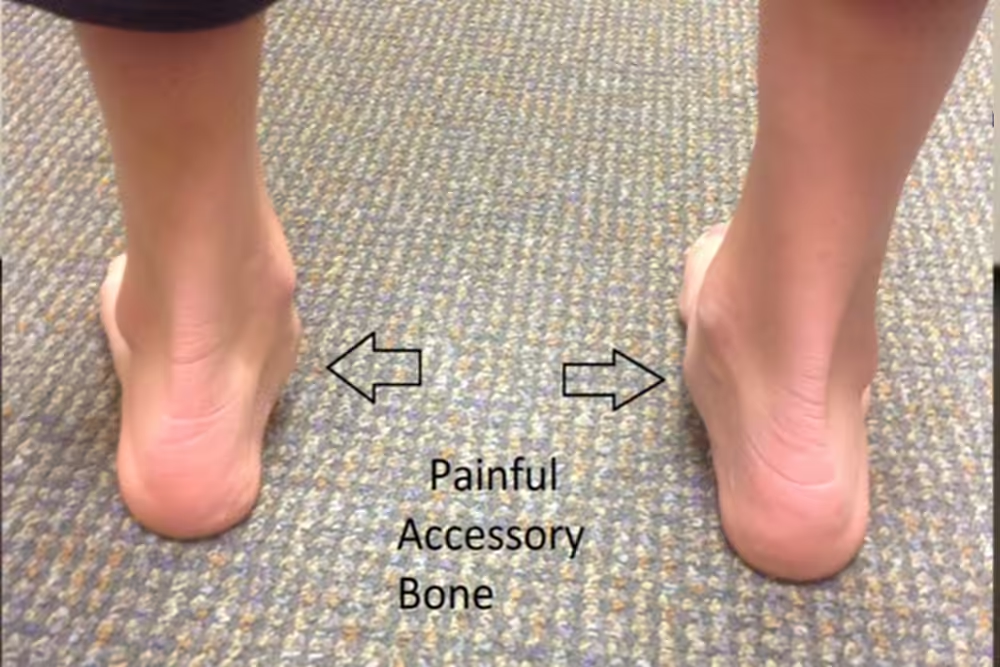
What can we do/ treatment:
Initially, when a patient first comes in with pain related to a planovalgus (flat foot), we always try to recreate the arch with a support device and make the foot as neutral as possible. Non-surgical treatment is always the best first option which is dependent on the severity of the patient’s pain and problem. If they are unable to walk, we usually will start with a boot. If the pain is mild or intermittent, then an insert in the shoe or a brace may be more appropriate. 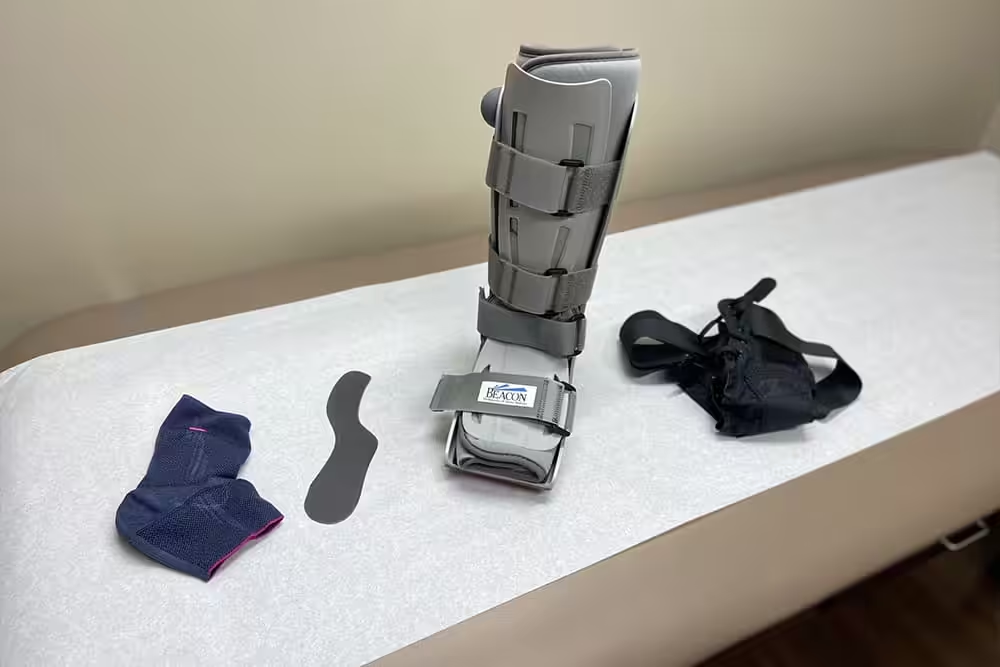

Depending on how the patient is tolerating the transition, we will try and wean them back to normal. Many times, improving flexibility and calf stretching is important, along with physical therapy. However, if these measures fail, we then start turning our attention to surgical intervention.
If you think you may have flat feet and are experiencing pain, we are here to help! Dr. Miller is Beacon Orthopedics foot and ankle specialist and is available at several locations around the Cincinnati area. Contact us today for more information! Click here to learn more and schedule an appointment with Dr. Miller for your foot and ankle injuries.
Landmark Care Close at Hand: Introducing Clifton Hand Surgery Center
October 18, 2021
In the 2016 Bureau of Labor Statistics report, hand & wrist injuries were second only to back injuries. At Beacon Orthopaedics & Sports Medicine, we understand the importance of getting quality care for your hand or wrist ailment. That’s why we’ve added seven new fellowship-trained hand & wrist physicians to our team to give us the largest group of hand & wrist specialists in the region.
Getting immediate care for injuries or pain in the hand or wrist gives you the best chance for the best possible outcome. That’s true for all conditions in orthopedics, but because of the frequency you use of those parts of the body, it’s all that more crucial. The more you use a hurt hand or wrist, the more the issue is exacerbated. That’s why we’re excited to announce that we’re taking our already high level of wrist and hand care even higher with the Clifton Hand Surgery Center.
The Clifton Hand Surgery Center, in partnership with TriHealth, is a state-of-the-art, outpatient surgical facility, equipped to perform sophisticated hand & wrist surgery procedures. Because it’s near the University of Cincinnati, patients get the benefit of having surgery in a safer outpatient setting, which has proven to reduce infection rates and reduce the time of the patient’s stay. We already offer hand surgeries at our Summit Woods Ambulatory Surgery Center in Sharonville and Beacon West Surgery Center in Western Hills.
Clifton Hand Surgery Center Features
- Highly skilled & fellowship-trained hand & wrist physicians who prioritize the highest quality care
- Technologically advanced equipment hand & wrist surgery equipment
- Highly skilled nurses to assist our doctors throughout the surgery process
At the Clifton Hand Surgery Center, we also have Clifton’s Hand Therapy department. From consultation to recovery, Beacon Orthopaedics, in partnership with TriHealth, will walk with you every step of the way on your road to recovery. The experts at Clifton’s Hand Therapy space have a comprehensive range of services for everyone — from pain control to wound care. Our certified, highly trained hand therapists work closely with you and your physician to coordinate care and design a comprehensive therapy program that best meets your needs.
Do You Have Hand or Wrist Pain?
When pain starts in your hand or wrist, the realization of just how much you use that part of your body is never more apparent. Your Beacon specialist will work with you to identify the cause and treatment for your unique situation.
Common Hand & Wrist Conditions
- Boxer’s Fracture
- Carpal Tunnel Syndrome
- Colles Fracture
- Cubital tunnel Syndrome
- De Quervain’s Tendonitis
- Flexor Tendon Lacerations
- Fractures and Dislocations
- Ganglion Cysts
- Tennis Elbow
- Hand and Finger Joint Replacement
- Kienbock’s Disease
- Mallet Finger
- Strain or Sprains
- Texting Thumb
- Thumb Arthritis (CMC Arthritis)
- Trigger Finger
- Wrist Arthritis (SLAC Wrist)
Treatment can include, but is not limited to, surgery, home therapy, physical therapy, or medical management.
Next Steps: Hand & Wrist Pain
Beacon’s physicians are here to get you back to what you love doing as quickly as the healing process allows. There are no shortcuts when it comes to hand or wrist recovery. If you have pain and need to embark on your own recovery journey, schedule an appointment with our team of hand and wrist experts today.
Beacon expands physician options in Batesville and Lawrenceburg (2021)
October 11, 2021
To read the full story from the Greensburg Daily News, click here.
Beacon Orthopaedics & Sports Medicine is celebrating its 25th anniversary by expanding its presence in the southeastern Indiana communities of Lawrenceburg and Batesville.
The expansion includes the addition of two physicians, one of whom has practiced in the community for nearly 30 years.
Nicholas S. Mirkopoulos, MD, provides total joint replacement and wider sports medical care to his patients. He is among 20 physicians joining Beacon from TriHealth through a pioneering partnership agreement that agreement includes Beacon and TriHealth combining ambulatory assets.
M. Scott True, MD, a board-certified orthopedic surgeon specializing in total joint replacement, sports medicine, fracture care and knee arthroscopy, is also now seeing patients in Batesville.
Dr. True’s areas of interest are total knee replacement, total hip replacement including anterior approach, sports-related injuries, fracture care in adults and children and arthroscopic knee treatment.
“Beacon has been bringing the best care to patients in the community of Batesville and the entire southeastern Indiana market for years,” said Beacon President Peter Cha, MD. “With the addition of Dr. Mirkopoulos and Dr. True, we can serve even more patients. Dr. Mirkopoulos already has a tremendous reputation and great respect in the community, and we look forward to his patients joining us at Beacon.”
Dr. Mirkopoulos has treated patients in Batesville for 26 years. He said he loves the tight-knit community and small town charm of the city and is excited that Beacon’s commitment to the area will increase and enhance orthopedic care in the region.
“I really enjoy the people of Batesville and southeast Indiana,” Dr. Mirkopoulos said. “When I go to the grocery store, I’ll run into two or three people that I’ve treated and cared for. I’m to the point where I’ve treated multiple generations of the same family. I’m very comfortable here. It feels like home.”
Dr. True will be in the Batesville office at least once a week. He is a native of Cincinnati’s west side and his parents once lived in Southeastern Indiana as residents of the Hidden Valley Lake in Dearborn County.
“I know and like the community very much,” Dr. True said. “Beacon provides excellent service because we can offer the full gamut of care. If a patient comes in and needs something I don’t do, they can rest assured that someone at Beacon does it. We have many sub-specialists that can treat hands, backs, feet and more. We cover all their needs under one roof. I am excited to be in Indiana providing the same care that I offer at the other Beacon offices where I see patients.”
Beacon’s Batesville location is at 1360 East State Route 46 and their Lawrenceburg location is at 605 Wilson Creek Rd, Lawrenceburg, IN 47025.
Meet Your Physician: Dr. Robert Rolf
October 11, 2021
To read the full story in The Eagle, click here.
Beacon Orthopedics & Sports Medicine’s Robert Rolf, M.D. grew up in Cincinnati. He graduated from La Salle High School and then attended the University of Notre Dame where he earned a BS in Chemical Engineering.
When he was young, he was deeply and positively influenced by his uncle – a true father figure to him — Dr. Robert Burger, an orthopedic surgeon at Beacon Orthopedics. Dr. Burger is also a Notre Dame alum and always thought his nephew should attend medical school – and pursue orthopedics too. The young Robert wasn’t so sure.
As the son of two teenagers, he was the first in his family to graduate high school and attend college and had always been personally driven to succeed. Pursuing the engineering degree seemed a good fit and it was a great way into his early career. For two years after graduation he worked in engineering sales, however, the personal lure of becoming a physician was still inside him.
He turned his sights to medical school, attending the University of Cincinnati College of Medicine. At first, he was open to all specialties, but the more he studied and experienced, he kept being drawn to orthopaedics so that became his focus. “It seemed that the orthopedists I met and learned from (including my uncle) were well rounded – they were hardworking, athletic, committed to academic pursuits and still family centric,” Dr. Rolf said. “It just seemed a good fit for me too.”
Upon graduation from UC, Dr. Rolf completed his orthopaedic surgery residency at Emory University in Atlanta, Georgia. He continued his training as a shoulder and elbow specialist at the Boston Shoulder Institute at Harvard University. He is board-certified in orthopaedic surgery and holds a specialty certificate in Sports Medicine. He is the first to tell you that his practice is much more than simply treating athletes. “Shoulder pain can be debilitating,” he said. “And sometimes that pain needs the attention of an orthopedic specialist.” He shared that his goal is to help people live as pain-free as possible.
He has extensive training and years of experience in advanced arthroscopic techniques for shoulder instability and rotator cuff tears. He has also performed numerous complex shoulder reconstructive procedures such as total shoulder replacement and reverse shoulder replacement. He has truly become an expert.
Dr. Rolf relayed that he is most proud when his patients tell him that he’s “given them their lives back” – lessening or even eliminating their pain. Using his education, training and experience to help patients is what inspires him and in turn, his experience, personal training and dedication is inspirational to his patients. For athletes and non-athletes alike, that is a winning combination.
Beyond his patient service, Dr. Rolf is committed to helping future practitioners. One example of that commitment is his past role as the Co-Director of the Beacon Orthopaedics and Sports Medicine sports medicine fellowship program. This unique and highly competitive fellowship offers training to surgeons throughout the country about sports medicine and shoulder surgery. He hopes this work will be a positive influence on future practitioners. He wants to share what he experienced with is uncle and many other committed adults who took an interest in him throughout his youth and professional education and training.
“I truly have been blessed,” Dr. Rolf said. “My parents were only teenagers when they had me. My mother raised 3 boys on her own and never expected anything other than maximal effort.” He is a testament to knowing that hard work and dedication matter. Not only has it influenced his own career, but he purposefully shares that with all students he works with. “No matter what tough cards you’ve been dealt in life,” he said. “You can work to overcome obstacles and reach your goals.”
When not at work, he is with his wife and family. His free time is consumed happily with the interests and lives of their four active children.
If you are experiencing shoulder pain, contact Dr. Rolf or one of the more than 60 physicians at Beacon. Beacon Orthopaedics treats patients of all ages for various injuries and ailments – including shoulder difficulty. If you or someone you love is experiencing pain (whether from a sports injury or just usual exertion), you can always schedule a diagnostic appointment at one of the 20+ locations Beacon Orthopaedics has to offer in Greater Cincinnati.
Schedule an appointment 24/7 online or by calling 513-354-3700. More than twenty Beacon Tri-state locations are accepting new patients.
Fall Sports Injuries: What to Watch For and When to Seek Care
September 28, 2021
The Bridge: From Total Joint Replacement Surgery to Recovery
September 21, 2021
There are three big chapters in the storybook of total joint replacement surgery. The first chapter varies in length depending on the person and when they come into get treatment. Most of the attention goes to the second chapter when the surgery occurs. The least amount of focus is given to the third chapter when rehabilitation and recovery happen.
Patients are understandably eager to close the book on their joint story. However, the ones who skip to the end might get a very undesired plot twist that results in them taking longer to heal, re-injuring themselves, or worst of all, a turn of events that lands them back on the operating table.
At Beacon, our specialists are committed to guiding patients through each chapter of their joint replacement story — with footnotes. From our first consultation, you’ll know that we’ve got you. Oftentimes, we can even take same-day appointments to get you started on your path to recovery. Your recommended care plan may start with minimally invasive treatment before jumping to total joint replacement surgery. The treatment approach varies to your unique situation.
Once it’s decided that joint replacement is the right course of action, your physician will lay out your specific recovery plan. It will not stop at surgery day, and it will include post-surgery care — specifically, physical therapy.
The Bridge from Recovery to Wellness
From knee to hip replacement, rehabbing your body after surgery is key to proper recovery and avoiding prolonging the healing process. Once you complete physical therapy, you might benefit from extended therapy.
That’s where our Bridge Program comes in. It’s designed to ease the transition from injury recovery to return to full function, decrease your risk of re-injury, and improve strength, range of motion and balance.
The Bridge Program is provided at Beacon Orthopaedics Summit Woods Physical Therapy department. It evaluates a patient’s functional movement patterns as well as their level of strength and endurance and uses this information to tailor an exercise plan that will increase their speed, agility, and endurance post-injury. Contact Josh True, ATC by email [email protected] or phone 513-389-3666 to learn more.
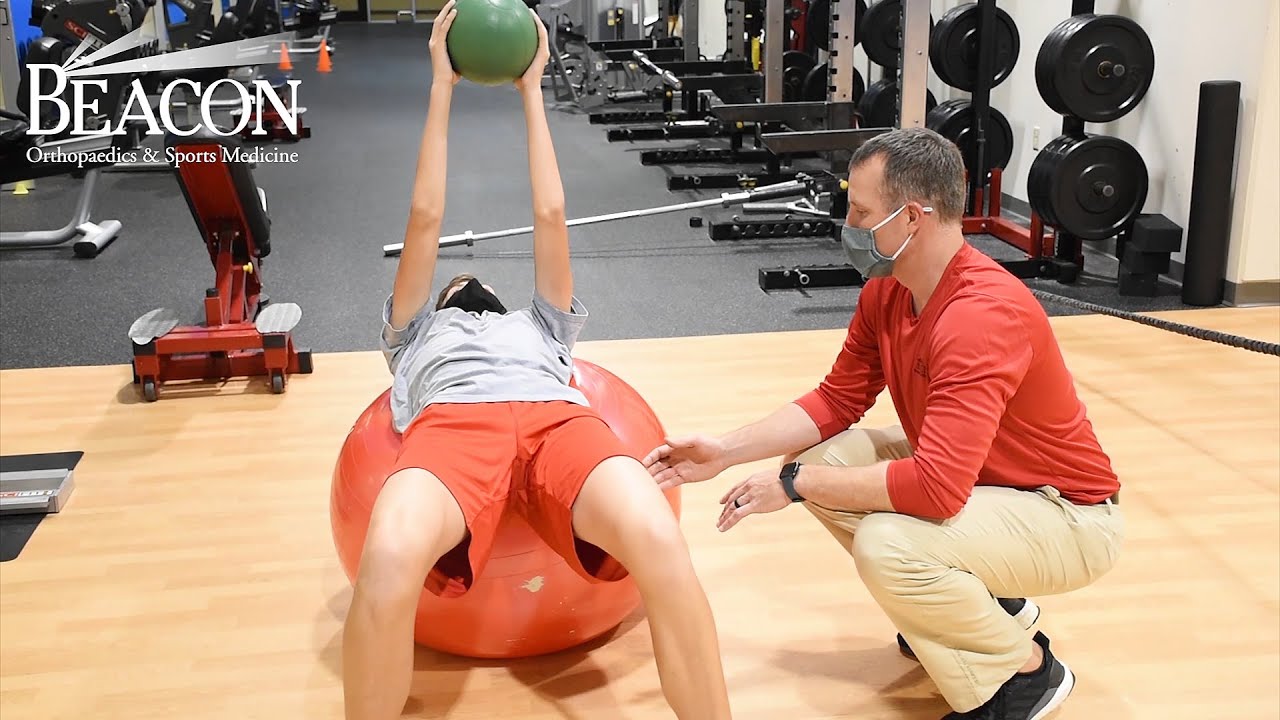
Next Steps: Total Joint Replacement
Beacon’s physicians are here to get you back to what you love doing as quickly as the healing process allows. There are no shortcuts when it comes to total joint replacement. If you have joint pain and need to embark on your own recovery journey, schedule an appointment with our team of knee and hip replacement experts today.
Further Reading
Dr. Chaudhary Explains a Total Knee Replacement
Dr. Chaudhary Explains a Total Hip Replacement
Total Hip Replacement: From Surgery to Recovery
Frequently Asked Questions about Total Hip Replacement
Knee Surgery: Choosing Between Total or Partial Knee Replacement
A Joint Replacement Years in the Making: Mick Bennett’s Story
September 20, 2021
“It was my fault I waited that long. You know, I should’ve got it done years ago. Had I known the surgery would go this well, I would’ve done it sooner.”
That’s a familiar sentiment of many our patients who are faced with joint pain. Mick Bennett, a Beacon joint replacement patient, is in good company with that statement. As a long-time sufferer of knee pain, Mick knew for years that he needed to see an orthopedic specialist. Even his son’s high school friend, who has since become an orthopedist, reminded him of it on the daily.
“Every time he saw me, he’d ask ‘when are we going to take care of that?’ And I’d tell him when I retire. So, when I retired, he said ‘ok, let’s get it done,’” recalls Mick.
Taking the First Step
That’s when his story came to a turning point. Making the first appointment, took him from being a longtime joint pain sufferer to getting back on the road to recovery and wellness.
“I had a bad right knee for years. However, I didn’t want to take time off of work to get it taken care of, which was stupid because I had a lot of buildup. And that was my fault. I just didn’t pursue it,” Mick reflects.
For him, the initial plan of attack was to try the minimally invasive route, which revealed two things. The first was that his knee pain could be significantly helped with an injection. Now, seven months out, he says it’s still at 95%. However, the second thing that he learned was that years of adjusting his gait to accommodate his knee pain had taken a toll on one of his hips. The shot did little to lessen that pain. The next step would be a hip replacement, and that’s when he was introduced to Beacon’s Dr. Matthew Johansen.
“The doctor I was seeing told me he refers people to Johansen, and that he’d never heard a complaint on him. I told him you’re the doctor, so that’s my man,” Mick remembers. “My surgery was at 9 a.m., and by 1 p.m., I was home moving around with a walker. My son was with me, and he told me I was already walking better than before the surgery.”
From there, Mick began his physical therapy and rehabilitating his hip. In all transparency, if we described his experience, you’d think we were making it up. We’ll just share it from there the best way we know how. In Mick’s words.
“Maybe I’m just the luckiest person in the world. I feel like I am.”
“My pain is gone now. I tell people that Dr. Johansen is the guy you’ve got to go to if you have a problem like mine. I’ll tell anybody about him. He was great. He was fabulous. I have all of the faith in the world in him. I couldn’t brag on him more,” shares Mick. “Maybe I’m just the luckiest person in the world. I feel like I am, but it just went that well. I’m so pleased with everybody. From the surgery to the therapy with Beacon, I can’t say enough about them. I really can’t.”
Paying it Forward
Mick’s surgery was in May 2021. Now, in September of the same year, he’s paying it forward, “I have a friend who had two knees and two hips replaced. He just had to have another knee replaced. He was using another doctor. I told him to go to Dr. Johansen. I just talked to his wife an hour ago, and she was telling me how well he’s doing after his surgery with Dr. Johansen.”
For anyone else, who’s facing hip replacement surgery, Mick has only this advice, “Have no fears whatsoever. You’re in the best hands in the world with Dr. Johansen, his staff, and the people who do the therapy. I couldn’t be more pleased. I couldn’t speak more glowingly about them.”
And for anyone who’s left wondering about how exactly Mick’s hip is doing, he has this to say, “People ask ‘how’s your hip?’ I say to them if it was any better, it’d be yours. I’m telling you. It’s unbelievable.”
If you have joint pain and need to embark on your own recovery journey, schedule an appointment with our team of knee and hip replacement experts today.
Further Reading
Dr. Chaudhary Explains a Total Hip Replacement
Total Hip Replacement: From Surgery to Recovery
Frequently Asked Questions about Total Hip Replacement
One of Greater Cincinnati’s largest physician groups testing new way to cut costs – Cincinnati Business Courier
September 15, 2021
Two of the biggest names in health care in the region have been piloting a new payment program they say has saved area employees more than $1 million in its initial year. The effort is now being expanded more broadly across other specialties and health systems.
Beacon Orthopaedics & Sports Medicine, one of the region’s largest independent physician groups, and Anthem Blue Cross and Blue Shield in Ohio, one of the state’s largest health care insurers, said a new bundled payment agreement is providing cost savings to employers and patients while also improving outcomes for workers.
The agreement provides opportunities to perform more orthopedic procedures at Beacon’s outpatient ambulatory surgery centers rather than inpatient hospital settings. Beacon said the move offers care at a lower cost — surgery in an ambulatory setting versus inpatient costs roughly 45% less, Beacon says — with better outcomes and more convenience for patients.
Bundled payments are similar to a prix fixe for health care versus ordering a la carte. Anthem said it encourages better coordination of care by replacing a piecemeal approach with a comprehensive one. Since launching the agreement July 1, 2020, Beacon and Anthem said they have saved area employers more than $1 million.
Beacon CEO Andy Blankemeyer told me the program has centered around total joint replacement and spine surgery, two very high-dollar procedures.
The physician group is now looking to expand it to other orthopedic procedures.
“This is an innovative collaboration between a health plan and a physician group that is driving cost savings and quality,” Blankemeyer said. “By shifting more services to an outpatient setting, the savings can be significant.”
———–
To read the full story by Liz Engel in the Cincinnati Business Courier, click here.
Beacon Orthopaedics & Sports Medicine and TriHealth announce joint venture – Cincinnati Business Courier
August 31, 2021
To read the full story by Liz Engel in the Cincinnati Business Courier, click here.
Two Greater Cincinnati health care providers have announced a new partnership agreement that aims to transform orthopedic offerings in the Tri-State region.
Beacon Orthopaedics & Sports Medicine and TriHealth said their new joint venture, which will be formally announced Tuesday, will improve quality, affordability and accessibility of care. Both groups will remain independent, but select TriHealth-employed orthopedic physicians will have the opportunity to join Beacon.
TriHealth and Beacon also will combine ambulatory assets, with plans to further develop TriHealth’s Evendale hospital, starting early next year.
Officials called the move both landmark and pioneering. Beacon CEO Andy Blankemeyer told me the partnership will serve as a “model nationally” for how independent physician groups can partner with health systems.
Andy Blankemeyer is the CEO of Beacon Orthopaedics & Sports Medicine – DANIEL SMYTH
“This is one of the first partnerships of its kind in the country,” Blankemeyer said. “This creates the most comprehensive group of physicians and will allow for the most access across the entire Tri-State area. As we all continue to try to bend down the cost curve of care, by having a partnership like this we are truly going to see the impact across the entire community.”
Financial terms of the partnership were not disclosed. The agreement includes the following essential elements:
- TriHealth and Beacon will combine their existing orthopedic ambulatory surgery centers. That includes the Summit Woods Surgery Center, Beacon West Surgery Center and the TriHealth Hand Surgery Center. A future site will also be developed on TriHealth’s Evendale campus. Blankemeyer and Mark Clement, TriHealth president and CEO, said it’s too early to detail the size and scale of the investment in Evendale but may consist of repurposing some of the existing facility as well as expanding. It’s a project officials hope to move on relatively quickly. The jointly governed network of facilities will be operated by Beacon on a day-to-day basis.
- TriHealth orthopedic and hand surgeon physicians will have the option to join Beacon. Blankemeyer said a “vast majority” of TriHealth surgeons have decided to make the move, which should be effective in early October. At minimum, that includes 20 TriHealth-employed doctors, he said. This group of physicians will provide patients with access to orthopedic care in community-based locations. TriHealth pain management, podiatry and physical medicine and rehabilitation providers will remain in TriHealth’s employed physician group. Beacon, one of the region’s largest orthopedic practices, currently has 42 physicians. Its office location count will jump from 15 to 25 across Cincinnati, Northern Kentucky, and southeastern Indiana.
- Through a co-management agreement, Beacon will provide support in leading TriHealth’s musculoskeletal service line at all TriHealth hospitals. Through this arrangement, TriHealth and Beacon will work together to manage musculoskeletal services with TriHealth continuing to oversee the day-to-day management of the hospital-based orthopedic and sports services.
“Through this partnership, we can provide patients more convenient access to care,” Dr. Peter Cha, president of Beacon, said. “TriHealth is the logical partner for us in taking this next bold step.”
Clement, TriHealth president and CEO, said detailed conversations with Beacon had been underway for more than a year. The two organizations have partnered in various capacities for more than a decade — Beacon staff, for example, have practiced at TriHealth hospitals. Its physicians will continue to work with other regional health systems.
But Clement said the relationship deepened as orthopedic surgeries increasingly shift away from hospital inpatient settings to lower-cost ambulatory service centers.
TriHealth included its whole orthopedic surgeon group in the most recent discussions. Clement said it’s generated a lot of excitement and enthusiasm.
“[The providers] see the opportunity to take two really good programs and take them to the next level,” he said.
“This is not a scale play,” he added. “It’s about access and ultimately being the best. It’s about improving outcomes and performing at the very highest level, and not just getting bigger for the sake of getting bigger.”
TriHealth, which operates Good Samaritan and Bethesda North hospitals, among other sites of care, is the region’s third-largest employer with 14,000 team members.
Beacon, established in 1996, employs more than 700 in the region. Beacon is currently hiring at least 50 medical professionals as part of the transition. Positions range from nurses to clerical staff to medical assistants and more.
Blankemeyer and Clement said the definite agreement has been executed but the remainder of the documents will be finalized in October.
Karen Mueller, an executive vice president at Horan, which provides employee benefits consulting, life insurance and wealth management, said the partnership should lead to better outcomes for all. The joint venture is unique, she said, but plays on the strengths of both organizations.
“In this particular market, because of the competitiveness of our region, it really means they are putting their egos aside, for a lack of a better term, and doing what’s best for the community — by combining their expertise, versus more bricks and mortar,” she said. “This is a good step.”
To read the full story by Liz Engel in the Cincinnati Business Courier, click here.
To schedule an appointment with Beacon Orthopaedics today, click here.
Dr. Aarti Singla Joins Angenette Levy on the Simply Medicine Podcast
Neuropathy Diagnosis & Treatment
August 30, 2021
Neuropathy means damage to a nerve or a disease affecting multiple nerves. This may present as altered sensation, numbness, weakness, or pain in the arms or legs. Neuropathy can affect a single nerve, multiple nerves, or have a more widespread effect on nerves (peripheral neuropathy.)
Diseases causing peripheral neuropathy include: most commonly diabetes, alcoholism, auto-immune disorders, medications, inherited diseases, and hypothyroidism. Diabetes is the most common cause of peripheral neuropathy. 34.2 million Americans suffer with Diabetes. Physical examination, blood tests and nerve conduction studies can be helpful to diagnose peripheral neuropathy.
Treatment focuses on finding the underlying cause and treating the disease. Medications can be used to help treat the symptoms of neuropathy. Medications like Neurontin, pre-gabalin, nortriptyline or amitriptyline can help alleviate the symptoms, but have many side effects such as grogginess, dizziness, and can increase the risk of falls.
A new study published in the Journal of the American Medical Association Neurology shows how a medical device used for chronic pain can alleviate the symptoms of neuropathy. Patients on average decreased their pain scores by 50%. They even remarkably saw improvement in their numbness, tingling, and cold sensation in their feet. In the study, patients had the device inserted for a trial for about a week. Many saw improvement in their symptoms and elected to have the device implanted. 85% of patients were satisfied with their relief.
Beacon Orthopaedics & Sports Medicine Welcomes Dr. Robert Pettit
August 26, 2021
CINCINNATI, Ohio – Beacon Orthopaedics & Sports Medicine is proud to announce the addition of orthopedic surgeon Dr. Robert Pettit. Dr. Pettit is a highly skilled, fellowship-trained orthopedic surgeon who specializes in sports-related injuries. Dr. Pettit will hold clinic at four different Beacon locations, before spearheading Beacon’s new Fort Thomas location once building is complete in January of 2022.
“We’re very excited to welcome Dr. Pettit home to Cincinnati and into the Beacon family,” said Andy Blankemeyer, CEO of Beacon Orthopaedics & Sports Medicine. “He is another fellowship-trained expert in orthopedic surgery and sports medicine that we’ll be able to add to our already fantastic and rapidly growing Beacon team of physicians.”
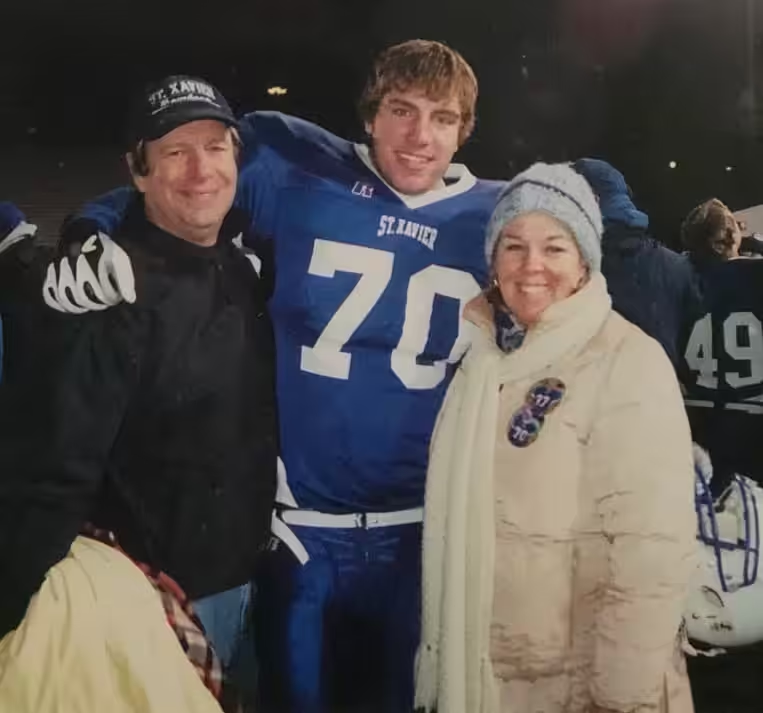
Dr. Pettit completed his undergraduate degree in Biology at The Ohio State University, medical degree at the University of Cincinnati, and Orthopaedic residency at The OSU Wexner Medical Center. He completed his fellowship training in Sports Medicine and Reconstructive Surgery at the prestigious Beth Israel New England Baptist Hospital (affiliated with Harvard and Tufts academic programs). During his time in Boston, he served as an assistant team physician for the Boston Celtics, New England Free Jacks (major league rugby), and the Merrimack Warriors Division 1 teams.
Dr. Pettit trained with leaders in the fields of ACL reconstruction, cartilage restoration, meniscal allograft transplantation, knee osteotomies, mako robotic knee arthroplasty, arthroscopic shoulder surgery, and shoulder arthroplasty. He has a special interest in knee and shoulder preservation utilizing techniques to prolong joint health and delay or avoid joint replacement in young active patients. For those patients that could benefit from joint replacement, he is certified in Mako robotic-assisted knee and partial knee replacements.
Dr. Pettit is a Cincinnati native from Anderson Township and graduated from St. Xavier High School as a member of the 2005 State Championship Football Team. His personal experience with sports-related injuries compelled him to pursue a career in Orthopaedic Surgery Sports Medicine. He has a particular interest in helping patients get back to a functional lifestyle at any stage of life and level of competition.
During Dr. Pettit’s childhood, physical activity and especially sports meant everything to him. He played baseball, basketball, football and soccer. At 12 years old, he was diagnosed with a rare disorder of the subchondral (the bone underneath cartilage) in both knees called Juvenile Osteochondritis Dissecans (JOCD). It is a condition that can lead to cartilage damage and early arthritis. He says he decided then that he wanted to become a surgeon.
“It was my first introduction to orthopaedic surgery,” said Pettit. “After several surgeries and phenomenal care, I was cleared to play football for Saint X.” He even was part of the school’s first state championship team.
Dr. Pettit’s study and work experience have energized him to give back to his home community. Even while out of town, he volunteered with St. X’s “Career ConneXions” program (designed to help students discern their college and career goals). As he settles locally, Dr. Pettit hopes to further use his personal experiences as an athlete, a patient, a student and a physician to offer the most compassionate high-quality advice to students interested in Sports Medicine.
Dr. Pettit spends his free-time with his wife, Alison, a healthcare worker herself, and their growing family. They are excited to move back to Cincinnati with their two young boys and third child due in January 2022. They are thrilled to be surrounded by family and friends in the Cincinnati area.
Schedule an appointment today to meet with Dr. Rob Pettit at one of Beacon Orthopaedics & Sports Medicine’s locations in Hyde Park (at the Cincinnati Sports Club), Anderson, Erlanger, KY and Lawrenceburg, Indiana.
Reds medical director Kremchek celebrates 25 years on the job
August 26, 2021
To read the full story by David Jablonski in the Dayton Daily News, click here.
Forty years after he graduated from Wittenberg University, Dr. Tim Kremchek looks back fondly on his days in Springfield.
That time was so important to his career path — one that led to what is now a 25-year run as the medical director for the Cincinnati Reds — he has given back to the school in donations to help fund The Steemer, the indoor facility that opened in 2019, and an athletic training facility that bears his name inside the HPER Center.
Kremchek, nicknamed “Doc Hollywood” by Hall of Fame broadcaster Marty Brennaman in the 1990s, is well known by Reds fans. He also has had a consistent presence at his alma mater over the years. It’s not uncommon to see him watching football games from the turf at Edwards-Maurer Field, and for every Joey Votto he has operated on, there’s a Ryan Holmes, a former Wittenberg quarterback, he has helped return from injury.
“It’s been a great relationship,” Kremchek said Tuesday. “Wittenberg really helped mold me. I wouldn’t have been able to go to medical school or do any of the things I wanted to do if I had transferred out of Wittenberg.”
Leaving the school crossed Kremchek’s mind early in his college career. He picked Wittenberg in part because he wanted to play baseball. He went to work for his dad, Dr. Edward Kremchek, who preceded him in orthopaedics, one summer and thought about attending school closer to home. Wittenberg, however, convinced him to stay and pledged to work with him on a pre-med major.
Among the professors who stood out for Kremchek were Chuck Shaffer and Nelson Sartoris.
“(Shaffer) was an immunology teacher,” Kremchek said. “He was fantastic. He was a pilot. He loved baseball. He was very, very bright in the science department and was extremely, extremely supportive of what I wanted to do. Sartoris was our organic chemistry teacher, and he was one of those guys that totally understood the baseball and the sports and the fraternity. As hard as organic chemistry was, it was one of my favorite classes and one of the classes I did best in.”
Kremcheck, a graduate of Indian Hill High School in Cincinnati, played first base for the Tigers. He realized early in his college career he didn’t have the ability to play professional baseball but never imagined how much of his life he would spend at that level — even if it wasn’t in uniform.
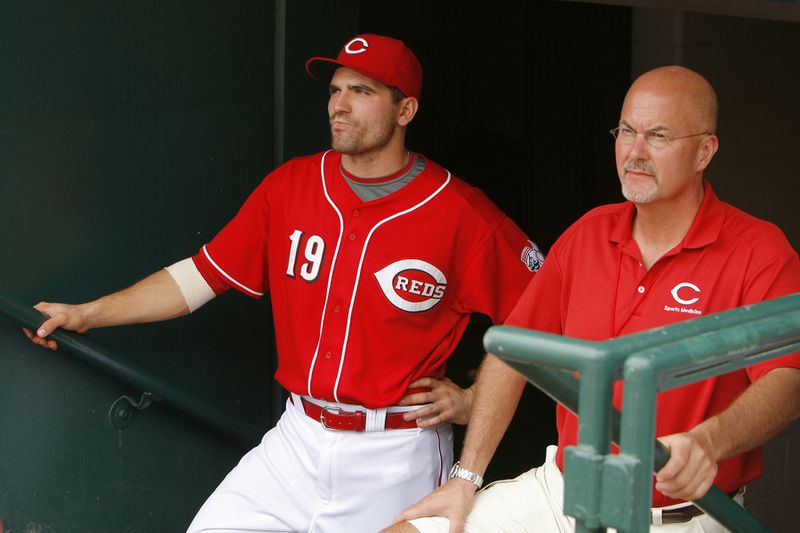
The job with the Reds started in November of 1996. Jim Bowden, then the general manager of the Reds, hired Kremchek, who by then had become a well-respected orthopaedic surgeon who had co-founded Beacon Orthopaedics & Sports Medicine. Bowden added to Kremchek’s duties by asking him to speak to the media about injuries. That’s how Kremchek became a household name in Cincinnati.
In 1997, his first season, for example, Kremchek talked to reporters after performing foot surgery on shortstop Barry Larkin.
“Couldn’t have gone any better,” Kremchek said then. “This was outstanding. It will make him much better. His movement will be better, he’ll be pain-free. By next season, we expect to see the Barry Larkin of old.”
In 2004, Kremchek repaired Ken Griffey Jr.’s torn hamstring. He used three screws to attach the tendon to the bone.
”Three years ago, nobody heard of this surgery, never heard of a torn hamstring being fixed,” Kremchek said then. ““Nobody was doing it. With this type of injury, there is no way Griffey could ever again play center field … or left field … or right field … or anywhere. Zero. None.”
A year later, Griffey won the National League Comeback Player of the Year award.
“I’ll cherish this forever because of the hard work I put in and the behind-the-scenes people who helped me like (trainer) Mark Mann and Dr. Kremchek,” Griffey said then. “They had to put up with a lot from me, physically and mentally, because I always want to be the best that I can be.”
Through all that time, Kremchek continued working for Wittenberg. In 2006, he even repaired torn ACLs for twin brothers Derrick and Desmond Braziel, who played football for Wittenberg, about five weeks apart.
Kremchek also serves as a team physician for Wilmington College and as a medical director for a number of high schools in the Cincinnati area.
Despite his long history with the Reds, Kremchek first cheered for the Boston Red Sox. HIs dad worked at Westover Air Force Base in Chicopee, Mass., when he was 5 years old.
The family moved to Ohio in 1968, and the only thing Kremchek missed at first was the Red Sox. Then his dad took him to Crosley Field to see a game between the Reds and St. Louis Cardinals. Kremchek quickly switched allegiances, and by the time, he was in medical school at the University of Cincinnati in the 1980s, he had made it a goal to make the Reds a part of his working life.
Kremchek was sitting in the green seats at Riverfront Stadium when he told a friend, “One day my goal is to come back and take care of the Cincinnati Reds baseball team.”
Twenty five years after accomplishing that goal, Kremchek said, “It’s been a dream come true. Not only because I love the game and you get seasons like this when every game means something, but you get to know the players. Who would have thought Barry Larkin was going to be an excellent friend of mine, or Ken Griffey Jr., or Johnny Bench or even Pete Rose?”
Kremchek grew up watching the Big Red Machine and then operated on many of the players — Rose, Bench and Morgan to name a few — after their careers ended.
Kremchek feels fortunate he got the job with the Reds at the relatively young age of 34. A one-year fellowship at the Alabama Sports Medicine Institute in Birmingham, Ala., under famed sports surgeon Dr. James Andrews helped Kremchek rise in his field. He was working as the team doctor for the Cincinnati Cyclones when Bowden heard about him.
All these years later, everyone knows about Kremchek, and he has no plans to retire anytime soon.
“I keep redefining it every year,” he said. “I have a couple young partners come down and work games with me and help me. What makes it fun is when I go down there I sit in the owner’s box with (Bob) Castellini, and he’s the biggest Reds fan you’re ever going to meet. He loves the team, loves the game and wants to win so bad. He’s so passionate about it. And nobody else sits with him. He’ll occasionally have dignitaries sit with him, but for the most part, it’s him and me and his wife watching games, dissecting games and just enjoying it. It’s just a different approach from when I started with Jim Bowden, who was on pins and needles.”
This season ranks as one of the most fun in recent memory for Kremchek. The Reds entered the weekend with the lead in the race for the second wild card.
“This reminds me of 2010, 2012,” Kremchek said. “You get home and you can’t wait — when they’re on the road — to watch the game. You know you want to win. You know what you need to do to get to the playoffs. If you’re a real baseball guy and you follow the Reds, oh my gosh, you look at the schedule and it’s exciting. September is not, ‘When do the Bengals and Bearcats play?’ It’s: ‘What are the Reds doing?’ it’s an absolute ball.”
Business Spotlight: Dr. Andrew Razzano at Beacon Orthopaedics & Sports Medicine
August 24, 2021
To access the full post from FOX19, please click here.
Dr. Andrew Razzano discusses Beacon Orthopaedics’ comprehensive shoulder care. Dr. Razzano has special interests include sports medicine and the treatment of knee, shoulder, and elbow injuries. He performs knee and shoulder total joint replacements, as well as minimally invasive treatments for the knee, shoulder and elbow.
Getting a Total Joint Replacement? Avoid These 7 Common Post-Surgery Mistakes
August 13, 2021
Is it time for a total joint replacement? Surgery can be scary, but when it’s medically necessary, it’s good to not only prepare for the procedure but also prepare for your post-surgery recovery. As orthopedic specialists, we see common mistakes that patients make as they rehabilitate. Most missteps aren’t intentional, but some are. We’re looking at you, at-home-exercise skippers.
All kidding aside, we’re here to help you heal as wholly as humanly possible. Avoiding the post-surgery blunders listed in this article will help you do just that.
7 Common Post-Surgery Mistakes
The trouble with life is that it keeps going on without you — even when you’ve had surgery. Because of that, we can be in a hurry to get moving again or skip important parts of the rehabilitation process. Avoiding the following mistakes that total joint replacement patients commonly make will help get you back on your feet while reducing the chance of complications in the future.
1. Pushing Yourself Too Soon, Too Fast
Activities that fall in the “too soon, too fast” category: driving, returning to work, going back to your fitness routine — you get the idea. Engaging in non-approved activities before your body has healed enough can land you in a worse place than the one you started out in. You and your doctor should identify a recovery roadmap that will keep you moving forward.
2. Not Pushing Hard Enough
Not to contradict ourselves, but as easy as it is to do too much too soon, there’s also the trap of not doing enough to help further your recovery. Rehabilitation is a painful process, but it’s a necessary one. Patients are also afraid of re-injuring themselves, which is completely understandable. However, not getting up to move can result in blood clots and/or muscular degeneration.
3. Not Taking Medications as Prescribed
Deviating from your medication regimen can have disastrous effects on your recovery. Sticking to the medications that your doctor has prescribed is key — even if you’re feeling better. Early on in your healing process, the reason you might be feeling better is likely because of the medications. If you have any concerns, absolutely talk them through with the doctor overseeing your care, so that you’re able to identify a plan that you’re comfortable with undertaking.
4. Not Eating or Drinking Enough
Lack of appetite post-surgery is wildly common among patients. However, drinking and eating is crucial to ensuring your body has the nutrients, energy, and hydration required to heal properly. In fact, not getting the appropriate nutrition can stall recovery.
5. Skipping Physical Therapy
Physical therapy is critical to recovery. Full stop. Rehab strengthens the muscles surrounding your new joint. Whether your exercises are to be completed at home or with a physical therapist, it’s important to not only stick to the prescribed schedule, but also it is imperative to complete it.
6. Ignoring Red Flags
Ask questions. If something feels off or if there’s something that you’re unsure of, ask your physician about it. Don’t assume it’s part of the healing process. Don’t be afraid of looking silly or worrying too much. This is your body. You only get one. Make sure to raise a flag on red flags. Don’t ignore what your body is telling you.
7. Failing to Follow Up
Follow-up appointments with your doctor are part of the surgery process. When you leave, that isn’t the end of your recovery. The surgery is just the start. Even if everything seems fine, make sure to keep those post-op appointments.
When It’s Time for a Joint Replacement
Beacon’s physicians are here to get you back to what you love doing as quickly as the healing process allows. There are no shortcuts when it comes to total joint replacement. If you have joint pain and need to embark on your own recovery journey, schedule an appointment with our team of knee and hip replacement experts today.
Further Reading
Dr. Chaudhary Explains a Total Knee Replacement
Dr. Chaudhary Explains a Total Hip Replacement
Total Hip Replacement: From Surgery to Recovery
Frequently Asked Questions about Total Hip Replacement
Knee Surgery: Choosing Between Total or Partial Knee Replacement
‘I kept working hard’: Colerain product Casey Grimm living pro dream with Florence Y’alls
August 11, 2021
The content in this blog was written as an article by Shelby Dermer for the Cincinnati Enquirer. See the complete article here.
FLORENCE — In May 2021, Casey Grimm was preparing for one final season in the Great Lakes Summer Collegiate League (GLSCL) as a pitcher with the Hamilton Joes.
After that, Grimm’s baseball future was not guaranteed.
Then, while packing his bags after a Joes’ victory at McBride Stadium in Richmond, Indiana, on June 29, his phone rang.
On the other end was Chad Rhoades, the pitching coach for the Florence Y’alls of the Frontier Independent League. The conversation with Rhoades and Y’alls manager Brian White lasted until midnight. When he hung up the phone, he was a professional baseball player.
“It was my mom’s birthday (when they reached out). It was like the best birthday gift she could ever ask for. She was so excited and she was crying,” Grimm said. “It was awesome.”
Grimm, a Colerain High School product, officially signed July 7 and his first month as a professional has been a whirlwind.
In his debut at Y’alls Ballpark against the Lake Erie Crushers, Grimm allowed four first-inning runs on four hits and two walks. Over the final four frames, Grimm allowed two runs and earned the victory when the Y’alls rallied for a 9-8 win.
“That first start I had so much adrenaline,” Grimm said. “I had 50 or 60 family members in the stands. After the first inning, I kind of settled in.”
In his next outing, Grimm tossed seven innings of three-run ball to lead Florence to an 8-4 win over the Windy City Thunderbolts. In five starts, Grimm holds a 2-1 record and the Y’alls are 4-1 when he toes the slab.
“It’s been insane so far,” Grimm said.
Overcoming the odds
The way Grimm carved out a professional career was unique and improbable. The left-hander had to overcome the adversity produced from a lack of recognition, a pitcher’s worst nightmare and a global pandemic.
Browsing through the archives of the Greater Miami Conference, you won’t find Grimm’s name on any all-league teams. In three seasons at Colerain, he threw just 35 ⅓ innings out of the bullpen, posting a 2-2 record, a pair of saves and a respectable 3.76 ERA.
When it came to a college decision, Grimm just wanted to play baseball.
“I didn’t get a lot of innings in high school, so I wasn’t getting many looks,” he said. “Toward the end of my senior year, I started reaching out to some colleges and Wright State Lake actually reached out to me. I took a visit up there. I knew I’d be fighting for playing time right away and I figured I’d rather go there than redshirt for a year.”
At Wright State University-Lake Campus, a member of the United Small College Athletic Association (USCAA), Grimm immediately became one of the team’s most-used arms during the 2017 season. He finished his freshman campaign 6-2 over 51 innings.
As a sophomore, Grimm went 3-2 with a 4.22 ERA over a team-high 53 ⅓ innings over 11 appearances, helping lead the Lakers to USCAA World Series.
In Game 1 against Penn State Du Bois, Grimm retired six of the first eight batters he faced. Then, in the third inning, he delivered a fastball and felt a pop.
“I’ve never had any arm problems, ever,” Grimm said. “I threw a couple more and it kept bothering me and I called out the trainer. I knew I was done.”
The training staff didn’t need much information to deliver a quick diagnosis: Grimm had torn his UCL, which meant Tommy John surgery and extensive rehab.
“It was a gut punch,” Grimm said.
Luckily for Grimm, Dr. Tim Kremchek, one of Major League Baseball’s best team surgeons for the Cincinnati Reds, performed the surgery.
Just 5 ½ months post-operation, he was throwing. He breezed through rehabilitation with no setbacks. By summer 2019, he was suiting back up for the Cincinnati Steam, making 10 appearances out of the bullpen.
After spending most of the fall and winter getting the arm prepared for the 2020 season at Wright State Lake, the COVID-19 pandemic shut down his senior season after just 11 games.
“It took 11 months to get to 100 percent,” he said. “Then we shut down, but it gave me two full years to get healthy.”
Though he had more time to rest his reconstructed elbow, Grimm was running out of baseball. For the first time since he was a child, his summer wouldn’t involve the game. During the layoff, he worked out at Ohio Baseball Science Academy in West Chester, preparing for one more season as a graduate student, but then what?
‘It was my best year’
In an era of lighting up radar guns and overpower hitters, Grimm stands out. He’s never going to blow fastballs past the opposition. Instead, his style is an ode to baseball’s past, where hurlers had to use a barrage of pitches, located in the right spot, to get outs.
Just down the road from Florence, Reds’ starting left-hander Wade Miley is 9-4 with a 2.75 ERA and threw a no-hitter earlier this season. Miley is one of a handful of MLB pitchers who do not top 90 MPH with any pitch.
Grimm takes a similar approach. When he’s on the rubber, he’s trying to avoid barrels like the plague, inducing weak contact with precisely-placed off-speed offerings. One mistake — like a breaking ball just a few inches off its mark— could spell trouble.
“The way I can mix speeds and get guys out on their front foot, it makes my stuff play better than what it might be or how hard I’m throwing,” Grimm said. “If I’m hitting my spots, I’m gonna get guys out.”
Having Tommy John and extended time off helped Grimm perfect his mechanics. It showed right away during his final season at Wright State Lake. In nine appearances (eight starts), Grimm went 5-4 with a 2.05 ERA over 52 ⅔ innings. He threw a no-hitter with 16 strikeouts against Roosevelt University-Peoria on April 25 and was later named the USCAA national player of the year.
“It was my best year on the mound for sure. It was definitely a statement season,” Grimm said.
What’s next?
If Florence had never called that night in June, Grimm would’ve won a GLSCL championship with the Hamilton Joes and likely bid baseball goodbye.
A final year at Wright State Lake was on tap, but as he puts it, he would’ve been a “normal student” just finishing up his MBA with no eligibility remaining. He was already planning to try out for a Frontier League club, but the Y’alls got to him first.
For a pitcher who doesn’t throw 95, went to a small school and has already had Tommy John, Grimm is just riding the wave. He gets paid to play baseball, and that’s a dream come true no matter the level.
Most importantly, his confidence never wavered.
“No, I never believed I couldn’t get here,” Grimm said from the Y’alls’ clubhouse. “I know the odds were stacked against me. I just always believed that I could do it as long as I kept working hard. That’s what I did and it’s been pretty sweet.”
Success Story: Dr. Chaudhary’s Double Knee Patient Back In His Karate Studio
August 11, 2021
Here at Beacon, patients measure their success by getting back to the life they love. For some, that means being able to swim again, get back in the office, or even learn to walk again. For Carl Prather, it means maintaining a lifestyle of martial arts.
Prather, 71, has been a karate instructor for over 30 years. He also served in the marines until 1973, and worked in a factory for almost four decades. Over time he has sustained wear-and-tear injuries to both knees, causing excruciating pain for the past five years of his life. A pain that almost took away his favorite title – Sensei Prather. After hearing Dr. Chaudhary’s success stories from multiple friends and family members, he decided it was time to help his knees in whatever way he could.
Last July, Carl got his right knee replaced. By November, his left knee needed replacing too. Sustaining two total knee replacements, Carl was worried he would never get back to teaching the art he loved, karate. Having been the owner of Prather Martial Arts since 1996, this was a passion he could not give up.
“I can’t sit still. I refuse to buckle up.”

Karate is an outlet for him. In his studio he can sweat, and be active. But the biggest reward by far, he claims, has been watching his students progress.
“Karate is an art, a lifestyle. It is a lifestyle of discipline and respect.”
Over the years, he’s watched countless students, including his own sons and grandchildren, grow into men and women of deference, with resilient self defense skills. This, to him, has been the greatest gift.
After his surgeries, he knew that if he wanted to continue teaching, he needed to do whatever he could to get better and recover. After a few months of physical therapy and strictly following Doctors’ orders, Carl was back to a life he hadn’t experienced in years – a life free of pain.
 To this day, he has never given up on teaching traditional Okinawan Karate at his school. Prior to his surgeries, he was pushing and straining his knees to keep up with his love for martial arts. Since his procedures he’s been able to practice and teach again, using various moves such as the front kick (Mae Geri) and roundhouse kick (Mawashi Geri), completely pain free. In addition to martial arts, Carl has been able to get back into kayaking and fishing. He has even taken on a new hobby of hiking. He recently completed a 6.5 mile hike, his favorite hike being in Miamisburg. His wife, who also had her knee replaced by Dr. Chaudhary, has enjoyed getting back to her daily walks with their family dog.
Carl advises anybody who wants to get back to a life they love to follow through with surgery, find a specialized Doctor, and firmly follow instructions in order to recover.
“Therapy is the key to getting better. The recovery process is worth it to stay active and get back to life without pain.”
Making a Plan for the Perfect Fit: Customizing Knee Implants
July 26, 2021
To read the full article from VENUE Magazine, click here.
Often when patients visit Beacon Orthopaedics and Sports Medicine for the first time, they are confused or at the very least a little overwhelmed by the many buzzwords they’ve heard regarding knee replacement surgery. They may have heard the terms “robotics,” “computer-assisted,” and “patient-specific” but don’t have a good understanding of what those words mean. As a result, these patients usually enter the office and say something like, “My buddy had his knee done here and was happy with the result, so I’d like to do the same thing he did.”
While the positive referral is great, the “I’ll have what he’s having” mentality doesn’t really work when it comes to determining the best type of knee implant for yourself.
Michael Lawson Swank, M.D., a seasoned orthopedic surgeon with Beacon, has been performing knee replacements for 28 years and computer assisted replacements for over 20 years. He likens the procedure to hanging a picture where you can either do so by eyeballing it or taking precise measurements.
“While it usually works pretty well just eyeballing it, there is less trial and error when you use measurements, stud finders and levels,” says Swank. The same is true when using imaging or some kind of customization in surgery since customization or robotics is like measuring ahead of time.
“Instead of just eyeballing the X-rays and going five degrees or whatever it may be, we measure the patient’s anatomy to know the actual center of the hip, the knee and the ankle to get the correct alignment,” says Swank.
By taking these measurements ahead of time, they are armed with much more information, and this is key because although these are routine procedures, not everyone is built in a routine way. Our bones and bodies are all shaped differently so surgeons have to adjust implants for the patient’s specific anatomy.
“The more experience you have, the better you can overcome that, but if you want to make them as good as you can, it makes sense to gather that information prior to surgery.”
This gathering of information might involve getting a CAT scan or MRI or putting tracers on the bones. It may be a combination of comparing imaging with the information gathered in the bone. Alternatively, the surgeon could get a CAT scan ahead of time and then make a mold like a dentist makes for a crown. They then put that mold on top of the bones to tell them where to cut.
Beyond all this planning, there are also a variety of implants both traditional “off the shelf” ones and custom ones that fit to a patient’s specific bone.
“In knees, we can even use a CT scan to make an implant specifically designed for the patient,” says Swank.
To use the picture-hanging analogy, what makes computer-assisted or navigated surgery different is that surgeons are actually trying to place the picture in the spot where they know it belongs based on the things they can’t see at the time of surgery.
“It’s like we’re trying to hang it on the studs when we can’t see the studs,” says Swank.
The key to improving the entire process, with decreased variability, is to go into surgery with a proper plan.
Think of purchasing a suit. You can either buy one off the rack that will fit decently or you can tailor it for a perfect fit that will not only look better but also feel better. Customizing an off-the-shelf implant is like tailoring a suit from off the rack. To make a fully customized implant is like designing a suit from scratch.
While many surgeons use just one implant, Swank utilizes a variety depending on the patient’s needs.
Swank determines a patient’s need for a custom implant based on their size, shape, profession, activity level, and bone deformity.
The more unusual the shape of the bone, the more likely he is to use a fully customized implant. The same is true for a patient whose age or activity level requires an implant with a proven track record. Furthermore, if Swank is seeing a construction worker, plumber, roofer or carpet layer, someone who puts a lot of wear and tear on their knee, he will use an implant that can spare their ACL.
The fit is so important because if it doesn’t feel right, mobility becomes an issue.
“With knee replacements, patients tend to complain that it feels too tight or too big and just doesn’t feel like the right size,” says Swank. “One of the ways you eliminate those issues is by actually sizing the implant for them.”
Think about getting a dental filling. The dentist can do the procedure, followed by a visual inspection, and all looks good on his end. But until he asks you to bite down to see how everything feels, there is no way to know if everything is just right. Depending on your response, however, the dentist can make slight corrections and you are on your way with a happy mouth. Unfortunately, the same can’t be done during knee implant surgery because your surgeon can’t ask you to walk around in the middle of the operation to check if something feels funny.
“With knee replacements, we want the implant to fit so seamlessly that you forget you had a joint replacement, but you will have a hard time forgetting that if you feel a little off,” says Swank, who can adjust things to one millimeter. “The goal is to get it as close to that as we can because there is a real difference in function.”
The bottom line is that if you don’t think about it if you take your movement for granted, that means it feels normal, and that’s the end goal.
“The idea is to make a plan, execute that plan, then confirm that we executed that plan,” says Swank.
‘The guy was tenacious.’ It’s been 25 years of repairing Reds for Dr. Timothy Kremchek
July 23, 2021
To read the full article from Scott Springer at The Enquirer, click here.
BLUE ASH – If not for the injured foot of a left wing in the International Hockey League, one of Major League Baseball’s top experts on Tommy John surgery for pitchers might not have been discovered.
It wouldn’t have been for lack of effort.
Dr. Tim Kremchek graduated from the University of Cincinnati College of Medicine in 1986. After an internship and a couple of residencies, he served a sports medicine fellowship with renowned orthopedic surgeon Dr. James Andrews at the Andrews Institute for Orthopaedics & Sports Medicine in Birmingham, Alabama. Upon returning to Cincinnati, he was medical director of the Cincinnati Cyclones in their “hockey barn of bedlam” days at Cincinnati Gardens.
Former NHL player Paul Lawless was at the latter stage of his career but had injured a foot that Kremchek had repaired successfully. Then-Reds general manager Jim Bowden had a relief pitcher, Jeff Brantley, who had the same injury. Bowden sought out Kremchek, who would eventually perform the surgery.
Along the way, he relentlessly lobbied to become the Reds team doctor.
“The guy was tenacious,” Bowden recalled. “We didn’t need someone new at the position he wanted, but he just wouldn’t give up. He kept reaching out to me. I agreed to see him. I will never forget: He looked me in the eye and promised to give 100% at every single game. He was a go-getter, and I was impressed.”
Kremchek describes the interview process as a three-hour grilling of his knowledge of the franchise as well as his commitment to being available
Whatever he said worked. In late 1996, at age 34, he was hired for his dream job by a GM who was roughly the same age.
“That was the beginning of the dream that I’ve always had. Growing up in Cincinnati, if I couldn’t play for the Reds, I wanted to somehow work for the team.”
Kremcheck used his time with Andrews in Alabama well. He had wanted to learn how to take care of baseball playersand Andrews was among the best at it.He brought the Andrews attitude of 24/7 365 days per year to the Reds.
Andrews marvels now at Kremchek’s follow-through.
“He’s become remarkably successful and has done a tremendous job not just for the Reds, but for players around the league, especially when it comes to Tommy John elbow surgery,” Andrews said. “He achieved what he set out to do, which is become one of the best in our field.”
The walls of Kremchek’s office at the spacious, sprawling Summit Woods location of Beacon Orthopaedics in Sharonville are full of signed photos of Reds and numerous big leaguers who have benefited from his talents.

“His track record as a medical director and orthopedic doctor is at an equivalent level of a Mike Trout, LeBron James or Tom Brady in their fields,” Bowden said, who continued to consult the doctor after he left the Reds for the Nationals. “If there was a wing in the Baseball Hall of Fame in Cooperstown for orthopedic surgeons. Dr. Andrews would be there, with Doc Kremchek not far behind.”
Ironically maybe, Dr. Frank Jobe, creator of Tommy John surgery, was honored by the Baseball Hall of Fame but never inducted, nor was John who pitched 14 more years after the procedure.
Kremchek was recently named a Top 10 MLB surgeon by Bleacher Report. He’s done more than 2,500 Tommy John operations, including on the arms of such pitchers as Milwaukee’s Brent Suter (Moeller), San Diego ace Mike Clevinger. and Oakland ace Chris Bassitt. Bassitt was referred to Kremchek by local agent Joe Bick of Pro Star Management.
“Nobody cares about the people they work on more than he does.,” Bick said. “And he will do it on a moment’s notice.”
A long way from Plant City
It’s been 25 years since Kremchek signed on as Reds medical director. He experienced Opening Day for the first time after flying home with the team from one of their previous spring training sites, Plant City, Florida.
“Getting off the plane, I still get chills thinking about it,” Kremchek said. “You come off the plane with Barry Larkin, Reggie Sanders, Kevin Mitchell and Bret Boone. It was a big deal!”
Larkin was on that team and was one of the first Reds to welcome him in spring training, having known his past association with Moeller High School. (Kremchek’s father was Moeller’s team doctor for years and he has since maintained that position). His love and admiration for Moeller have also resulted in a sizable donation to the school to build their upcoming baseball stadium in Miamiville that will feature the family name.
The days and hours can be long. A typical day can run from 5:30 a.m. to an hour after a late-night ballgame at Great American Ball Park, with double-digit surgeries in between at Beacon’s Sharonville complex.

“When you do this and to do it correctly, it’s not just showing up and taking care of their injuries,” Kremchek said. “It’s developing a personal interest with the players, front office, ownership. You immerse yourself into the organization.”
Former Red Sean Casey added, “Doc Kremchek was more than our doctor,he was part of the team.”
After his preliminary work before a game, he joins Reds Chief Executive Officer Robert Castellini in the owner’s booth where they discuss the team’s health. Sometimes, hesays, he’s playfully chastised if he has worked on a member of the opposition who fares well against the Reds, though his loyalty is never doubted.
“I don’t think there’s another team physician in all of baseball that equals Tim’s love and devotion to a team,” Castellini said.
Becoming Doc Hollywood
A silver anniversary comes with a lifetime of memories and Kremchek has many from his time spent in the clubhouse. Among those are experiences with two members of the Baseball Hall of Fame (Barry Larkin and Ken Griffey Jr.), a member of the broadcast wing of Cooperstown (Marty Brennaman) and a Pro Football Hall of Famer in Deion Sanders.
The latter once challenged the young doctor to a spring-training foot race. This came after Kremchek had teased “Prime Time” during a visit in spring training at Sarasota, wondering aloud if Sanders was really that fast.
Sanders then offered him a lead-off start off of second base saying he would start at the plate and beat him home. Somewhere, video of the match race exists.
“I’m chugging going around third and hitting it hard,” Kremchek said. “All of a sudden this breeze goes right by me and he’s at home plate. On the video you see him go around second base facing home plate. I said, ‘You win. I’ve never seen anything like that in my life!'”
In the end, Kremchek had and still has fun.And, he’s admired enough to have to have been mentioned by Larkin, Junior (Griffey) and Brennaman in remarks at Cooperstown.
It was Brennaman who first referred to Kremchek as “Doc Hollywood”.
That happened because Bowden didn’t care to discuss injuries, preferring to have his new medical director answer the questions. Soon, Reds Public Relations chief Rob Butcher was organizing media gatherings and Kremchek also had a regular spot in the Reds Radio Network pregame show.
“Every day I was on TV,” Kremchek said. “The spotlight was hot. Marty used to come by and call me Doc Hollywood. That caught on with everybody.”
Bridging the gap
In addition to the current players, Kremchek has had the privilege of working on some of the Big Red Machine players like Pete Rose, Johnny Bench and Joe Morgan. Now, most of his patients were not alive when those Reds were world champs over 30 years ago.
Cincinnati was six seasons removed from the 1990 World Series title when Kremchek joined the organization. Rookie pitcher Tony Santillan was not yet born and second baseman Jonathan India was just a few months old in the spring of ’97.

“I could bond with Larkin, Reggie Sanders, Bret Boone, they were around my age,” Kremchek said. “These young kids come in and you have to find a way to relate.”
Kremchek talks every day to Reds Athletic Trainer Steve Baumann and has ties in other big-league clubhouses like Royals Head Athletic Trainer Nick Kenney of Wilmington. Kremchek gave Kenney his first job serving the Cyclones hockey squad.
“Doc taught me a simple lesson,” Kenney said. “Do what you do better than anyone else, stay passionate, be accessible and you will be successful.”
In addition to co-founding Beacon Orthopaedics & Sports Medicine in 1996 and growing it from one office to 14 locations and 42 physicians, Kremchek serves as team physician for alma mater Wittenberg University in Springfield, Ohio, and Wilmington College. He also serves as medical director for several Greater Cincinnati area high schools, including Moeller, Indian Hill, Kings, Wyoming, Mount Notre Dame, Mason, Clinton-Massie, Wilmington and Lakota West.
He remains optimistic about the Reds and plans to continue his role until it’s no longer fun.
By all appearances, that’s not anytime soon.
Our Hot Take as the Summer Olympics Heats Up
July 22, 2021
If professional athletes spend any time in the Greater Cincinnati area, Beacon specialists likely cross their paths.
They may encounter us as athletic trainers — like it was for Olympics U.S. Women’s Soccer Team midfielder and Mt. Notre Dame alum, Rose Lavelle. We’ve been treating athletes at Mt. Notre Dame, and dozens more, for more than a decade.
We might be their team medical director — like it was for U.S. Men’s Baseball Team third baseman and former Reds player, Todd Frazier, or U.S. Men’s Baseball Team and Reds catcher prospect, Mark Kolozsvary. Beacon’s Dr. Tim Kremchek has been the Reds’ Team Medical Director for 25 years.
It’s for all of these reasons and more that our team finds a bit more vested interest in the Olympics. And not just the current Games, we have the privilege of treating Olympic hopefuls and other up-and-coming athletes looking to make a career of their sport of choice. In fact, we treat more high school, college, club, and professional athletes than any other health system in the area. But what does all of that mean for our patients? Easy. It means we have the capacity and experience to deliver Olympic-level care no matter the patient.
2020 Tokyo Summer Olympics Injury Watch
Don’t misunderstand us! We are not anticipating OR hoping for injuries. However, with the amount of time we’ve spent with professional athletes, we know there are certain things the athletes and their teams will be watching for to ensure they stay healthy throughout the 2020 Tokyo Olympics.
The first consideration is timing. Athletes must be aware of their bodies at all times, which means being cognizant of the periods they’re most likely to get hurt. Looking back at the Beijing Games in 2008, nearly 75% of the injuries were incurred during competition. That still means more than 25% of them happened in training. The Games in London were a more even split between incurring injuries during training or competition.
Injuries involving overuse are the most common. Severe injuries are less common at the Games. The most likely are related to overuse injuries including everything from tendinitis to shin splints. Symptoms are typically swelling, soreness and pain. Treatment for those types of issues involve cupping, dry needling, scraping, massage, compression, and ice baths.
Injuries are already impacting this year’s Games. Athletes competing at the Olympics level know their bodies, what they’re capable of, and their limits. A few big names have already said that they’ve hit theirs, and those athletes include people from around the world. Well-known Americans include the likes of tennis star Serena Williams and golf standout Dustin Johnson among a handful of others.
Olympic-Sized Care for Every Walk of Life
We want to keep you going in your walk of life — whether it’s walking or competing in the Olympics, Beacon physicians are at the ready to help you reach your goals when it comes to orthopedic health. Contact us to schedule a time to experience the Beacon difference.
Orthopedic Urgent Care or Emergency Room: 5 Questions So You Know Where to Go
July 14, 2021
It’s the scene all parents of athletes dread — seeing their child limp off the field. Your soccer star isn’t going back in the game and needs medical treatment. Where do you take her: orthopedic urgent care or the emergency room?
5 Questions to Ask Yourself So You Know Where to Go
Is the injury life-threatening?
Any injury or traumatic event is likely emergent. If it’s life-threatening (for example, significant blood loss or a head injury), go directly to the emergency room.
Do you have an orthopedic injury?
If you know what is considered an orthopedic injury, you can better determine where you need to go. Orthopedic doctors are specialists in musculoskeletal injuries. That means they are expertly trained to treat:
- Elbow, wrist, and hand sprains and fractures
- Foot, ankle, knee, and leg injuries, including sprains, fractures, and ACL or meniscus tears
- New back, neck, and spine injuries or flare-ups from a previous condition
- Shoulder injuries; for example, those involving fractures or the rotator cuff
Are you considering convenience?
If you’ve been to the emergency room in say the last 50 years, you know there’s a possibility for a wait. Moreover, emergency departments treat all conditions, issues, illnesses, and injuries, which needlessly exposes you to communicable diseases, especially considering COVID-19 risks.
Conversely, when you go to orthopedic urgent care, people are there to be treated for musculoskeletal concerns — not sickness.
Have you thought about cost?
The most minor of injuries can incur big costs with an ER visit. Orthopedic urgent care trips can provide patients more control over their care and ultimately their medical expenses.
Is comprehensive care important to you?
When you start with orthopedic urgent cares like ours at Beacon, you receive a care plan from the start. Because you’ll immediately see an orthopedic specialist and since we have diagnostic testing onsite, we can seamlessly provide you with an evaluation, a diagnosis, care options, treatment, and provide rehabilitation if/when you need it.
Get Urgent Care Help Now
If you or a loved one experiences an orthopedic injury, avoid the long waits and high costs of an emergency room visit while enjoying the convenience of expedient care by a specialist.
Our physicians are ready to provide a diagnosis and treatment plan at our Orthopedic Urgent Care locations, Summit Woods and Northern Kentucky (Erlanger)
Contact us to schedule a time to experience the Beacon difference.
Beacon Orthopaedics & Sports Medicine to Provide Care for Cincinnati Country Day School Athletes
July 6, 2021
CINCINNATI, OH. – Beacon Orthopaedics & Sports Medicine, the region’s recognized leader in comprehensive sports medicine care, is now providing medical and athletic training services to Cincinnati Country Day School (CCDS) in Indian Hill.
Beacon’s President and Orthopaedic Sports Medicine Specialist, Peter Cha, MD, is serving as CCDS’s medical director while Beacon’s Paige McDowell is the school’s athletic trainer.
“We are honored to bring Beacon’s expertise and experience to Cincinnati Country Day School,” Dr. Cha said. “Sports medicine is our specialty at Beacon with more than 30 local high school, club, college, and professional teams partnering with us as their official sports medicine providers.”
CCDS Athletic Director Dennis Coyle, who also serves as the Nighthawks’ head football coach, said the school is looking forward to working with Dr. Cha, McDowell, and the entire Beacon team.
“Beacon has a great reputation for providing excellent orthopedic care in Cincinnati and we are thrilled to partner with such an exemplary institution for years to come,” Coyle said. “This partnership with Beacon will help us continue to provide opportunities for our students to discover their own abilities and embrace their unique leadership capabilities in athletics, health and wellness, and beyond.”
Coyle said the benefits and service provided by Beacon include:
- Access to Beacon’s year-round after hour and Saturday clinics.
- The presence of Paige McDowell, ATC, a full-time certified athletic trainer who will work with CCDS’s student-athletes.
- Impact testing for student-athletes.
- Providing CPR/AED and First Aid training for all CCDS coaches.
“We are excited to work with Dr. Cha, the medical director who will oversee our program to ensure that effective communication, quality, and service are provided to our student-athletes and their families,” said Rob Zimmerman, CCDS Interim Head of School. “Additionally, Beacon provides incredible real-life shadowing and internship opportunities for our students and access for our students to attend lecture series in Beacon’s bio skills and medical educational program.”
# # #
About Beacon Orthopaedics & Sports Medicine
Established in 1996, Beacon Orthopaedics & Sports Medicine has helped thousands of patients overcome injuries and improve their quality of life. Beacon Orthopaedics provides medical direction and coverage for over 30 local high schools, five college athletics programs, and professional teams including the Cincinnati Reds. With 15 locations across Southwest Ohio, Northern Kentucky, and Southeastern Indiana, Beacon offers instant access to comprehensive orthopedic care, including sports medicine, physical therapy, athletic training, imaging services, orthobiologics, as well as surgical procedures involving neck, spine, shoulder, elbow, hand, hip, knee, foot and ankle repair, reconstruction, and replacement.
About Cincinnati Country Day School
Located on a 62-acre campus in Indian Hill, Cincinnati Country Day School has long been known for its academic excellence, character education, and diverse community. The school attracts students from 18 months through grade 12 from 70-plus zip codes throughout Greater Cincinnati and abroad. For more information about the school, please visit https://www.countryday.net.
Does Your Foot Hurt Here?: The Heel
July 1, 2021
Pain in the heel is incredibly common and a vast majority will typically fall into a few different categories. These pains will most likely develop over time, however few will present seemingly out of the blue. There are several nonsurgical ways to treat these problems to better the pain. In fact, it is less common to need surgery in the first place. Let’s get into a few of the most common and treatable types of heel pain.
Achilles Tendon
The Achilles tendon is the longest and strongest tendon in your body. Given its strength, the tendon endures a lot of force. Traditionally over several months and years, there can be scar tissue that builds up with wear and tear that occurs to the tendon. Sometimes even bone spurs will form insidiously along the back of the heel imbedded in the tendon.
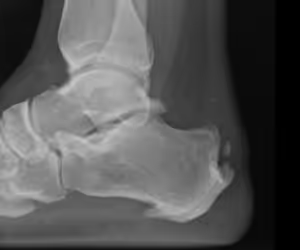
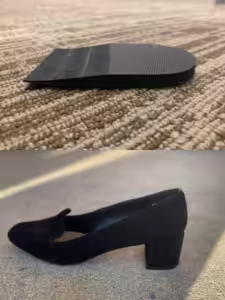
 Symptoms: The body’s reaction to these processes results in more scar tissue and even more bone spurs. Those changes can be painful and it is possible to notice thickening pressure in the back of your shoe, focal prominence, and pain with walking and motion in the heel. Located directly in the back of the heel, the pain does not typically radiate on the bottom; however, pain may be present on the sides.
Treatment: In the beginning, a common solution is to get a heel cup or lift to take the tension off the heel (think high heeled shoe!) This will relax the tendon and allow it to heal and calm down. There are also many topical anti-inflammatories that are found over the counter that are often recommended. Once the treatment starts relieving swelling and feeling better, its best to start some light stretching. This focuses on the calf and hamstrings. If the pain is not feeling any better after a few weeks, then it may be necessary to get an x-ray and evaluation with Dr. Miller. There are several options depending on the severity and activity level that are likely beneficial.
Plantar Fasciitis
Plantar Fasciitis is pain attributed to the bottom of your heel and is one of the most common things that an orthopedic surgeon will see. Plantar fascia is a cord of tissue from the bottom of your heel that goes to your toes. It is made up of collagen tissue and helps support the arch of the foot. Think of this structure as the bowstring to the arch of the foot. Although there are several theories as to why this occurs (including tightness and contracture in the legs), there still isn’t a great understanding of what causes plantar fascia and is often treated in many different methods.
Symptoms: Often times, people will experience this pain when first getting up from sitting or first thing in the morning. This pain is located directly at the bottom of the heel pad closer to the arch and may be manageable during different parts of the day. Typically, the pain tends to improve as the day goes on, but not always. Severe cases can last constantly.
Treatment: Patients suffering from plantar fasciitis are urged to try several modalities at once because the remedy might be different from one patient to another. The first area to target is flexibility, a key to recover from this problem. Try to focus on the calf stretching initially. The more flexible the ankle is, the less stress there is on the soft tissue. In this case, a heel cup or full-length shoe insert is a good idea because it will redistribute the weight the heel is bearing so the force can be spread throughout the foot and the arch. Another remedy to relieve the pain is a night splint that will target the flexibility while the body is sleeping. This will further help the morning pain in the heel. If these modalities are not helping in recovery, then it is appropriate to get an evaluation with Dr. Miller and make sure it is actually plantar fasciitis. Other options for recovery include an injection or other non-surgical treatments such as shockwave therapy or biological type treatments such as platelet injections. These should be discussed as needed at your evaluation.
Stress Fracture
A common type of bone injury to the foot or heel is a stress fracture. Repetitive activity is often associated with this type of injury. Often young kids play sports all weekend long and end up with unremitting pain and difficulty walking. People who stand on their feet several hours can suffer bone injury. Runners classically suffer from this type of problem. Stress fractures can be caused from many different activities or more aggressive force on the heel. True fractures of the calcaneus are usually from a fall from the height of 4-5 feet or more. Those accidents may be traumatic with lots of swelling and bruising along with it.
Symptoms: Stress and bone pain in the heel is a generalized pain all around the heel. It is often not just on one side of the bone. It comes with continuous pain and does not resolve as well as the day goes on.
Treatment: Any traumatic fall from a significant height should be evaluated immediately. At that point, the foot should be non-weight-bearing prior to x-ray evaluation. If there was no associated trauma, boot therapy is often enough to begin treatment. Timing and duration are usually best assessed in the office with Dr. Miller.
Are You Suffering From Heel Pain?
Dr. Miller is available at several locations around the Cincinnati area with Beacon Orthopaedics to assess your lower extremity. Contact us today for more information! Click here to learn more and schedule an appointment with Dr. Miller for your foot and ankle problem.
Is Your Knee Pain Arthritis or a Torn Meniscus? 3 Questions to Help Figure it Out (And a Bonus Tip!)
June 29, 2021
Sometimes it’s all in the wrist. Other times it’s all in the hips. So what happens when it’s all the knees? When you have knee pain, especially if you’re an older adult, it can be hard to know what’s causing it. In today’s blog article, we break down the difference between arthritis and a torn meniscus to help you understand if your knee pain could be attributed to one of these common causes.
Knee osteoarthritis is when damage occurs to the articular cartilage. This is the tough, slick material covering the thighbone along, shinbone, and behind the knee cap.
A torn meniscus results from damage to the flexible, rubbery cartilage that helps cushion the shin and thighbone in the knee.
Common symptoms of both osteoarthritis and a torn meniscus include:
- Pain around the knee joint, especially after physical activity
- Swelling that can make the knee painful to the touch
- Knee locking
3 Questions to Help Figure Out Your Knee Pain Cause
The following questions can help you get a better handle on the source of the pain in your knee(s) to determine if you’re suffering from arthritis or a torn meniscus. This will not lead you to a diagnosis, however. When experiencing any kind of unusual pain, always visit a Beacon specialist to get an official diagnosis and establish a plan of care.
#1 When did your knee pain begin?
The biggest difference between having a torn meniscus and arthritis is if the pain started over a period of time, suddenly or after an injury. Arthritis-related pain typically continues to increase over time and can’t be narrowed down to a specific injury. On the flipside, sudden knee pain is usually a sign of a torn meniscus.
#2 What’s your pain type?
Dull and/or constant pain typically accompanies arthritis, and meniscus tears often cause sharp pain right after sustaining a traumatic injury. In the latter, rest can help. It might go away and then return after turning the wrong way. The sides of your knee are likely to become tender, too.
#3 How old are you?
Age is a big factor in the likelihood of your knee pain cause. Arthritis is more likely to happen in older adults. A torn meniscus can happen at any age, although it’s more likely to happen to younger, more active people.
BONUS! Have you tried the Thessaly Test?
The Thessaly Test is a method used to diagnose a torn meniscus, which you can do at home.
- Rest your hands on a counter.
- Stand on your injured leg. Slightly bend the knee at a 20-degree angle. Bend the opposite knee to your back, with your foot completely off of the floor.
- Keep your foot solidly planted into place. Twist your entire body by rotating your hips in a back and forth motion three times. If you experience a locking sensation, you may have a meniscus tear.
Knee Pain? Then You KNEEd a Doctor (insert groan)
Like any pain in the body, the sooner you seek the help of a specialist the better. Beacon’s knee experts are here to help you get back to living with less pain. Contact us to schedule a time to experience the Beacon difference.
Further Reading
Knee Conditions, Symptoms and Treatments
Conditions for Knee Replacement
Osteoarthritis: What is it and How is it Treated?
Beacon Orthopaedics & Sports Medicine Expands Again in Northern Kentucky
June 29, 2021
CINCINNATI, OH. – Beacon Orthopaedics & Sports Medicine is continuing its expansion into Northern Kentucky with the planned opening of two Orthopaedic Care Centers in Kenton and Campbell counties.
Beacon’s Kenton County care center at 2900 Chancellor Drive in Crestview Hills is scheduled to open July 14th and a new Campbell County care center being developed by Ashley Builders Group at 775 Alexandria Pike in Fort Thomas is slated to open in early 2022.
The company’s existing Northern Kentucky care center is located at 600 Rodeo Drive in Erlanger.
“Northern Kentucky is an underserved market where patients will benefit from more competition, increased accessibility to high quality, low cost comprehensive orthopaedic care,” said Beacon CEO Andy Blankemeyer. “We are excited to once again be growing our presence in Northern Kentucky and we continue to look for opportunities to expand.”
Northern Kentucky has been a major focus of Beacon’s growth this year.
In April, Beacon announced that John J. Larkin, MD, a highly regarded Northern Kentucky orthopaedic surgeon, joined the Beacon team. And in May, Beacon’s Glen McClung, MD, was named medical director of the Florence Y’alls Frontier League minor league baseball team.
With the opening of the Crestview Hills care center next month, Beacon will have a total of 15 local care centers throughout the region.
“Bringing the best care to more patients is what we are accomplishing in Northern Kentucky and across Greater Cincinnati,” said Beacon President Peter Cha, MD. “We are growing strategically and geographically with the Beacon model that places emphasis on quality, access and value.”
# # #
About Beacon Orthopaedics & Sports Medicine
Established in 1996, Beacon Orthopaedics & Sports Medicine has helped thousands of patients overcome injuries and improve their quality of life. Beacon Orthopaedics provides medical direction and coverage for over 30 local high schools, five college athletics programs, and professional teams including the Cincinnati Reds. With 15 locations across Southwest Ohio, Northern Kentucky, and Southeastern Indiana, Beacon offers instant access to comprehensive orthopedic care, including sports medicine, physical therapy, athletic training, imaging services, orthobiologics, as well as surgical procedures involving neck, spine, shoulder, elbow, hand, hip, knee, foot and ankle repair, reconstruction, and replacement.
Schedule An Appointment
What’s Your Type? Understanding Your Kind of Back Pain
June 24, 2021
“It’s complicated.” If that sounds like your relationship status with your back, we get it, and more importantly, we get backs. In fact, so do many Americans. More than 65 million of us woke up this morning with back pain. It doesn’t matter your age, income, or activity level. Some of us are born with a condition that causes pain, and others experience it from years of sports, posture, or even childbirth.
At Beacon, our specialists get to know you, and your unique pain to identify the specific cause of it. Then together we can create a course of action. If you’re experiencing the intense pain of back problems, we’ve identified some commons types of backaches to help you better understand what could be your particular cause of pain.
First, we have to look at the structures in your back and in what ways they can cause pain. We have:
- Facet joints connecting your vertebrae
- Intervertebral discs provide shock absorption for your bones
- Large muscles supporting your spine
- Spinal nerves that go through your spinal canal to other parts of your body
- Bones, ligaments, tendons, and more are also present
For you, as the patient, it can be difficult to determine the source of the discomfort because different causes can create similar sensations. Your Beacon physician will walk through your medical history with you to help identify potential causes, but an accurate diagnosis will come through an exam and diagnostic tests — like MRIs, x-rays, etc. — when appropriate.
“People are surprised to learn that most back pain is treated without surgery. We can come up with an individualized treatment plan and help relieve their back pain,” says Beacon Pain Management & Rehabilitation Specialist Dr. Aarti Singla. However, if surgery is required, our expert Back & Neck Surgeons, Drs. Michael Planalp, Ian Rodway, and Michael Rohmiller will ensure you receive the highest level of care through your surgery.
Types of Pains
How you describe your pain can help your doctor get to a diagnosis more quickly. There are three common classifications when it comes to back pain.
Axial (mechanical) Pain: Confined to one spot or region. Axial pain may be described as sharp or dull, comes and goes, constant, or throbbing. Muscle strains are common causes of axial back pain as are facet joints and annular tears in discs.
Radicular Pain: Searing or like a shock, radicular pain follows the spinal nerve path out of the spinal canal. It’s typically caused by compression and/or inflammation of a spinal nerve root. Other terms for radicular pain are sciatica or radiculopathy (when accompanied by weakness and/or numbness). Conditions like herniated discs, spinal stenosis, or spondylolisthesis can contribute to this type of pain.
Referred Pain: Typically considered dull and achy, referred pain can move around and vary in intensity. For instance, degenerative disc disease in the lower back may cause hip and posterior thigh referred pain.
Types of Common Back Pain Causes
We’ve gathered together some of the most common causes of back pain. Keep in mind, however, there is a long list of potential causes. These are just some of the most frequent types we see in our offices.
- Aging
- Degenerative disc disease
- Fracture of vertebrae
- Herniated discs
- Muscle injury
- Muscle strains
- Osteoporosis
- Pinched or compressed nerves
- Scoliosis
- Spinal stenosis
- Spondylitis (a spinal infection that creates inflammation)
- Tumors
We’ve Got Your Back
If you and your back have a complicated relationship, we want to help you uncomplicate it. Our back and neck pain specialists are here to help you regain a more pain-free situation with your back — or wherever you are experiencing acute or chronic pain. Contact us to schedule a time to experience the Beacon difference.
Further Reading
We’re Bringing Healthy Back(s): 6 Ways to Ease Back Pain
The Case of Acute and Chronic Back Pain: When to Seek Consultation
Back Pain: Common Causes, Symptoms and Treatments
Is Spinal Stenosis the Cause of Your Neck or Back Pain?
3 Ways to Reduce Office Back Pain
Non-Surgical Treatments for Back Pain
Dos & Don’ts for High School Athletes Summer Training
June 15, 2021
7 Dos & Don’ts for High School Athletes Summer Training (#3 May Surprise You)
School is out for the summer. For many high school athletes that means it’s off-season training time. Whether you’re taking it easy or ramping up to gain an extra edge, you need to condition responsibly. We’ve compiled our list of 7 dos and don’ts for summer training with our athletic trainers’ help.
#1 Do Keep a Routine
They don’t call them the “lazy, hazy days of summer” for nothing. Instead of waking up late and waiting till the mood hits to condition, keep to a schedule to help ensure success. Having a plan from the start of the day helps. Wake up and go for a run. Then plan a set time for weightlifting and practicing your sport. Now is the time to also focus on weaknesses and refine your game.
#2 Don’t Forget to Warm Up and Cool Down
Even though it doesn’t always seem like it, and it is easy to just dive into a workout, warm-ups and cool-downs are crucial to staving off injuries. Start out with a low-intensity exercise for 5-10 minutes and integrate gentle stretching. Following a workout, it’s time to cool down in a similar way. Gently bring down your heart rate and stretch out those muscles.
#3 Do Emulate a Favorite Athlete
We likely all have sports figures as role models. What were they doing at your age? Did they have a routine or have they developed they have techniques that you’d like to try out? The summer is a wonderful time to study what the greats have done and to figure out what applies to you. That doesn’t mean to go out and expect major league results, but you certainly can try things they’ve done to enhance your own foundation.
#4 Don’t Short Your Rest Intervals
Constant motion and speed don’t equal hard work. Recovery between sets and reps is important, too. In most cases, rest will yield better results in the long run. When we’re on our own, it’s easy to skip over or forget to take time to rest while going through a workout.

#5 Do Remember Common Sense
You’ve heard that common sense isn’t as common as it should be. Don’t fall into the trap of skipping the obvious in the summer heat. Stay hydrated. Let someone know what you’re doing and where you’re going. Like #2 suggests, make sure to stretch it out, warm-up and cool down. Also, get a healthy diet. It’s easy to forget good conditioning habits while spending days at the pool, on the beach, or hanging out with friends.
#6 Do Incorporate Weight Training, Aerobic, and Anaerobic Conditioning
This is a PSA. Squats and deadlifts aren’t the end all be all. Workouts need a good balance of weight training, aerobic, and anaerobic (like sprints and jumps) conditioning. Rounded out by stretching and of course practicing your specific sport itself. Superman strength isn’t enough. Make sure you’re well-rounded. That last bit is actually good advice in all aspects of life.
#7 Don’t Go Crazy with Supplements
Sure, protein powders, vitamins, and other supplements can have their place. But never start adding supplements into your diet without the approval and supervision of a doctor. Furthermore, protein shakes do not equal a training day, so be clear on what you’re taking and do it responsibly.
Beacon Specialists are at the Ready
The off-season is an ideal time to get a checkup with a doctor or take a look at an area of your body that’s been causing issues. It’s also a time when injuries can happen. Regardless of what your need is, our specialists can help.
Our goal is to ensure all of our student-athletes are able to play at their peak performance level while maintaining their health. Contact us to schedule a time to experience the Beacon difference.
Further Reading
Understanding & Preventing Heat Illness
Signs of Dehydration
Preventing Heat and Hydration Related Problems in Young Athletes
Dr. Adam Miller – Summer Injuries
ASAP Podcast with Beacon Orthopedics Surgeon & Shoulder Specialist Robert Rolf M.D.
June 15, 2021
Robert Rolf M.D. is a native of Cincinnati, Ohio and a graduate of La Salle High School. He attended the University of Notre Dame where he received a BS in Chemical Engineering. This served as the foundation for furthering his studies into medicine and eventually, a specialty in the shoulder following his advanced research conducted at The Boston Shoulder Institute at Harvard under the guidance and fellowships with world reknowned shoulder surgeons. Nowadays, Dr.Rolf is the Co-Director of the Beacon Orthopaedics and Sports Medicine sports medicine fellowship program. He’s also a guest for our ASAP Podcast on the shoulder joint and rotator cuff.
The shoulder joint is definitely one of the more intricate joints of the human body. It’s an amazing structure, to say the least. And, it’s capable of some extraordinary athletic performance. USA gymnast, Simone Biles is not going to have extreme success performing a Yurchenko double pike without a the shoulder joint working to perfection. Quarterback Aaron Rogers would not be able to launch a football 70 yards with pinpoint accuracy with a seriously injured shoulder. Dr. Rolf, a distinctly skilled surgeon was able to share some of his time and expertise with ASAP~Athletic Stength And Power Podcasts in a discussion about the shoulder, and more specifically the rotator cuff, while making the intricasies of a very complicated joint quite easy to understand.
What is the rotator cuff?
The rotator cuff is a term used for a complicated area of the shoulder joint, comprised of tendons and relatively small musculature. The rotator cuff allows us to extend our arms up over our heads, rotate our shoulders, and throw a ball or object.
The main muscles that make up the rotator cuff are:
- the Supraspinatus
- the Infraspinatus
- the Teres Major
- the Subscapularis
Other important muscles in this region that need to be considered are the latissimus dorsi, the deltoids, the pectoralis muscles and the biceps and triceps. All of the aforementioned muscles play a key role in the function of the shoulder.
The shoulder, the rotator cuff and the muscles of the back are all interrelated with the large shoulder bone blades, or scapula, as well as the clavicle, humerus and acromion process. Interestingly, as Dr. Rolf discusses in our ASAP Podcast, there are seventeen muscles that attach to the scapula. Seventeen muscles! In addition, he explained that those smallish rotator cuff muscles are “two to four pound muscles”, meaning that two to four pound dumbells along with the exercise bands at The Bill Jacobs Power Company, are all that’s required to stimulate growth or repair to the area. The heavier weights used in bench pressing, vertical presses, cleans and rows are not effective in targeting the rotator cuff.
Athletes, especially those who are required to do a lot of throwing need to pay special attention to this area of the body. Career ending injuries or painful, nagging type injuries have been the demise of many athletes…both professional and amateur. Things can go wrong in this area….including, the aging process- where the shoulder slowly degrades over time, overuse injuries that lead to tendonitis, tears, impingement and sprains. Other injuries are due to muscle imbalances and also hard or heavy impact to the region.
A specialized program needs to be used to prevent injuries to the rotator cuff. This includes proper strengthening exercise and a regular flexibility program.
STRENGTH TRAINING for the Rotator Cuff
The following exercises should be included in a comprehensive program for the rotator cuff.
- Side lateral raises
- Side deltoid flys with a cable machine
- Front Deltoid Raises with a dumbell
- Rear deltoid flys (machine or dumbells)
- Dumbell Shoulder press on a inclined bench
- Lying “L” Flys
- Standing “L” Flys
- Lying Flys (arms straight out)
- Normal Grip Bench Press (avoid the wide grip technique!)
FLEXIBILITY PROGRAM
- Straight Armed Pectoralis Stretch
- Overhead Pole Stretch
- External Rotation Stretch
- Partner Deltoid Stretch
Schedule with Dr. Rolf online 24/7 by clicking here.
AlloSource Honors Dr. David Argo with the Annual Dr. Steven Gitelis Inspiration Award
June 10, 2021
Centennial, Colo. — June 9, 2021 — AlloSource®, one of the largest allograft providers in the U.S., creating innovative cellular and tissue products to help surgeons heal their patients, today announced it is awarding Dr. David Argo with its fifth annual Dr. Steven Gitelis Inspiration Award. The award honors a physician who understands and embraces the use of donated human tissue, called allografts, to help patients heal.
“This award recognizes the revolutionary way Beacon is providing innovative care to patients who have suffered cartilage damage to their knee,” Dr. Argo said. “Patients, including athletes who have been injured, are quickly returning to full mobility through the use of allografts.”
Dr. Argo is a fellowship trained orthopaedic surgeon practicing at Beacon Orthopaedics and Sports Medicine in Cincinnati, Ohio. He received his medical degree from the University of Tennessee, then completed a prestigious orthopaedic sports medicine and arthroscopy fellowship with the Mississippi Orthopaedics and Sports Medicine Center. Dr. Argo has been in practice for over 15 years and has worked extensively with athletes on all major levels such as, high school, college, and professional.
“It has been a privilege to work with Dr. Argo over the last several years,” said Thomas Cycyota, AlloSource President and CEO. “His passion for patient healing and dedication to improving outcomes through the use of allograft tissue is inspiring.”
The award is named after Dr. Steven Gitelis, a highly-regarded orthopedic surgeon and one of AlloSource’s founding medical directors.
###
About AlloSource
Founded in 1994, AlloSource is a nonprofit leader in providing allografts that maximize tissue donation to help surgeons heal their patients. The company has grown into one of the largest tissue networks in the country creating more than 200 types of precise bone, skin, soft-tissue and custom-machined allografts for use in an array of life-saving and life-enhancing medical procedures. As a world leader in cell-based products, cartilage tissue for joint repair and skin allografts to help heal severe burns, AlloSource’s products bridge the proven science of allografts with the advanced technology of cells. The company is accredited by the American Association of Tissue Banks and is headquartered in Centennial, CO. For more information, please visit allosource.org.
How to Decide if That Foot Pain is a Fracture
May 25, 2021
When trying to assess your new foot pain, it’s important to keep note of even the most minor injuries as they can become something more if not protected appropriately.
Whether you dropped a jar on your foot or got stepped on in a game of soccer, don’t dismiss the pain. Sometimes the pain can come on slowly over time; it’s important to know when to get an evaluation.
Direct Impact Injuries and Contusions
In most cases, an appropriate measure for the first couple of days is to assess if the injury is too painful to continue activities. If mild, walk or play through the pain temporarily. However, if you continue to feel pain that is either staying the same or getting worse, you may have developed a bone bruise, or contusion of the foot. This means there is enough injury to the bone without fracture to compromise the integrity of the bone. Your body responds with pain to try and avoid using this area of your foot. The most common place where we see these happen is the metatarsals (pictured here). If these smaller bones are bruised to the point where the integrity is challenged, the continuation of playing or walking can make it prone to a delayed injury or even a delayed fracture.
Make sure to be mindful that the pain is rapidly improving over time. If the injury is not improving as it should, you may find yourself requiring oral medications such as Tylenol or anti-inflammatories to get through the day. It’s at that point where it’s worthwhile to get an evaluation so you don’t sustain an injury that could have been properly prevented.
Stress Fractures
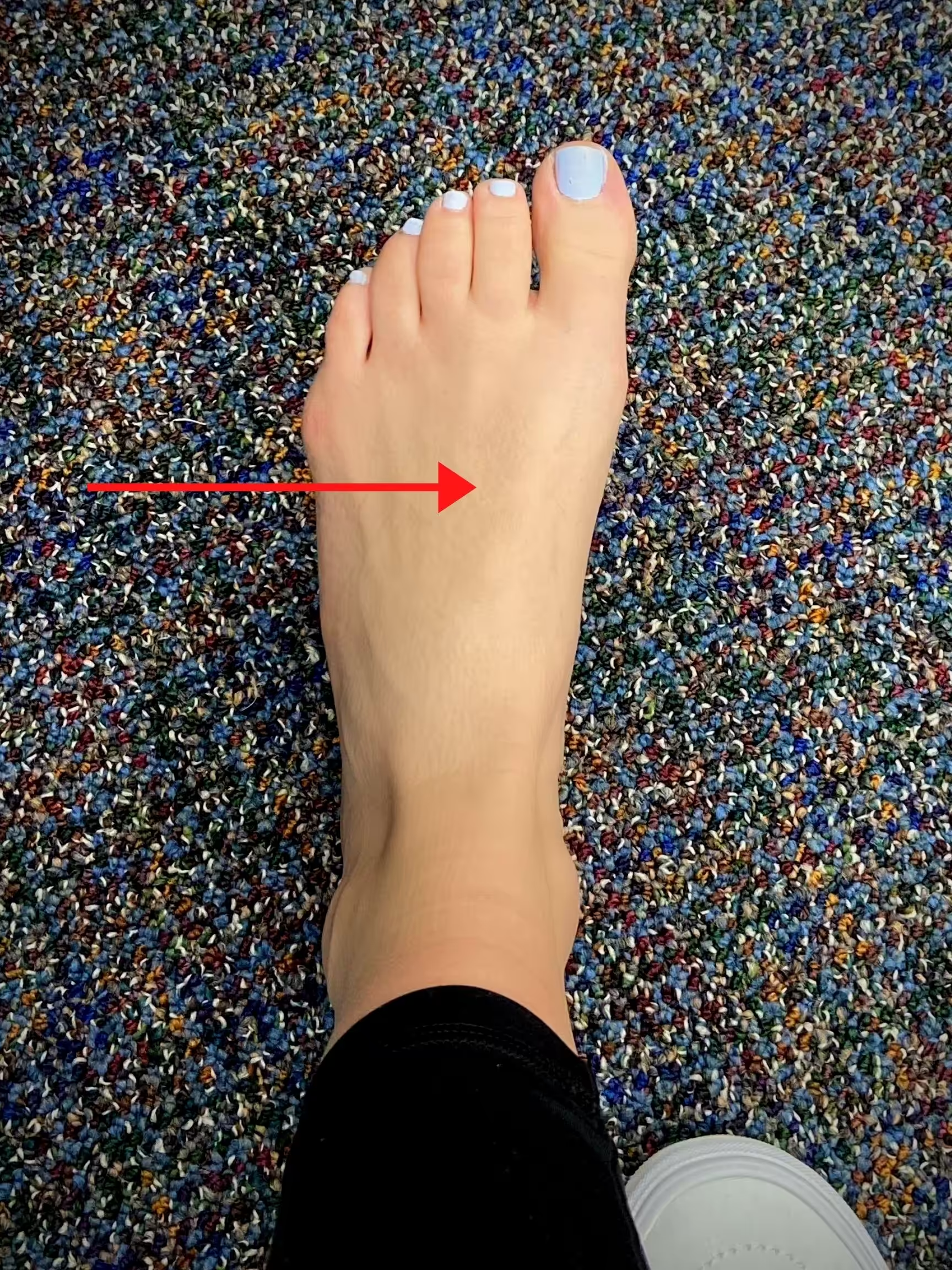
Stress fractures or stress reactions are injuries typically found on the top of the foot in the metatarsal area (shown above). While they can occur in almost any bone, these are the most common. These seemingly trivial injuries can occur over time by simply running on a new trail or through new repetitive movements. This change in activity triggers stress and that repetition can further cause additional stress fracture scenarios. The most common areas we see these fractures are the second through fourth (see image to the right) metatarsal. The first metatarsal is too big and too strong to sustain one of these injuries. If you are not seeing improvement over a few days, or weeks’ time, then an evaluation is highly recommended. In these cases, x-rays are important to make sure that a fracture is not developing. If the bone has been injured enough, then proper equipment is required to help in the healing process. Whether that equipment be a sandal or a shoe adjustment, it is appropriate to make sure they minimize and improve the state of your forefoot before you are ready to get back to activity. The proper equipment is important. A boot may be required instead of a sandal. This is dependent on the individual’s radiographs and the patient’s history. In addition, how long you must wear the device and how much activity during a day are important variables to ask when being evaluated. Ideally, you want to see 1-2 weeks of no pain before you start to ramp up the activities again while being off pain medication completely. Dr. Miller will give you explicit advice how make these injuries better.
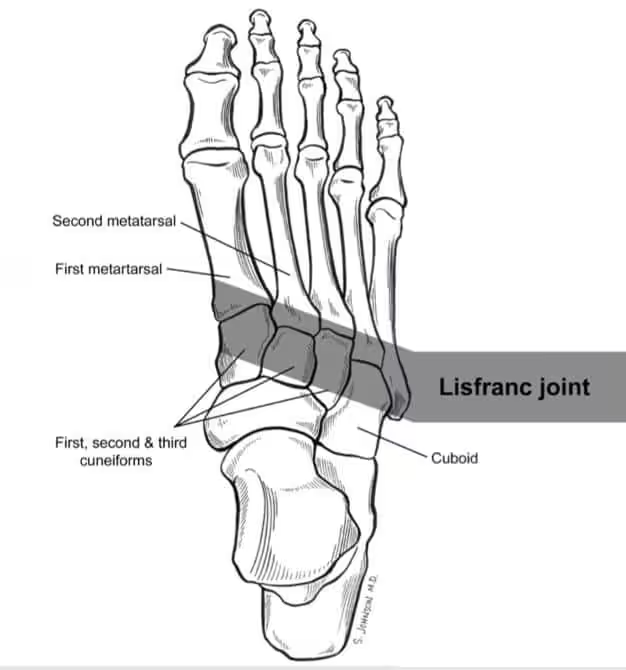
Twisting and Midfoot Sprains
What is a foot sprain? Just like an ankle sprain, the ligaments that connect bones in your foot can be injured. When those connections are partially injured or ruptured, a foot sprain can be a significant injury. How do you know if your foot is sprained? Many times, we see injuries where the foot will have an awkward landing underneath your ankle. These injuries can be painful enough making it difficult to walk or a moderate pain that simply won’t go away. When that happens, certain ligaments in the middle of your foot (Lisfranc ligament, see image to the left) can get injured, which sometimes require surgery to treat or immobilization. These injuries are characterized by pain on the top of the foot just closer to the ankle than the metatarsals. Sometimes these injuries may also seem trivial if you land the incorrect way, either with your foot falling underneath, or an axial twist of the foot. Both scenarios can result with pain in the middle of your foot. These injuries cause pain on the top of the foot in the middle of the arch. (Black arrow) They also necessitate a prompt evaluation with Dr. Miller to know the severity of the injury and appropriate treatment. Often times they do not get better on their own no matter the grade or level of injury unless immobilized with a boot.
Why are evaluations important?
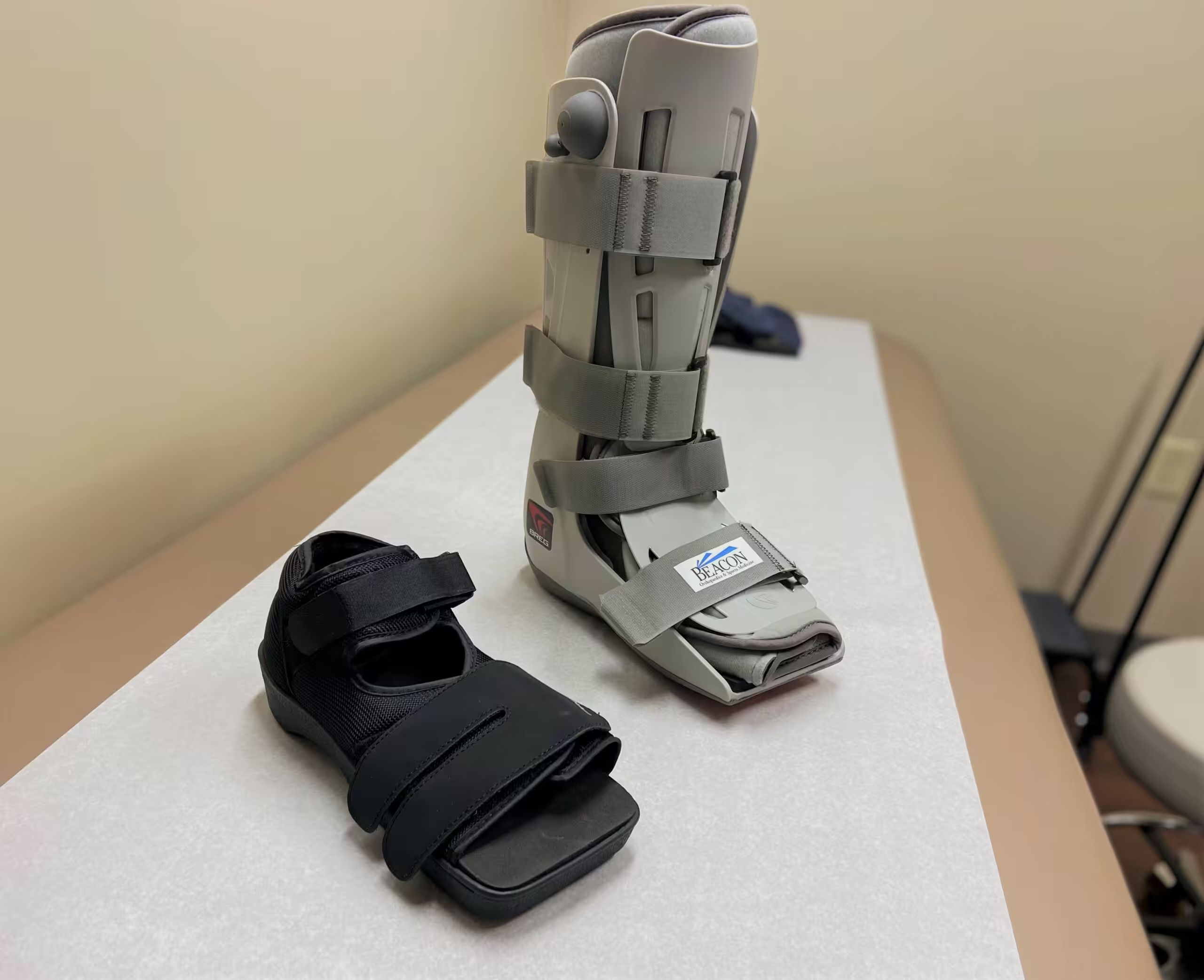
A proper orthopaedic evaluation consists of a hands-on thorough exam, appropriate x-rays taken with good technique, and possibly advanced imaging studies obtained promptly. At Beacon, we have the capability of obtaining rapid imaging studies and we take pride in offering prompt evaluations. Carefully evaluating these injuries are always important because you want to avoid making an injury worse and be able to recover as fast as possible. Neglecting the injury will often delay recovery. For example, a stress fracture may become a complete fracture. They can move, displace, and require surgery or heal very slowly because of continued use. Without an evaluation, it is very difficult to know if you need surgery or if it’s amenable to boot type non-surgical therapy without really being seen. It’s important not to hold off and come in sooner rather than later because these injuries often necessitate several weeks off. Midfoot sprains, or Lisfranc injury, can be very serious if not evaluated within reasonable time. Often if a midfoot sprain is severe and left untreated, the foot can collapse, change shape, and arthritis eventually ensues with chronic pain.
Do you have nagging foot pain?
Don’t wait, get an evaluation today! Dr. Miller is available at several locations around the Cincinnati area with Beacon Orthopaedics. Contact us today for more information! Click here to learn more and schedule an appointment with Dr. Miller for foot and ankle injuries.
Beacon Orthopaedics & Sports Medicine’s Dr. Glen McClung to Serve as Florence Y’alls Team Medical Director
May 20, 2021
FLORENCE, KY. – Beacon Orthopaedics & Sports Medicine – the regional leader in providing medical services to professional, college, high school and recreational sports teams – will serve as medical director for the Florence Y’alls minor league baseball team through a five-year partnership announced by the two organizations.
Glen McClung, M.D., who offers comprehensive sports medicine care and orthopaedic surgery, has been named team medical director for the Y’alls, which plays its first home game May 27th in Florence.
“We are excited to have Beacon Orthopaedics and Sports Medicine as our official and only healthcare provider for the upcoming season,” said Florence Y’alls President, CEO and Managing Partner David DelBello. “Dr. McClung is going to work directly with the players to make sure they are healthy and to make sure they get what they need.”
“If they players aren’t healthy, they aren’t playing,” DelBello said. “So we need the best behind them, making sure they are up to par and playing at their highest peak of performance. And Beacon is the best.”
“Beacon Orthopaedics & Sports Medicine is very excited to be the new medical providers of the Florence Y’alls and we are looking forward to working with the team during the 2021 season,” Dr. McClung said. “We already take care of the Cincinnati Reds, so this is a tremendous opportunity for us, especially because our physicians are sports-medicine trained.”
In addition to the Reds and Y’alls, Beacon has professional athletic partnerships with three of the Reds minor league affiliates – the Louisville Bats, Dayton Dragons and Daytona Tortugas – as well as more than 20 high school athletic partnerships and nearly 30 recreational athletic partnerships with area club teams, youth teams and leagues.
Dr. McClung specializes in sports medicine and treatment of elbow, hip, knee and shoulder injuries, including fractures. In addition, Beacon’s entire roster of more than 40 orthopaedic and sports medicine specialists will be available to the Y’alls.
“We have a whole array of physicians who can treat knees, shoulders, spines, hands, feet and ankles,” Dr. McClung said.
In addition to Dr. McClung attending games, Beacon will provide two trainers to the Y’alls, one who will work with the players and another staffing a first aid station in the stands for the fans.
“At every game, we will have a physician, two trainers on the field and in the stands and all the equipment needed for the players and the fans,” Dr. McClung said.
“Beacon is going to be all over the team, all over the ballpark and we are excited to have them,” DelBello said. “This is going to be a fantastic long-term partnership between Beacon and the Y’alls. Beacon is a leader in orthopaedics and sports medicine, and we believe we are leaders in minor league baseball. It is going to be a fruitful and mutually beneficial partnership.”
Serving as the medical provider for the Florence Y’alls is another example of Cincinnati-based Beacon’s expansion into the growing Northern Kentucky market. Beacon operates an office in Erlanger and will soon be announcing two more Northern Kentucky offices.
“We have taken care of patients and athletes in Northern Kentucky for several years,” Dr. McClung said. “Our offices in Northern Kentucky make it much more accessible for our patients as opposed to driving to Cincinnati. We are adding more physicians, more offices and we plan on continuing to grow throughout the Northern Kentucky market.”
Media note: Click here for video of Dr. McClung.
# # #
About Beacon Orthopaedics & Sports Medicine
Established in 1996, Beacon Orthopaedics & Sports Medicine has helped thousands of patients overcome injuries and improve their quality of life. Beacon Orthopaedics provides medical direction and coverage for over 30 local high schools, five college athletics programs, and professional teams including the Cincinnati Reds. With 15 locations across Southwest Ohio, Northern Kentucky, and Southeastern Indiana, Beacon offers instant access to comprehensive orthopedic care, including sports medicine, physical therapy, athletic training, imaging services, orthobiologics, as well as surgical procedures involving neck, spine, shoulder, elbow, hand, hip, knee, foot and ankle repair, reconstruction, and replacement.
About the Florence Y’alls
The Florence Y’alls are Northern Kentucky’s professional baseball team, and are proud members of the independent Frontier League, an MLB Partner League. With a purposeful focus on entertaining our fans, the Y’alls provide affordable, family-friendly entertainment. Y’alls home games are played at Y’alls Ballpark, located at 7950 Freedom Way in Florence, Kentucky. Opening Day is Thursday May 27 and tickets are on sale now for the 2021 season. More details can be found online at florenceyalls.com or by phone at (859) 594-4487.
If you’d like to learn more about a pain that’s been keeping you from living your best quality of life, we’d love to help. Beacon even has same-day appointments available. Schedule your appointment now to experience the Beacon difference.
5 Things to Know About Joint Replacements
May 19, 2021
When severe pain or joint damage limits your daily activities, it’s time to see a doctor. Most cases of joint pain are caused by degenerative damage to your articular cartilage, the cartilage that lines the ends of your bones. The breaking down of cartilage is usually caused by overuse, arthritis, an injury, or another condition.
When lifestyle changes, physical therapy, or injection therapies (such as mesenchymal stromal cell or platelet injections) are no longer effective at reducing your joint pain, your doctor may recommend total joint replacement surgery.
1) You Will Likely Walk the Day After Surgery
Being sedentary after surgery increases the risk of complications, such as blood clots, pneumonia, and bedsores. For those reasons, you’ll be encouraged to get up and at ‘em pretty quickly. In some cases, patients take a few steps— anywhere from 10 to 200 feet—the same day as the surgery.
2) Physical Therapy is Key
Moving around is critical after surgery — from the initial days following your operation and well into the coming weeks and months. The more you move, the better the long-term outcome. Most patients will see a physical therapist following their procedure and will be asked to practice exercises on their own.
3) Recovery Can Take Time
Full recovery can take up to a year. Starting out, you’ll recover in a rehabilitation facility or at home. While you’ll be asked to move almost immediately, driving is off the table for about six weeks. It’ll take some time to get you back into your job, and slowly over time, you’ll increase activity to fully regain your mobility and strength.
4) Losing Weight is Helpful
People who are overweight are 33 times more likely to need a joint replacement than people who are a healthy weight. They’re also more likely to experience complications after a procedure. Issues like infections, difficulty waking after anesthesia, and eventual joint loosening are all increased the more overweight a person is. For that reason, losing weight may be recommended and could even be a reason to delay surgery.
5) Artificial Joints Can Wear Out Over Time
The younger you are when receiving a joint replacement, the more likely you are to one day need to undergo joint replacement again. New joints can last anywhere between 15-25 years, so make sure to understand the implications of your joint replacement surgery when meeting with your doctor.
Beacon Specialists are at the Ready
The experts at Beacon Orthopaedics are not jack-of-all-trades doctors — they’re specialists. With advanced training in their areas of expertise, you can rest easy knowing your physician has in-depth knowledge and experience with your specific issue. Your unique path to recovery may include anything from orthobiologics, physical therapy, or arthroscopic surgery to partial joint replacement or total joint replacement surgery.
Our goal is to ensure patients have a high level of comfort in their care plan. To do that, we’ll discuss all of your treatment options and identify the best one for you, together.
Seeing a doctor as soon as you begin experiencing joint pain is critical. Oftentimes, the quicker you seek care, the less intensive the treatment you’ll require. At Beacon, surgical intervention is often reserved for when other non-invasive treatments haven’t worked, or no longer work, as desired.
Contact us to schedule a time to experience the Beacon difference.
Why We Run: Is It for You?
May 19, 2021
The Pros and Cons of Improving Body and Mind Health Through Running
You don’t have to look far to find someone raving about the benefits of running. Seemingly, there are new converts every day whose lives have been transformed by hitting the pavement. Maybe you’re one of those converts, or you’ve already been running for years. Perhaps you’re one of the many who has wondered if it’s all it’s cracked up to be and if it could be for you.
In this blog post, we unpack the pros and cons of all things running.
Pro: Cardiovascular System Boost
Aerobic activities, like running, significantly reduce your risk of certain diseases. Your chance of dying from any cause is reduced by 29%. Your risk of dying from cardiovascular disease is reduced by 50% when you run for leisure. Simply running for 5-10 minutes per day can significantly improve your risk of disease and mortality.
Con: Overuse Injuries
When you’re new to running, it’s crucial to start slowly and listen to your body. Coming out of the gate too aggressively can cause injuries before you have a chance to reap the benefits of running, possibly deterring you from your new hobby. Common injuries include plantar fasciitis, stress fractures, shin splints, IT band syndrome, and tendonitis.
Gradually ramping up helps your body adapt better. Research shows that adding about 10% to your distance every week is ideal for warding off injuries. Your doctor can work with you on the best way to start if you do want to begin running.
Pro: Improves Your Daily Functioning
One of the most significant rewards of running is that you feel more energized and capable to accomplish your daily activities. Walking longer distances and climbing stairs without getting winded is a game-changer. Even people with existing joint issues experience improvements when they take up running. While running is sometimes thought to cause knee or joint pain to worsen, research shows otherwise. Since you strengthen the muscles and tendons around the knees while keeping your weight at a healthy level, it can actually improve their function.
Con: Monotonous
While some people find that going for a run clears their heads or gives them a chance to focus, others find running to be boring, frankly. That feeling can deter even the most motivated of folks. There are ways to make running routines more stimulating, however. Varying the type of running, routes, and getting a good music playlist can drastically improve the experience for those who find running less than stimulating.
Pro: Works Every Muscle in Your Body
Running is a full-body workout. Going downhill and uphill, runners utilize different muscle groups. When you’re finished with a run, you’ll have used almost every muscle group in your body — from core muscles to your arms and of course, your legs.
Should You Run?
We may be biased, but we say yes! With your doctor’s green light, of course. It’s beneficial for every age group and fitness level. Just make sure to take proper precautions:
- Start slowly
- Warm-up
- Wear proper footwear and replace them at the appropriate intervals
- Listen to your body
- Drink electrolytes
Beacon Specialists are at the Ready
Our physicians are here to help you keep running and doing whatever activities you enjoy. If pain is keeping you from what you love to do, we’re here to get you back to it. Contact us for a same-day appointment or schedule a time that works for your schedule to experience the Beacon difference.
It’s All in the Wrist: What You Should Know About Wrist Injuries
May 18, 2021
Written by Dr. Michael Wigton, Hand & Wrist Specialist at Beacon Orthopaedics
Injuries and fractures of the wrist are very common among patients of all ages and activity levels. Wrist ailments come in all varieties, some can be obvious and seen and treated immediately such as a radius fracture while others are more subtle and may not be diagnosed right away such as injuries of the wrist ligaments.
Common Wrist Injuries
The most common wrist fracture seen by orthopedic hand surgeons is a distal radius fracture. Often these injuries happen when a patient lands on their outstretched hand to break a fall. These injuries can also result from higher-energy trauma such as car or motorcycle accidents or falling from higher heights. Distal radius fractures are more common in women and in the post-menopausal age group. When we see these injuries it is important to evaluate the hand, wrist, and arm in its entirety to make sure there are no other associated injuries. Hand and wrist specialists are able to evaluate and treat any issue that may arise from these injuries.
Another frequent fracture treated by orthopedic hand surgeons is a fracture of the scaphoid bone. The scaphoid is a small bone on the thumb side of the wrist, it is shaped somewhat like a peanut. (Or shaped like a boat as the origin of the word scaphoid comes from the Greek word Skafos, which means boat.) Scaphoid fractures are notoriously more difficult to treat. This injury is not always recognized initially, sometimes an MRI or a CT scan may be needed to diagnose the fracture. Regardless of the nature of the fracture, early treatment yields the best outcome.
Chronic Wrist Pain
Ligament and soft tissue injuries within and around the wrist are often a culprit of persistent pain. The scapho-lunate ligament (or SL ligament) is a ligament within the wrist joint that links the scaphoid bone and the lunate bone together. It is an important structure for maintaining wrist motion and stability. The triangular fibrocartilage complex or TFCC is a ligament and cartilage structure on the little finger side of the wrist. The TFCC provides stability to the wrist as the forearm rotates. Injuries to both the SL ligament or TFCC can occur from subtle acute injuries like a twisting force from a power tool, or from a higher energy fall, or as a result of chronic injury over many years. Often an MRI is recommended for evaluation and is helpful when deciding the best treatment option.
Treatment Options for Wrist Injuries and Chronic Pain
Many wrist injuries and fractures can be treated without surgery while many others require surgery to achieve the best result. When appropriate, treatment of wrist fractures is the perfect clinical situation to engage in a shared decision-making approach with your surgeon. Your surgeon will present options and discuss expectations for different treatments with the patient. This way, the patient and surgeon can decide on the best treatment to get back on the road to recovery as quickly and efficiently as possible. A shared decision-making approach results in higher satisfaction regardless of the treatment modality chosen because both the patient and the surgeon have ownership in the choices made.
Beacon is Here to Help
If you’re experiencing hand or wrist pain, we’d love to help you return to your normal activities. Dr. Michael Wigton, one of Beacon Orthopaedics & Sports Medicine’s talented hand & wrist specialists, is available to schedule appointments online or by phone 24/7. Schedule your appointment now to experience the Beacon difference.
No, You Aren’t Too Young for Arthritis
May 12, 2021
And other facts about arthritis you should know
If you suffer from arthritis, you aren’t alone. More than 54 million adults in the United States live with doctor-diagnosed arthritis. The actual total of those who experience it could be almost double that number since most people don’t seek treatment until the pain is severe. In addition to the millions of adults suffering from it, nearly 300,000 children live with it, too.
By these estimates, more than 1 in 4 U.S. adults has some form of doctor-diagnosed arthritis. The estimate is even higher in rural areas where specialized healthcare access can be limited. The conservative estimate in those areas is 1 in 3 adults. In fact, it’s the top cause of disability in the United States. (Arthritis Foundation, 2020)
Orthopedics and Rheumatology
Arthritis can be treated by both orthopedists and rheumatologists.
- Orthopedists are surgeons who treat bone and joint diseases and injuries, such as arthritis, osteoarthritis and body trauma. They use varying care plan approaches depending on each patient’s unique situation — from medication to minimally invasive treatment and surgery.
- Rheumatologists are internal medicine physicians who focus on autoimmune conditions and non-surgical treatment of diseases like arthritis.
Could You Have Arthritis?
With any joint pain, there’s a chance arthritis could be the cause. Perhaps surprisingly, arthritis includes more than 100 types of joint-related diseases. The reasons can be varied but generally the sources include genetic predisposition, injury or illness that can lead to joint problems, or repetitive and/or stressful movements over time.
Prevention, as Always, is Key
You can’t fix genetics, and you also can’t change an injury or illness. You can, however, be aware of your risk factors and lead a healthy lifestyle to mitigate its potential effects.
If you believe your joint pain could be related to arthritis, early detection and putting a treatment plan in place are essential to slow progression of the disease and managing your pain. Your healthcare team can work together to help identify if you have arthritis and manage it if you do.
Diagnostic tests and physical exams are part of determining the root cause of your pain. Your Beacon physician will guide the development of an individualized care plan unique to your needs.
How is Arthritis Treated?
We, as orthopedists, look at arthritis treatment on three different levels: conservative, moderate, and surgery as the final option. We turn to surgery when your arthritis is no longer manageable with therapeutic and minimally invasive pain-management approaches.
Conservative: the sooner you seek medical attention, the longer conservative methods like the following have the potential to be effective. Treatments include:
- Anti-inflammatories
- Behavior modification
- Bracing
- Physical therapy
- Supplements
Moderate: If and when conservative measures aren’t able to help maintain your quality of life, there are moderate, minimally invasive treatments that can help manage pain, while still avoiding surgery. Those methods can include:
- Assistive devices
- Cortisone injections
- Hyaluronic acid injections
- Occupational therapy
Surgery: When all other approaches are failing, joint replacement surgery is typically the next recommendation. It is the only means currently available that can address and eliminate arthritis completely.
When It’s Time to See a Doctor for Arthritis Pain
At-home treatment that doesn’t improve your condition after a week
If you have minor ache and pain flare-ups, ice and heat, over-the-counter pain relievers and periods of rest can help. The Arthritis Foundation further suggests acupuncture, massage therapy, tai chi and yoga as a few options to help relieve arthritis pain. When you don’t notice improvements in your joint pain after a week of treating it with those methods, it’s time to see a doctor.
One of your joints goes rogue
You probably know your baseline of pain pretty well — as well as your body’s norms. If you start waking up with a swollen knee, wrist or other isolated joint, it may be cause for concern, and you should contact your doctor.
Rest doesn’t improve the pain
If you’ve been at rest or started resting for extended periods of time after joint pain and it doesn’t help, it’s time to see a doctor about starting or changing treatment.
Beacon Specialists are at the Ready
If you’d like to learn more about a pain that’s been keeping you from living your best quality of life, we’d love to help. We even have same-day appointments available. Schedule your appointment now to experience the Beacon difference.
A Hike a Day is the Orthopaedic Doctor’s Way
April 29, 2021
Dr. Michael Swank is Hot on Our Trail
Cincinnati Nature Center is a local treasure that invites its visitors to slow down, enjoy nature, and take a hike. Few know that more than Dr. Michael Swank, board-certified surgeon specializing in hip and knee replacements. As a Nature Center member and creator of Walk30™, his two greatest passions (outside of orthopaedics) intersect with his conviction to the power of walking.
When Cincinnati Nature Center’s Event Coordinator Pamela Tierney called Dr. Swank to initiate a conversation about the benefits of hiking outdoors as part of the healing process for health issues, Dr. Swank immediately agreed.
“Getting patients to explore new spaces like the Nature Center as part of their exercise routine is a great way to keep them motivated,” said Dr. Swank. “It significantly contributes to a successful health and wellness journey.”
Accessibility at the Cincinnati Nature Center
Even better, the Nature Center offers accessible trails at both their Rowe Woods location in Milford and Long Branch Farm & Trails location in Goshen. Allowing recovering surgery patients, when cleared by their doctor, to further their rehabilitation in the great outdoors — for many, a peaceful and restorative environment.
Dr. Swank recently donated several of his Walk30™ Walking Sticks to the Nature Center, who will raffle them off to some very lucky recipients. A few were already presented to raffle winners, and more will be given away later this year. That includes on National Trails Day on June 5 as part of the Nature Center’s planned celebration.
Get Outdoors
Cincinnati Nature Center was founded in 1967. Their focus is to enrich lives by encouraging a passion for nature through experience, education and stewardship. Learn more about visiting their Rowe Woods and members-only Long Branch Farm & Trails locations.
“With 20 miles of award-winning trails available for all ages and abilities, Dr. Swank’s donation will be used to enhance the hiking experience for the lucky winners!” said Tierney. “Our joint care and consideration for getting the community outside and moving is a wonderful thing for everyone involved.”
If You Need Help Getting Back Outside Without Pain
If you’d like to learn more about a pain that’s been keeping you from the great outdoors, we’d love to help. Our team of specialists is here to get you back to what you love. We have same-day appointments available. Schedule your appointment now to experience the Beacon difference.
New Moeller baseball field to be named after Kremchek family doctors who served school
April 29, 2021
The content in this blog was written as an article by Scott Springer for the Cincinnati Enquirer. See the complete article here.
KENWOOD – Tim Kremchek remembers part of his father’s job meant pulling out of the driveway on Friday evenings in the fall for high school football games. He also remembers the family phone going off in the house on Saturday mornings around 6:30.
It usually was Gerry Faust, the architect of Moeller football, calling Dr. Edward Kremchek who began serving Moeller athletes as far back as 1968. His father lived for those moments as a pioneer of what is now known as sports medicine.
The combination of sports and medicine so intrigued young Tim that he went off and became an orthopedic surgeon himself, serving under world-renowned Dr. James Andrews in Birmingham until returning home to Cincinnati to work with his father before his passing in 1995.
Though neither Kremchek went to Moeller, both cared for their athletes and witnessed how the school molded them into successful young men.
In honor of the late Dr. Edward Kremchek and as a gift back for the inspiration Moeller has meant to both of them, Dr. Tim Kremchek gave the Crusader family a generous donation to name the new field after the Kremcheks, Kremchek Stadium.
“You get to this point in your life and you want to give it back to the community,” Kremchek said. “My father meant everything in the world to me and he was one of the leaders in sports medicine in this city. He gave me the inspiration to go into medicine to begin with. The way he loved Moeller High School and the way he cared for Moeller High School, he was really a trailblazer especially in this part of the country, on how to take care of a high school.”
The new complex was announced in early December at Moeller as part of their $14 million “Raise The Shield” campaign. It will be located in Miamiville off of Second Street.
“Often when I talk to Doc Kremchek, he talks about his dad,” Major League Baseball Hall of Famer and Moeller grad Barry Larkin said. “He left a lasting impression. His father was the team physician when I was playing for Moeller. Everybody had respect for him because he was a quality person.
The gift thanks Moeller for its tradition-rich history and for allowing both Kremcheks to play a part in it. Dr. Tim Kremchek has been well known in athletic circles for years through his position as the Reds team medical director since 1996.
“The Kremchek family has been a part of the Moeller family for decades and has already given so much to our teams, students, coaches and families,” said 1996 alumnus Marshall Hyzdu, Moeller president and acting athletic director. “We are eternally grateful for the Kremchek’s long and deep commitment to the school and are honored that Kremchek Stadium, the first home baseball field in school history, will stand as a lasting testament to the Kremcheck family’s dedication to Moeller High School and all that it stands for.”
Family ties that bind
Like his father, Dr. Tim Kremchek has been wrapped up in his work from being in the Reds clubhouse to Goodyear spring training to pacing the sidelines at Moeller games, Lakota West games or Indian Hill games (other Beacon clients).
“As I got older, I understood it,” Kremchek said of his Dad’s ties to the athletes. “When I came back in 1993, he was sick and I was helping him. I watched how Moeller took care of him and made him feel like he was the most needed, wanted man in the world even though he could do nothing at that point. He wasn’t able to perform surgery and was having a hard time getting around, but he’d still go to the games with me.”
He was thankful for the time he was able to spend with his father at places like Galbreath Field where former coach Steve Klonne once awarded him the game ball after a victory by the Crusaders.
That picture still rests in Kremchek’s office in Sharonville at the Beacon Orthopaedics Complex. If you’ve not been there, numerous pictures adorn the walls of athletes he has worked on, worked with or encountered along his medical journey.
He’s performed numerous Tommy John surgeries on Reds and other major leaguers, as well as college and high school players, including Moeller’s own Brent Suter (Milwaukee Brewers) in recent years.
A day off?
Kremchek’s a busy man in all seasons and began some of the first Saturday clinics in the area. Remembering those 6:30 a.m. Saturday phone calls from Faust to his father, he began seeing patients Saturday morning rather than having parents wait until Monday. Athletes from girls and boys sports populate his office now early in the weekend.
Again, that sprang from his father’s experiences giving Moeller athletes the quickest medical treatment possible. Dr. Edward Kremchek was on the sidelines at a time when most schools had no medical personnel around.
“People used to think he was crazy bending over backward, working seven days a week with high school kids,” Kremchek said. “But he loved it. He got drawn into the culture and tradition.”
That dedication was honored years later at Dr. Edward Kremchek’s funeral at All Saints Church when hundreds of Moeller kids in blue blazers showed up to pay tribute.
“I’ve watched how they grow up and are educated,” Kremchek said. “I’ve watched how they go out into the world and the kind of people they become. The brotherhood, the camaraderie and the community of Moeller is something like I’ve never seen in my life. What it meant for my father, what it means to me, what it means to my family is where I wanted to put my money.”
Former Moeller football coach Steve Klonne, who led Moeller to state titles in 1982 and 1985, remembered Dr. Edward Kremchek’s sense of humor and dedication to the team at a time when few if any high schools had team doctors attending practices and games.
“Dr. Kremchek was one of the funniest guys I was ever around,” Klonne said. “He had a dry sense of humor, and he always had a joke. And in those days, you didn’t have doctors caring about your football team and going to football games on Friday night.”

A historical venture
The baseball stadium will recognize past teams like the eight state champions (1972, 1989, 1993, 2004, 2009, 2012, 2013, 2015). Moeller’s first coach Mike Cameron won the first four state titles with Tim Held winning the last four.
Moeller’s major leaguers will also be recognized at the new Miamiville property such as Baseball Hall of Famers Barry Larkin and Ken Griffey Jr. The Crusaders have also produced Buddy, David and Mike Bell, Andrew Brackman, Phillip Diehl, Adam Hyzdu (brother of Moeller President Marshall Hyzdu), Stephen Larkin, Bill Long, Len Matuszek, Eric Surkamp, Brent Suter and Alex Wimmers.
All were in contact with Drs. Edward and Tim Kremchek at one point or another.
“The donation to Moeller is a reminder of how meaningful Moeller is to Doc Kremchek and his family,” Cincinnati Reds manager and Moeller alum David Bell said. “On top of everything he has done, this is a gift that will continue to give for many years to come. I’m happy for Doc and I’m happy for all the Moeller athletes who will be able to play on this beautiful field that Doc is helping make possible.”
Now, the circle continues as Kremchek treats kids of the kids he helped when they were in high school.
“He took care of hundreds and hundreds of those kids through the years,” Kremchek said of his father. “He used to tell me about watching Junior Griffey play saying, ‘This kid’s going to be something else!’ All of those guys remember my father.”
Kremchek would like to thank his colleagues at Beacon Orthopaedics and Sports Medicine for supporting the donation.
You can schedule with Dr. Tim Kremchek at Beacon Orthopaedics by clicking here.
Hand Pain & Smartphones: When Your Phone Isn’t Doing Your Body Good
April 26, 2021
Did you know the average American spends 5 hours a day on a mobile device? That can lead to issues like trigger finger, texting thumb, carpal tunnel syndrome, and more.
There isn’t a day that goes by that most Americans aren’t on their smartphones. What don’t they do for us? They’re our watch, camera, alarm and GPS. They’re where we get our news and music. We use them for texting, social media, email, internet, and every once in a while, we might use it to make a phone call.
If that list looks at all like yours, then you’re like most people. The issue for orthopaedic specialists comes in when you’re on your smartphone for hours every day. A 2015 study by Flurry, a mobile analytics company, found that the average American spends five hours a day on a mobile device, which was up 20 percent from the same time period in the previous year. Those trends have, at minimum, remained the same if not increased.
Smartphone-Related Orthopedic Issues
That kind of time investment can cause physical issues for smartphone users. From hand discomfort to wrist and elbow pain, we see patients with a variety of problems that can be traced back to phone use. It isn’t always the main reason for the pain but can play a noteworthy role in the conditions our patients develop.
One of the most common smartphone issues we encounter is the trigger thumb — or trigger finger. It falls under the category of repetitive stress injury, a.k.a. stenosing tenosynovitis. We also have a number of patients who experience carpal tunnel syndrome in their wrists or cubital tunnel syndrome in their elbows.
6 Ways You Can Outsmart Your Smartphone Pain
To our readers who are feeling the pain when it comes to their smartphone use, there’s hope. There’s the obvious advice: put down your phone. Since that isn’t likely to happen, however, we do have some tips to help alleviate discomfort.
- Stretch the muscles involved with phone use: fingers, wrists, forearms
- Play games or text in burst — break up your use into shorter sessions
- Use voice-to-text
- Get the hang of the swipe feature by sliding your fingers to letters over typing
- Switch hands
- Take over-the-counter pain relievers to reduce swelling and inflammation
How Much Pain is Too Much Pain?
Cramping and stiffness that continue once you stop using your phone are red flags. Numbness and tingling are even bigger red flags. Any symptoms that continue well past phone use should be considered reasons to see a Beacon hand and wrist specialist, like Dr. Mohab Foad, Dr. Sam Koo, and Dr. Michael Wigton.
“Hand and wrist issues from cell phone use are very common, particularly from texting,” shared Dr. Wigton. “Patients should seek specialist care if they have symptoms that are persisting for any length of time. Clicking of the thumb or a feeling that the thumb is jumping out of place could be trigger thumb. Pain of the wrist with wrist and thumb motion could be tendinitis. Early treatment of these conditions may result in a cure with non-surgical options.”
Depending on a patient’s symptoms and ultimate diagnosis, treatment may call for:
- Immobilization for a few weeks allows tendons to rest and recover
- Medication that might be used along with immobilization or on its own — it can include an injection as part of a minimally invasive treatment or a pill in hopes of inflammation reduction
- Surgery is the last option and uncommon for issues caused solely by phone use
Smartphones are an indelible part of life in the 21st century. Make sure you manage your usage to reduce your risk of phone-related pain. However, if you start to experience issues, we’re here for you with same-day appointments available. Schedule now.
IN & OUT: Patients Safely Experience Outpatient Joint Surgery
April 25, 2021
Read the full article on VENUE Magazine by clicking here.
There’s no denying that COVID-19 changed everything, and while a number of those changes were unsettling, some were for the bet- ter. Such was the case in the world of orthopaedics. According to Michael Lawson Swank, M.D., orthopedic surgeon with Beacon Orthopaedics and Sports Medicine, before the pandemic, hospitals sent 50% to 60% of patients home in the same day following a joint surgery when 80% to 90% could have been discharged in the same day. “It was just inertia, really,” says Swank, who found that patients felt more comfortable with that plan since the coronavirus loomed. Whereas patients once fought to stay in the hospital because they thought they would receive better care, now the fear of going home too soon is less than the fear of staying and getting COVID-19.
“In that respect, COVID-19 was an accomplice I didn’t expect to have,” says Swank. “It set the stage for people to rethink how they view health care and risk.”
Within a few months of the coronavirus invading our country, Swank was performing exclusively outpatient joint surgeries where patients weren’t spending the night.
“It’s not this 23-hour admission stuff that hospitals made up as a less-than-a-full-day surgery,” says Swank. “It’s literally going home within three to four hours post-surgery and this includes patients up to 80 years old.”
This change in practice has major implications for health care because total knee replacements tally as the No. 1 surgical cost for Medicare.
“Ultimately, if we can do these things out of the hospital in an outpatient setting, we’re saving Medicare millions of dollars a year,” says Swank, who is the medical director of Cincinnati Orthopaedic Research Institute. Patients were initially skeptical, however, and right- fully so. In order to do this safely, Beacon has put in place standardized protocols that include treatment pathways, pain management and changes to anesthesia.
Swank employs muscle-sparing techniques — he doesn’t cut any muscle during the time of surgery. And, because he uses spinals and local blocks instead of full anesthesia, patients don’t wake up in pain or nauseated, which are typically two of the big problems following surgery. By avoiding those two major immediate post-op complications, patients are able to safely go home the same day.
While moving the procedure to outpatient surgery with faster recovery and rehab and less pain may send a message that the surgery is no big deal, that’s not true.
“This is a life-changing event,” says Swank. “Your joint is not the same as it used to be. It requires maintenance just like your car requires maintenance. It’s not a passive process.”
Patients come to Beacon because they want their joints fixed, and that requires both doctor and patient effort, Swank emphasizes, offering this analogy:
“All I do is put a hinge on your door so your door can move properly,” says Swank. “The hinge I put in doesn’t make your door move. The patient has got to make the door move. The problem is that people focus too much on the hinge and not enough on moving the door.”
Swank tells his patients it’s a 50/50 deal, meaning that while he must get his part right, they, too, have to put in the effort to ensure they can return to a life of independence and autonomy.
The joint replacement process involves:
- Prehabilitation (getting patients in the best shape prior to surgery)
- Acute phase recovery (getting patients back to range of motion/ walking/off ambulatory aides)
- Strength building (this lasts six weeks to a year and is for recovering lost strength).
- Maintenance (daily lifetime care, including walking and two simple stretches).
“Patients need to walk 30 minutes a day and do simple stretches in order to take care of their joint and keep themselves out of my office,” says Swank.
To help the process along, Beacon assembles a multidisciplinary team consisting of a nurse navigator, anesthesiologists and therapists. To help guide the patient through the perioperative episode of care, Beacon’s staff utilizes a web- and app-based software program to communicate with their patients to ensure they have seen their primary care physicians, completed their labs, gotten in their daily steps, and have seen their therapists.
Because the first six weeks post-surgery are really to restore motion, they have decreased the number of visits in the first six weeks but extended the visits to help patients through the strength-building phase when they require more help. Therapists are monitoring the patients longer and the patients can send physicians messages through the app about how they are doing.
“We can track these patients using a multidisciplinary, real-time record of what’s happening,” says Swank. “We’ve added this tracking and monitoring system so we can broaden our outreach even though we’re seeing people less frequently.”
Beacon uses customization techniques for implant fit and position by getting their patients CAT scans or MRIs ahead of time so that they can precisely fit the implants to the patients as opposed to making judgements about the patient at the time of surgery. Regarding hips, Beacon uses an interoperative computer program based on an X-ray that allows their team, in real time, to get leg length measurements, acetabular cup positions and femoral stem positions.
“All of these things are designed to decrease pain, reduce blood loss and allow for faster rehabilitation because there is not as much trauma, and we are fitting implants to the patients even better,” says Swank, who likens it to fitting a coat.
“When the fit is better, the feel is better. And when the feel is better, you’re likely to move better,” he explains.
Swank estimates that since COVID-19 started, he has performed between 500 and 600 outpatient joint surgeries. Where doubt once sat, gratitude has bloomed — complaints have decreased, patients are doing better, and there is less confusion among providers because they are controlling the whole narrative.
“Many of my patients were skeptical of going home the same day, but they came back and said, ‘Man, this is way better than I thought!’” says Swank, who suspects that COVID-19 will permanently change a number of protocols, and in this instance, that’s a good thing.
“It goes back to the idea that the goal is not to fix something but rather to get someone back to walking and moving more comfortably so that they can maintain their independence, their quality of life and improve their overall health.”
Recognizing National Minority Health Month
April 16, 2021
THE IMPORTANCE OF ACCESSIBILITY AND ORTHOPEDIC CARE
This April we recognize National Minority Health Month (NMHM). Our goal is to join a national movement to help raise awareness about health disparities that continue to affect racial and ethnic minority populations — while encouraging action through education, early detection, and control of disease complications.
Health Disparities: A National Conversation
Increasingly, there has been a larger national discussion around health disparities in minority populations — disparities that occur in orthopedics as well. For example, Baylor College of Medicine recently published a state of racial and ethnic health disparities overview. It specifically looked at patient outcomes related to the most commonly performed orthopedic procedure, joint replacement. Despite improvements in surgical pathways and overall health profiles, lower joint replacement outcomes continue to occur among minorities, particularly Black and Hispanic patients.
Why Health Disparities Exist
The underlying causes are vast and complex. There is a multitude of barriers that exist in minority communities. They can include social factors such as language, education level, income, living environment, caregiver support, and a patient’s life experience with healthcare professionals.
Particularly pertinent for orthopedic patients, there are studies that suggest disparities may partly result from patient-level factors, including minority patients’ longer delays before seeking care and a greater likelihood to refuse recommended services. Postponing care for orthopedic injuries on a whole typically results in outcomes that aren’t as great as when treatment is sought earlier.
Furthermore, recent studies revealed that despite similar education, amount of insurance coverage, number of comorbidities, and self-reported degree of osteoarthritis severity, African Americans were nearly 50% less likely than whites to perceive the benefits of total joint arthroplasty and 70% more likely than whites to recognize barriers to total joint arthroplasty. However, the good news is that these beliefs are reversible with appropriate educational efforts.
Even better news makes it clear that despite the persistence of health disparities, when the two minority groups experiencing the most disparities, Blacks and Hispanics, were analyzed over time, positive trends in terms of procedure utilization, health profiles, and outcomes were observed. These findings provide hope that efforts to tackle health disparities are making a difference.
Better Serving Our Patients
At Beacon, our goal is always patient first. With 42 doctors across 14 locations, the diversity and compassion of our staff guide us to put each patient first. We are committed to being sensitive to your unique needs, background, and experience while providing all patients with the information they need to make the best decision for themselves.
Moreover, our specialists are never on a clock. Our doctors spend time with each patient to ensure we understand their situation. From there, we work together to establish a care plan to provide the best treatment possible in a journey to recovery.
Learn more about how we can help you. We have same-day appointments available. Schedule your appointment with us now to experience the Beacon difference.
SOURCES
bcm.edu/news/addressing-racial-disparities-in-orthopedic-care
ncbi.nlm.nih.gov/pmc/articles/PMC2745478/
Beacon Orthopaedics & Sports Medicine Welcomes Dr. John Larkin
April 12, 2021
CINCINNATI, Ohio – Beacon Orthopaedics & Sports Medicine is proud to announce that highly regarded Northern Kentucky orthopaedic surgeon, John J. Larkin, MD, has joined the Beacon team, expanding its regional footprint and patient-centered care. Along with his successful NKY practice, Dr. Larkin brings more than 40 years of considerable experience in occupational and sports-related injuries. That depth and breadth of expertise immediately positions him as a wonderful Beacon provider.
“Now, as part of our team, Dr. Larkin provides yet another way for Beacon to best serve the communities in which we practice,” said Andy Blankemeyer. “He provides amazing care to patients in Northern Kentucky and will now to do so as part of our larger Beacon team.” Dr. Larkin is board-certified and fellowship-trained with expertise in sports and reconstructive surgery, arthritis treatment and total joint reconstruction. He was recently named a 2021 Cincinnati Magazine Top Doctor, having been included on that prestigious list consistently every year since 2002.
Dr. Larkin earned his bachelor’s degree and his MD from the University of Kentucky in Lexington. He completed a dual internship and residency at the prestigious Yale New Haven Hospital in Connecticut. Dr. Larkin then moved to the Greater Cincinnati area to complete a fellowship in sports medicine & orthopedic surgery at the Cincinnati Sports Medicine Midwest Institute for Orthopaedics.
Beyond his dedicated patient-specific care, Dr. Larkin is also a leader in the professional medical community in both Ohio and Kentucky. He is the Past Chairman of the Ohio Governor’s Advisory Board for Workers’ Compensation. He sat on the legislative committees of both the Ohio State Medical Society and the Northern Kentucky Medical Society. He is a fellow of the American Academy of Orthopaedic Surgeons. Dr. Larkin is past president of the Academy of Medicine of Greater Cincinnati and the Cincinnati Orthopaedic Society.
“Dr. Larkin joining Beacon Orthopaedics is another great example of how our organization is strategically growing to better serve our community,” said Dr. Peter Cha, MD, president of Beacon. “He represents one of 15 doctors who’ve joined us in the last year and have been attracted by our unique model that places emphasis on quality, access and value.” Dr. Larkin will continue to serve his current patients. However, he will do so from a new Crestview Hills, Kentucky office opening this summer. That will be Beacon’s 15th local care center, bringing the best care to more patients closer to home.
Also recently joining Beacon Orthopaedics are hand and wrist specialist, Dr. Michael Wigton who came from the University of Cincinnati, four more physicians from OrthoCincy and one from Wellington Orthopaedics. “I have been in practice for a long time. My decision to move to Beacon Orthopaedics was based on their philosophy,” Dr. Larkin said. “Their practice is patient-first and physician-driven, leading to the best care and best results. They have had the vision to become the leader regionally and I am excited about joining their team.”
Spring is here, prep for sports this year!
April 5, 2021
Baseball is upon us, local sports teams are finally practicing and playing outside, and runners are out in full force. There are a few things to be mindful of to prevent injury while engaging in high intensity sports. Whether it be a baseball player or track star- long jumper, new injuries tend to arise within the first few weeks into the season. These injuries are due to new forces upon lower extremities that the body is not used to. Common injuries from these new forces could include stress fracture, ankle sprain, ankle or foot buckling, or more serious injuries that could need surgery. You may be asking yourself: “How do I prepare for sports this year?” Let’s go over a few crucial tips to keep you moving and out of the orthopedic clinic.
Warming Up
It is always important to warm up your muscles before use. This will go a long way to preventing injury. Doing so provides oxygen to the local tissues. Stretch before your warm-ups and focus on calf muscles performing stretching several times a day. The more flexibility you have allows the leg and foot to tolerate more strenuous activity. A lack of flexibility leads to muscle strain or undue forces that can injure the foot and ankle. Keep in mind: you are a year older than last Spring! It takes longer to warm up with age and conditioning becomes more important each year.
Proper Equipment
A commonly asked question is “what shoes are best?”. The best answer is finding a shoe that properly fits you. Studies have shown more people buy too small a shoe. Improper sizing leads to pressure, blisters and awkward landings that can be hurtful overtime. Try buying a cleat with more room to fit an insert for added support. Runners should obtain a shoe that compliments your foot shape. For example, flat footed people should wear a shoe with more medial or inside support.
How should I treat a common sports injury immediately after it happens?
Orthopedic Foot and Ankle Specialist, Dr. Miller, suggests asking yourself first: “Can I continue playing or do I need to walk away?” An honest answer to this question allows your body to recover from injury instead of prolonging a recovery. In addition, some serious injuries can be subtle, so make sure to look for swelling and bruising. If you can’t run, try walking! Some injuries may bother you, but not enough to act immediately. In this case, give the injury one to two weeks of modified activity and allow your body to naturally heal. If time passes and you have not improved, you can’t walk or put weight on the foot, it is time for an orthopedic evaluation.
Is it risky to play through injury? 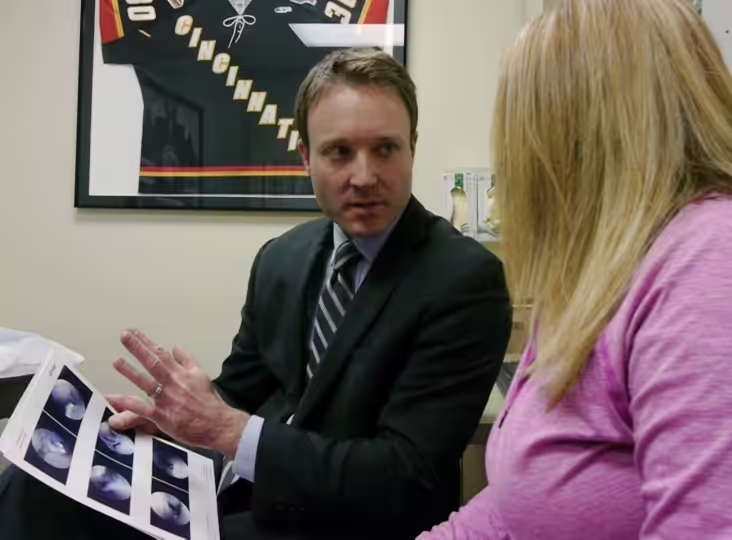
Almost always the answer to this question is yes! Pain is the body’s natural feedback loop to your brain saying stop. One of the most difficult aspects in helping people heal is balancing the return to activity with the time the body needs to heal. Going back too early commonly prolongs an injury or may lead to necessary intervention. It is super important to listen to your body and know when you are just doing too much.
How can I treat an injury on my own initially?
If you can walk with modest pain, then seeing if the injury improves in 1-2 weeks is warranted. During that time use the RICE method:
Rest, rest, rest.
ICE is a good pain reliever and found in studies to be a mild analgesic. Not only does this serve as pain relief, but it lowers inflammation as well.
Apply compression with Ace. Ace will help with swelling while providing stability.
Elevate. Elevate the injury to relieve swelling and limit bruising.
We’re Here for You
This Spring remember to treat your body right and prevent injury. Condition the body prior to activity by warming up and performing adequate stretching. Prevention of injury also comes with the proper equipment. Get fitted for the right cleats and shoes. Don’t play through an injury and remember allowing the body to recover after vigorous activity is important.
Suffering from a foot and ankle injury? Worried about a nagging pain prior to a race? If someone you know is needing foot and ankle care, Dr. Miller is Beacon Orthopedics foot and ankle specialist and is available at several locations around the Cincinnati area. Contact us today for more information! Click here to learn more and schedule an appointment with Dr. Miller for foot and ankle injuries.
Beacon Orthopaedics and Black Sheep Performance Partner to Treat Athletes & Weekend Warriors
March 22, 2021
CINCINNATI, Ohio – Beacon Orthopaedics & Sports Medicine and Black Sheep Performance have agreed to a partnership to get athletes back to elite performance quicker.
“The goal at Beacon is to put the patient first,” Beacon Orthopaedics President Dr. Peter Cha said. “We want the best sports performance program and the best health and wellness program for the patient, and that is exactly what Black Sheep Performance provides.”
Black Sheep Performance, located at 10888 Kenwood Rd., Blue Ash, Ohio 45242, was established in 2018 with the mission of delivering results, creating an inclusive environment and leveraging a comprehensive training style focusing on the energy, care and attention to each individual who walks through the door.
Black Sheep Performance was started by Patrick Coyne, a Cincinnati native who began his athletic career at Hamilton Badin High School before attending The University of Cincinnati to play quarterback.
“I’m from Cincinnati, and everyone knows what and who Beacon is. For us to be able to partner with someone as the leaders in sports medicine in their city, the partnership means everything to us,” Coyne said.
Not even four years after the establishment of Black Sheep Performance, Coyne has created one of the fastest growing performance training organizations in Cincinnati, training weekend warriors, youth and professional athletes from across the country, including Cincinnati Bengals quarterback Joe Burrow and defensive end Sam Hubbard.
“It’s kind of the old-school style of marketing. If you give someone a good product, they’re going to go and tell their 10 closest friends. We’ve been doing that with our clients, and we’re fortunate to build those relationships.”
The agreement will only enhance Beacon Orthopaedics and Black Sheep Performance’s footprint in the sports medicine and sports performance landscape in the Greater Cincinnati area.
Central to this new partnership is Beacon Orthopaedics’ Bridge Program, which is designed to ease the transition from injury recovery to return to full function, decrease your risk of re-injury, and improve strength, range of motion and balance after injury. Beacon’s Bridge program is open to everyone from weekend warriors to competitive athletes.
The Bridge program focuses on using functional analysis to determine the specific exercises that will help individuals reach their optimum level of function. Sessions are individualized and completed by one of Beacon’s certified athletic trainers, Josh True and Mark Keiser.
Black Sheep Performance’s facility will provide an optimal location for athletes participating in the Bridge Program. After participants have completed the Bridge Program, Black Sheep Performance will provide an opportunity for athletes to further improve their strength, speed, agility, plyometrics, mobility, and injury prevention, propelling athletes to generate even better results than before their injury.
Included in the partnership, Beacon Orthopaedics and Black Sheep Performance will host injury prevention and sports performance camps for youth, high school and college athletes.
“Beacon provides medical coverage to more teams and athletic programs than any orthopedic group in the region. We also see many professional athletes both locally and from around the country,” said Cincinnati Reds Medical Director and Beacon Orthopaedics Physician Dr. Tim Kremchek.
“Partnering with Black Sheep Performance only elevates the wide variety of services we can offer our patients to get them back to an elite level of performance as quickly as possible.”
March Madness is On! We Share Our Picks PLUS 5 Common Basketball Injuries
March 18, 2021
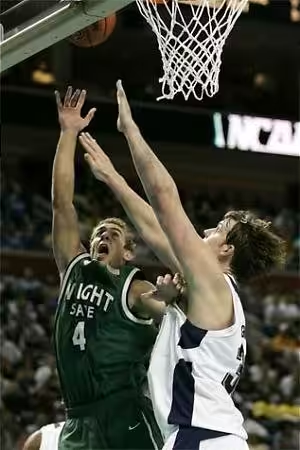 Our own Dr. Burleson has spent time on the court during the NCAA Division I Tournament. In this blog post, he shares his picks along with common basketball injuries.
While March Madness is a bit of a bust for Cincinnati fans this year, we’re still rooting on our favorite teams and hometown athletes playing in this year’s tournament. Our resident basketball expert, Dr. Drew Burleson, weigh in with his Final Four picks as well as common injuries basketball players experience out on the court.
Dr. Burleson Shares His Final Four Picks
Burleson_NCAATourney_PreferredPictureAs a four-year starting forward for Wright State University, a three-time captain and having earned a bid to the NCAA Tournament in 2007, Dr. Burleson has some pretty strong street cred when it comes to his Final Four picks; however, his bracket comes with a disclaimer.
“I have Gonzaga, Florida State, Baylor and Illinois going to the Final Four with Gonzaga winning it. You should know, though, I don’t think I’ve ever won a bracket.”
Besides, it’s about more than winning and losing for Dr. Burleson — especially when it comes to this year’s tournament.
“This time of year always has a special place in my heart and was one of the best experiences of my life. For these athletes, playing in March Madness has been their dream since they were kids. It was heartbreaking for the ones who didn’t get to play last year after working so hard. That’s what makes this year such a momentous one for every team — win or lose.”
The 5 Most Common Basketball Injuries
Through his experience on the court, Dr. Burleson is well-acquainted with the highs and lows of March Madness — and from his perspective as an orthopaedist, that includes injuries. The following includes the most common ones we see with our basketball patients.
- Ankle sprains and muscle strains
- Jammed fingers
- Knee injuries
- Facial cuts
- Foot fractures
“We typically see muscle strains and ankle sprains with basketball injuries. Big injuries, like ACL tears, are far less common,” said Dr. Burleson. “Prevention is key. For athletes who are early in their season and for our weekend warriors, I just caution them to be prepared and in shape before getting out on the court. People get into things too quickly because they’re excited, and that’s when they run into trouble.”
Orthopaedic Specialists are Here for Athletes
If your athlete at home has an injury or is experiencing unexplained pain, our Beacon specialists can help. Schedule an appointment to find out more about how we can get them back to playing the sport they love. Same-day appointments are available. As always, we have your safety in mind when it comes to the latest in COVID-19 practices. Take a look at our latest guidelines.
Beacon Orthopaedics Reaches Four Thousand Outpatient Total Joint Replacements Performed
March 17, 2021
To read the full article covered by Becker’s Healthcare, click here.
CINCINNATI, Ohio – Beacon Orthopaedics & Sports Medicine proudly announces that they’ve completed 4,000 total joint replacement (TJR) surgeries in the Ambulatory Surgery Center setting. “This milestone shows our commitment to providing leading-edge joint replacement surgery options for our patients,” said Dr. Matthew Johansen, a Beacon joint replacement surgeon. As a leader in outpatient orthopaedic care, Beacon continues to drive better healthcare with improved surgical techniques leading to less pain and faster recovery times. In addition, by providing TJR surgery on an outpatient basis, patients and employers can reduce their out-of-pocket costs when compared to inpatient settings.
Thanks to technical surgical advances and strides in post-operative pain management over the past six years, Beacon surgeons now regularly perform total hip and knee replacements and total shoulder replacements, at one of Beacon’s convenient outpatient Ambulatory Surgery Centers (ASCs). “All of Beacon’s TJR patients now go home either the same day or the next after surgery, quickly and safely setting them on the road to recovery,” said Dr. Haleem Chaudhary, Beacon joint replacement surgeon.
The Beacon clinical team works with each physician and patient to determine whether his/her orthopaedic surgical procedure can safely be performed at one of their state-of-the-art ambulatory surgical centers (ASCs). “Each situation is precisely evaluated, adhering to strict patient selection criteria,” said Dr. Michael Swank, medical director for Beacon’s Ambulatory Surgery Center. “We tailor our surgeries and treatment plans to the individual needs of each patient for better outcomes and quicker recovery times.”
Outpatient surgery centers like Beacon’s are reimbursed by insurance companies at a significantly lower rate than they do when the same services are provided by a hospital. This reduces the total cost of care for insurance providers, employers and patients alike. The cost savings can be significant not only for total joint procedures performed at an outpatient setting, but for all forms of orthopaedic care, including surgery, imaging, physical therapy, and other non-operative treatments.
“By utilizing our outpatient facilities, we are able to save patients, insurance companies, and employers up to 45% when compared to traditional hospital-based services,” said Andy Blankemeyer, Beacon CEO. “We are constantly working to lower the cost of care for our patients by providing care in the safest and most cost efficient setting.”
“Over the years, we have experienced significant growth at our ASCs due to the leadership of our physicians whose focus is on providing patients with a word class experience every time they walk through our doors,” said Blankemeyer.
For more information about total joint replacement, ambulatory surgical centers or Beacon Orthopaedics & Sports Medicine, visit www.beaconortho.com.
Wrestling. It’s in the Genes.
March 12, 2021
Just 30 years ago, Dr. Mohab Foad was competing in the State High School Wrestling Tournament — now it’s his son’s turn.
Our Beacon specialists often know more about what our athletes are going through than most people realize, as many are athletes themselves. Beacon’s own Dr. Mohab Foad, a hand and upper extremity specialist, wrestled competitively in high school and college and has passed on the love of the sport to his son, Harris, who’s preparing to compete in the state tournament for Indian Hill High School.
Deep into the high school wrestling post-season, we sat down with Dr. Foad to get his insights on the sport as well as a peek into his past as a wrestler.
Do you have any medical tips for wrestlers from an orthopaedic perspective?
Listen to your body and take care of it. Weight management will always be an important part of wrestling, but proper planning and reasonable goals are so important for a long, healthy, and successful season. Athletic performance suffers greatly with even modest dehydration, but the temptation to go down a weight class is so strong that wrestlers often sacrifice performance trying to gain a competitive edge. I encourage athletes to wrestle at a weight they can comfortably maintain without having to struggle for weigh-ins week after week. Most importantly, enjoy wrestling, it’s not about any single competition — it’s about how you approach life in general.
Let’s talk weight class…
Harris currently wrestles at 138 lbs, but he is bigger and stronger than I ever was. I wrestled at 112 lbs in high school at Cincinnati Country Day School (CCDS) and 118 lbs when I last wrestled my senior year in college.
What’s your signature move? What about your son?
My go-to move was the cradle, and Harris’ is a fireman’s carry. He is a much better wrestler than I ever was.
Have any records to your name?
I do not believe that I hold any special records as a wrestler. I got back on the mat as a senior in college after being away from it for three years. College wrestling is on a whole other level, and I lost every match that I wrestled. I was having so much fun being back on the mat that despite losing every collegiate match, I did so with a smile on my face. Maybe that’s a record ! Harris plans on wrestling at Washington and Lee University in college, in the same conference as The Johns Hopkins University where I wrestled. I hope he enjoys it and has as much fun as I did.
You seem like a natural-born leader. Did you happen to be team captain?
I was the team captain for my high school team and served a leadership role in college. Harris is one of the team captains at Indian Hill.
What’s it been like to share a love of wrestling with your son?
It has been great! We had the opportunity to travel to some out-of-state national tournaments this summer, just the two of us. Those opportunities don’t come by often, and I am so happy that we took advantage of it to spend time together while doing something we both love. I am very proud of his accomplishments, but more importantly, I’m proud of the person he is and how he treats everyone around him, win or lose.
How did Dr. Nicole Goddard and you start covering the Division II Southwest District Wrestling Championship in Wilmington?
Dr. Goddard has an established practice in Wilmington and a relationship with the high school and Wilmington College. I went to the tournament with Harris two years ago to watch his friends compete as he was recovering from surgery on his knee and wrist, which forced him to miss the post-season. I saw Dr. Goddard providing medical coverage and figured I would pitch in and help. I get to watch some good wrestling and feel like I am giving something back to the wrestling community. The people in Wilmington have been great, and I hope to continue to provide coverage for years to come, after Harris graduates.
How did COVID-19 precautions impact the structure of this year’s tournament look like?
The tournament was held over three days instead of two, with the weight classes divided into two groups such that only half of the normal number of wrestlers were in the building at once. The number of spectators was limited as well in an effort to limit the number of people in the facility at any time. The event looked very different than usual, as will the state tournament, but I am thankful that we are having a post-season at this point. One of the positive things to come out of this was that many events are being live streamed so that people can view the action from home.
What types of injuries do you watch for at tournaments?
I am always hoping for a quiet tournament where no one needs my expertise. Common injuries include finger and thumb sprains, elbow sprains or dislocations, clavicle fractures and AC joint injuries. Knee injuries are also common such at ligament sprains and rarely ACL tears. Bloody noses and minor cuts and scrapes are common but rarely require ongoing treatment. Concussions are one of the most concerning injuries as far as the long-term consequences, and we thankfully have resources to guide those athletes through their recovery.
What’s the plan for State?
The state tournament is a little different this year secondary to the COVID-19 restrictions. Each high school division will have its tournament in its own location instead of having all three divisions at the Schottenstein Center on the Ohio State University Campus. We will miss the fanfare and the “experience” of the tournament but are very happy to be wrestling at all at this point. Harris will do his best, and we will see how it all turns out. He achieved the goals he set and is already a champion as far as I am concerned.
Do you have a young athlete at home?
Our specialists are here to help young athletes enjoy their sport -of-choice to the fullest — whether it’s to help them stay in peak performance through our Bridge Program or work them to get to the root of any aches or pains they may be experiencing. Same-day and telehealth appointments are available. Urgent care is also a service option at some Beacon locations.
Lockdown Have Your Back Locked Up?
March 3, 2021
Between quarantine and shorter winter days, we’re all moving less. In this blog post, we explore how that’s affecting your body.
It’s been nearly a year since our world changed. Many of us were suddenly forced to work from home, give up the gym and fitness classes, and now colder, winter days have us huddled up at home. When you pile on the stress from the current state of things, it’s a recipe for orthopedic disaster.
When Working From Home Works Your Nerves
Picture it. A kitchen table. A kitchen chair. A laptop. Now imagine you’re the person sitting at this makeshift workstation. Your shoulders are likely curved forward, your head is jutted out in front of your body to look at the too-low computer screen, and your hips are thrust in the antithesis of ergonomic positions. Meanwhile, your wrists and forearms aren’t properly supported and likely resting on a table height that is all wrong for your needs. You maintain this position for several hours every workday — and for more hours than you would in an office.
The simple thing to do is to create a proper workspace, but that takes money and planning. Many people who were suddenly pushed into working from home lack basic ergonomic equipment that’s common place at the office — like adjustable chairs, desks and monitors. Because many people have lost work or taken pay cuts, they also don’t have the money to buy a more ergonomically healthy setup. They also have spouses and children working from home leaving little space to dedicate to it.
All said, ad hoc workstations like these are wreaking havoc on our bodies. Orthopedists across the country are seeing increases in neck and upper back pain complaints as well as repetitive strain injuries like carpal tunnel syndrome, pinched nerves, and hand and forearm tendinitis.
And that’s just one of the curses of what quarantining is doing to our health.
Physical Fitnessless
Getting active in the time of COVID is difficult, too. Many have said goodbye to their gyms, fitness classes, and exercise buddies. The depths of winter with shorter, colder days keep us inside. Finding motivation through all of that can prove to be a difficult struggle.
And so, we sit.
Even though it’s been said by more than just one health professional that sitting is “the new smoking,” and right now, it’s easier than ever to be sedentary. The American Cancer Society shared in a 2018 article, “studies have linked prolonged sitting time with death from cancer, heart disease, and ‘all other causes.’”
Less activity certainly leads to more orthopaedic-related injuries as well. Take your muscles for instance. If you aren’t using them, their mass drops — and strength and flexibility decrease, too. Throw in poor posture and a lack of ergonomic support, and it’s a lot more understandable when our hips or back suddenly lock up in the midst of a menial task.
All is Not Lost — Let Us Help You Help Yourself
Let’s start by saying that the physical ramifications of quarantine will be temporary or likely reversible. However, there are efforts you can make now that your body will thank you for.
Ergonomic Workspace Improvements
Make your work-from-home setup more comfortable with a few adjustments. Prop up your screen to get it eye level. Use an office chair if at all possible. If not, there are seat cushions that cost far less than a new chair and can really help. If all else fails, find a good pillow to put behind your back for lumbar support.
A Little Head, Shoulders, Knees and Toes Action
To give your body some much needed TLC, we aren’t suggesting a whole new exercise regime. Start with simple steps to get back in motion. Schedule breaks into your day — not just to the fridge. A quick walk around the block, is not only good for your joints and muscles, but it’s also mentally beneficial. Be sure to also find some basic stretches that limber up your whole body.
Most importantly, be gentle on yourself. We’ve all found different ways of managing our new norms and getting back to those healthier coping techniques is something to ease into. It may not be something you’re always able to do either. Do what you can each day, and remember every morning is a new chance to make healthy decisions.
New Normal Bringing You New Pains?
If you are experiencing unusual discomfort or pain, our specialists are available to help. Schedule an appointment to find out more about how we can get you back to living with less pain. Same day appointments are available. As always, we have your safety in mind when it comes to the latest in COVID-19 practices.
COVID-19 vaccine: Should you get a shot ahead of surgery? Timing is everything
February 28, 2021
To read the full story from The Enquirer, please click here.
Anne Saker
Cincinnati Enquirer
Many of the 2.2 million Ohioans now eligible for the COVID-19 vaccine also wonder how to time the shot with upcoming medical procedures.
Some hospital systems are urging patients to get vaccinated first, and others suggest waiting, but all recommend a consult with the caregiver first.
The chief caution, providers said, is not the vaccine itself but the potential for a recipient to experience a fever after vaccination. Elevated body temperature after vaccination indicates that the body’s immune system is learning to fight off the new coronavirus. The U.S. Centers for Disease Control and Prevention says a vaccine-triggered fever generally subsides in a day or two.
But running a fever in the day ahead of surgery or a procedure can force a provider to postpone or cancel the procedure, said Dr. Marc Orlando at the MayfieldBrain & Spine practice. Earlier in February, the practice had to send a patient home ahead of a procedure because of the patient’s complaints of muscle aches and chills.
[ Sign up for the free Coronavirus Watch newsletter to get the latest on the Cincinnati region ]
“I’m living proof of the effect,” Orlando said. “I just got my vaccination, and I told a friend I felt like a small truck, not a large truck, hit me last night.”
It’s hard for a provider to determine whether a fevered patient is responding to a vaccination or is fighting off an infection, Orlando said, and that uncertainty means providers will be cautious about proceeding.
UC Health, St. Elizabeth Healthcare and other hospital systems in the Cincinnati area have encouraged everyone to get vaccinated. Guy Karrick, spokesman forSt. Elizabeth said, “The answer is yes, you should get the vaccine if you are facing an upcoming surgery. However, you should talk to your doctor about the appropriate timing.”
Karrick said vaccine doses can ideally be spaced at least 72 hours ahead of surgery to avoid any fever that would mean canceling the surgery.
Orthopedic surgeon David Argo at the Beacon Orthopedics practice said he’s told 50 patients already that they should make sure to get a vaccination at least three days before any surgery or procedure. “There’s no contraindication for the vaccine, so it’s an inconvenience more than anything else, but we don’t want to operate on people who have a fever,” he said. Published 10:04 p.m. ET Feb. 15, 2021
Dr. Argo Helps Bring New Hope to Joint Pain Sufferers
February 18, 2021
“Articular cartilage” isn’t typically a term people are familiar with until they seek treatment for joint pain. If you haven’t heard of it, consider yourself lucky. However, for people suffering from joint pain, it’s one they come to know all too well because damaged articular cartilage is one of the most common causes of joint pain.
In case you don’t know, articular cartilage serves as a protective layer covering the surface of the bones within joints. It gives your joints the ability to glide over each other with ease. It also absorbs shock to the joints. However, traumatic injuries, overuse, or health conditions can cause damage to it. When that happens, the joint loses its smooth surface, which makes it more difficult for your bones to move — resulting in pain, swelling and stiffness.
Cutting Edge Research in Joint Surgery
Enter Beacon’s Dr. David Argo. During the last four years, he’s worked with “AlloSource®, one of the largest allograft providers in the world, to develop ProChondrix CR, which is a product specifically made to treat articular cartilage damage. Dr. Argo is able to implant living cartilage in a single-stage procedure (one surgery vs. two). In relevant cases, it can serve as a surgical treatment option when non-surgical treatments have been exhausted.
“Our goal at Beacon is to always bring the latest technology and treatments to our patients. We want to give them their best chance at a pain-free life,” said Dr. Argo. “Being intrinsically involved with the development of products like AlloSource®’s ProChondrix CR allows us to successfully pursue that outcome for them.” Dr. Argo is part of the Cartilage Counsel focusing on the future of joint preservation at AlloSource.
Allografts Help Alleviate Joint Paint
There are typically three surgical options used to treat this type of injury. The last one utilizes an allograft like ProChondrix CR:
- Make small holes in the bone to encourage growth of new cartilage, which uses marrow stimulation or microfracture
- Replace damaged cartilage with your own cartilage: an autograft
- Replace damaged cartilage with donated living cartilage, which is called an allograft, like ProChondrix CR
In January, Dr. Argo presented his extensive experience with ProChondrix® CR allograft on behalf of AlloSource® at the British Patellofemoral Society Meeting. The session, titled ProChondrix CR: Cryopreserved off-the-shelf Hyaline Cartilage Allograft, specifically highlighted repairing osteochondral defects of the knee with AlloSource’s allograft.
“Sharing my experience with ProChondrix for cartilage defects in the knee at the British Patellofemoral Society Meeting in January hopefully helps other orthopaedic surgeons bring increased relief to joint-pain patients around the world,” said Dr. Argo. “After having used the product for 29 cases at Beacon, I believe it will make a major difference in healing patellofemoral injuries and arthritis — especially when caught early; although it can be used for patients in a degenerative state, too.”
About ProChondrix CR from AlloSource
AlloSource developed ProChondrix CR as a cost-effective, single-stage alternative to deliver the necessary components for articular cartilage restoration. This cartilage restoration therapy provides live, functional cells and biological components necessary for the repair and regeneration of damaged cartilage tissue where as other treatments stimulate the patient to create scar tissue which does not replace the native cartilage. ProChondrix CR has an average of 94.97% chondrocyte viability after two years of storage at -80°C. The two-year shelf life helps to alleviate the inventory management challenges of other cartilage products and provides surgeons with more flexibility for their patients.
Are You or a Loved One a Joint Pain Sufferer? We Can Help.
Joint paint is not something you have to live with. That isn’t a sales pitch. It’s the truth. Our specialists, like Dr. Argo, can help you. Schedule an appointment by clicking here to find out more about how we can get you back to living with less pain.
Beacon Orthopaedics & Sports Medicine Expands Local Team & Opens New Office in West Chester
February 8, 2021
CINCINNATI, Ohio – Beacon Orthopaedics & Sports Medicine proudly announces the addition of four established, local physicians and a brand new location in West Chester to treat patients. This experienced group of providers, formerly with Wellington Orthopaedic & Sports Medicine, have joined with Beacon to bolster one of the region’s largest orthopedic practices. The combined practice now offers even more surgery and outpatient care options at 14 locations throughout Southwest Ohio, Southeast Indiana and Northern Kentucky. Forty doctors and more than 700 staff will now see patients through this community-wide network, under the Beacon banner. Beacon’s newest office is located in West Chester.
“Welcoming physicians of this caliber is just one way to enhance the three basic tenets at the heart of our practice – quality, access and value,” said Peter Cha, MD, president of Beacon. “Expanding our care delivery team allows us to provide the highest quality care at the best value to even more patients across Greater Cincinnati.”
The following four doctors have joined the Beacon team:
· Ronald Hess, DO, is a widely experienced and highly regarded osteopath, exercise physiologist and board-certified orthopaedic surgeon with critical expertise in sports medicine as well as knee and shoulder treatments. He holds a BS in biology from Hobart College, an MS in exercise physiology from NY Medical College and his Doctor of Osteopathy from A.T. Still University Kirksville College of Osteopathic Medicine. After specialized post-graduate orthopaedic training, he completed a sports medicine fellowship at the Florida Orthopaedic Institute in Tampa. He’s also currently the team orthopaedic surgeon for the Miami University Sports Medicine Program, and has been the team physician for Miami University and 22 other Division 1 sports teams since 1999.
· Brian Rottinghaus, MD, is a board-certified orthopaedic surgeon and is fellowship-trained in orthopaedic sports medicine with over 10 years of medical experience. He has served leadership roles in the medical community including Chief of Surgery at Mercy Fairfield Hospital from 2018-2020. Dr. Rottinghaus is a member of the sports medicine team at Beacon Orthopaedics & Sports Medicine. Dr. Rottinghaus has received a number of awards for his academic excellence as well as his medical expertise and service. In 2015, he was recognized as a Rising Star Medical Leader in Venue Magazine which honors the most respected young medical professionals in Cincinnati. In 2020, he was named one of Cincinnati’s Top Doctors in Cincinnati Magazine.
· Aarti A. Singla, MD, specializes in comprehensive non-surgical care for spine, joint and an array of pain issues. In addition to being dual-certified in Physical Medicine & Rehabilitation and Pain Medicine, she is one of a few physicians nationwide certified in orthobiologics by the American Society of Interventional Pain Physicians. Dr. Singla grew up in Cincinnati and completed an accelerated program for undergraduate and medical school at Northeastern Ohio Medical University. She served a Residency in Physical Medicine & Rehabilitation at Johns Hopkins Hospital in Baltimore. She also completed a fellowship in Pain Management at the University of Kentucky. She specializes in non-surgical management of neck and back pain with the ultimate goal of helping her patients regain an active lifestyle.
· M. Scott True, MD, is certified by the American Board of Orthopaedics and is a member of the Arthroscopy Association of North America, American Academy of Orthopaedic Surgeons, Mid-America Orthopaedic Association, Ohio Orthopaedic Society, Cincinnati Orthopaedic Society, American Medical Association, Ohio State Medical Society and the Butler County Medical Society. He earned a BS from Taylor University and his MD from the University of Cincinnati, where he also completed an internship and Residency. With over 30 years of experience, Dr. True specializes in total knee and hip replacements.
“We’ve made strategic investments over the past few years that have enabled us to increase patient access and expand our footprint,” said Andy Blankemeyer, Beacon CEO. “Patients benefit by having easier access to our locations, closer to their homes with expert clinicians. And, physicians are drawn to our physician-led model which puts them at the center of care delivery enhancing patient care and outcomes.”
If you are an existing patient of one of these physicians or would like to schedule with them, please call 513-818-0478.
Hitting the Slopes? Know Before You Go
February 3, 2021
As wild as it may sound, skiers and snowboarders do have at least a couple of things in common. The first is a love for winter and fresh powder. Another, while a bit of a bummer is no less true, it’s an increased risk for injury. In fact, there were more than 129,000 snowboarding and skiing injuries reported in 2018 alone, according to the U.S. Consumer Product Safety Commission.
With that in mind, we want to help our winter weather lovers get the most out of the season, so we checked in with George Matic, Jr., M.D., MPH who, along with other Beacon physicians, has seen an increase in patients suffering from skiing and snowboarding-related injuries. We asked talked to him to find out which ones are most prevalent and how to avoid them if possible.
“Preparation for the slopes is key to avoiding injuries,” said Dr. Matic. “Upper extremity injuries are more common in snowboarding, and lower extremity injuries are more common in skiing. However, they can occur with both.”
Dr. Matic added, “Some of the most common upper extremities injuries that we see are hand or wrist fractures. However, shoulder injuries including dislocations, AC (shoulder) separation, fractures, and clavicle fractures happen a lot. Skiers can also encounter thumb injuries including injury to the UCL (skier’s thumb).”
While we can’t prevent all injuries on the slopes, some measures can help mitigate them. Beginner skiers have more risk of injury, and although that shouldn’t discourage newbies, the younger you are the easier it is to learn. However, if you start skiing later in life, lessons can be helpful. Physical fitness, including strengthening and conditioning, is also one of the most ideal ways to avoid injuries.
Help Prevent Injuries on the Slopes
Acclimation is Key
For those who are traveling to destinations with high altitudes, acclimatization is important to avoid altitude-related illness. Without proper preparation, outdoor and elevation conditions can also cause hypothermia, frost bite and sun burn.
Warm Up
This tip is about more than hot chocolate and hot toddies in front of the fireplace. A little stretching and aerobic activity go a long way. Because cold muscles are prone to injuries, spending just 15 minutes will get your muscles good, warm and ready for the day. Utilizing slower ski runs initially can also help get the body ready for more challenging slopes.
Got Gear?
Always use proper equipment and gear. It should go without saying, but it’s easy to skip a step when you’re in a hurry to get on the slopes with your friends and family. Proper protective gear can mean the difference between a forgettable fall and a serious break or dislocation. Helmets are crucial for preventing head injuries. Wrist guards have been shown to decrease wrist injuries for snowboarders.
Don’t Be a Show Off
Stay in control on the slopes by sticking to ones that align with your skill level. That black diamond may have to wait for another day. While Kermit was right, it’s not easy being green, there’s no shame in it either.
Avoid Yard Sales
It’s happened to every skier and snowboarder (whether they admit or not). Things start to get out of control fast, and you know you’re headed for a fall. If you can manage it, try to tuck and roll. That position can actually help to avoid or minimize injuries in some instances.
Be Weather Aware
When you’re in the mountains, weather can change on a dime, especially at high elevations. Keep your eyes to the skies to know when a sunny day is starting to go south. Changes in the snow or ice can also alter the terrain and potentially become dangerous.
Know When to Quit
Look. We all know winter is short, and good powder can be hard to come by, but you have to know when to call it a day. When your quads are burning and everything else is feeling like jelly, you’ve pushed yourself too far, which makes you more vulnerable to falls. Listen to your body, and know when to quit.
Injured? We’ve Got Your Back (or shoulder or leg or arm or knee)
So the mountain got the best of you and you find yourself injured. It’s important to see an orthopedic physician for proper diagnosis and treatment as quickly as possible. If a ski destination has medical providers on site, they can help triage your injuries. When an injury is emergent, they’ll likely transport you to the nearest medical facility. However, a lot of injuries aren’t emergencies, and that’s what we tend to see at Beacon Orthopaedics. Many of our injured skiers and snowboarders take advantage of our Urgent Care services.
Specialists at Beacon, like snow-tested Dr. Matic, are here to help you. Same-day appointments and Urgent Care are available.
Featured Physician: George Matic, M.D.
January 14, 2021
George Matic, M.D. practices Primary Care Sports Medicine and non-operative Orthopaedics at Beacon Orthopaedics and Sports Medicine. He is fellowship trained in Primary Care Sports Medicine at The Ohio State University and completed his residency in Family Medicine at Wright State University earning Resident of the Year honors.
He has served as a team physician for The Ohio State University, Columbus Clippers (the AAA affiliate of the Cleveland Indians), Capital University, University of Dayton, Wright State University and Olentangy and Beavercreek High Schools. At Ohio State he treated many athletes and provided medical coverage for Ohio State football, volleyball, cross country, track and field, rowing, swimming and diving, ice hockey and wrestling.
Dr. Matic has special interests in treating endurance athletes and ultrasound-guided injections, orthobiologics such as platelet injections (platelet injections) and percutaneous tenotomy (Tenex) procedures and concussion impact testing.
What is your specialty?
Primary Care Sports Medicine and non-operative Orthopaedics
What attracted you to being a doctor or your specialty?
I grew up playing all types of sports. Unfortunately, I had multiple injuries, including four knee surgeries. This introduced me to the field of orthopaedics and sports medicine. Since then, I have always wanted to take care of musculoskeletal injuries.
What made you want to work at Beacon Orthopaedics?
I have the ability to take care of youth athletes, to professional athletes, to the weekend warriors. There is a comprehensive care team that is made up of the physicians, radiologists, assistants, physical therapists, and athletic trainers that really enjoy taking care of athletes and patients looking to stay active. This team’s approach is exactly the environment I wanted to work in.
Do you have any advice for young people who want to be doctors when they grow up?
Go for it! It is a long road and a lot of work, but it is totally worth it.
What is your most memorable sports fan moment? What team and what happened?
Being from Cleveland, I have a lot of memorable sports moments. Unfortunately, it usually involves the phrase, “Well, there is always next year.” However, the Cleveland Cavaliers 2016 NBA Championship run was amazing. Down 3-1 in the series to the Golden State Warriors, they came back and won. I will always remember Lebron James’ infamous block followed by Kyrie Irving’s game clinching three-pointer. I was able to share this moment with my family, including my then two-year-old son who stayed awake to watch.
What is your signature dance move? The Cleveland Shuffle. It’s only appropriate.
If you were a pair of shoes, what would you be? Air Jordan XII. Legendary.
What’s your favorite comfort food? My grandmother’s soup. Oh, and those dumplings!
You can follow Dr. George Matic on social media:
Twitter: @GMatic_MD
Instagram: GMatic_MD
Cincinnati Magazine Top Doctors 2021
January 13, 2021
Each year, physicians are selected by their peers in a survey, asking them which physicians they would turn to for their own personal care. Beacon Orthopaedics is proud to have 34 doctors listed on the latest Cincinnati Magazine’s Top Docs List of 2021. We are very proud of all of our physicians and thank the medical community for their recommendations. Click on any of the physician’s names below to view their personal profile page, orthopedic specialty and discover why their peers view them as top doctors in the Cincinnati region.
You can schedule an appointment with our Board Certified and Fellowship Trained physicians online or by phone 24/7 with no referral necessary. Beacon has 14 convenient locations, evening and weekend appointments and urgent orthopedic care clinics so that patients can get the care they need quickly.
Top Docs 2021:
Emergency Medicine
Foot and Ankle Surgery
Hand Surgery
Orthopedic Surgery
Pain Medicine
Physical Medicine & Rehabilitation
Spine Surgery
Sports Medicine
You can schedule with our physicians 24/7/365 online or by phone at (513)-354-3700.
A Walk A Day Can Keep The Orthopaedic Doctor Away
January 10, 2021
To see the article from Venue Magazine, please click here.
Walk this way. Or that way. It doesn’t really matter as long as you are moving. That’s the message from Michael Lawson Swank, M.D., orthopedic surgeon with Beacon Orthopaedics and Sports Medicine.
“Walk daily — that’s the underlying theme,” says Swank, one of Cincinnati’s busiest surgeons who specializes in computer assisted minimally invasive hip and knee surgery. A decade ago, Swank realized that if he could just get people to walk 30 minutes a day, it would be more meaningful than all the knees and hips he could ever fix. Therefore, he trademarked Walk30 initially for postoperative joint replacements because he had a protocol for getting people to walk following surgery.
He then expanded and trademarked Walk30 for walking sticks, fitness trackers and pedometers. The idea is to persuade friends, family and co-workers to walk and, by doing so, counter the obesity epidemic that is currently plaguing our country. Swank even created walking sticks on his own dime, and he distributes them not only to his patients but to anyone he sees out in the community whom he thinks may benefit from using them.
Though Swank has operated on heavier-set patients, he encourages them to lose weight because data shows that the complication rate following joint replacement in obese patients is high. Seeing patients in his office with a body mass index of 40 is commonplace and his Walk30 program will help them.
“Many heavyset patients don’t know where or how to start,” says Swank. That’s why he gives them a referral to a functional medicine doctor and promises to operate on them once they have gotten into better physical shape. He then hands them a pair of his walking sticks and encourages them to walk daily.
“The sticks are symbolic too. They say, ‘We care about you,’” explains Swank.
At Beacon Orthopaedics, they embrace the “spa concept,” which is a leading edge and multifaceted approach to traditional patient care. This means engaging not just surgeons but also therapists and functional medicine doctors to deal with muscular skeletal problems giving them the full “spa” treatment.
“Most people come to see me because they want to be fixed and they think that’s done through surgery,” says Swank. “But we don’t really fix people, per se. We help improve them so they can get on with their lives. What they do, however, is equally important to what I do.”
Swank’s primary purpose is to manage people through how to get back to their life. Though joint replacement is Swank’s strength, his No. 1 priority is getting people to radically change their lifestyle so that they may reengage in their life.
“When you lose your ability to walk — a fundamental human function — you lose a lot of your independence, your self-esteem, and your engagement with other people and the environment.”
Walking is crucial not only for weight management but to stave off arthritis and other ailments. According to Swank, arthritis is accelerating now because people are not active enough.
“Cartilage is a very unique substance. It actually needs activity to be nourished. If it’s not used or moved properly, it ages prematurely and suffers from malnutrition,” says Swank, who likens cartilage to a rubber tire. “If you have one sitting in your garage for a year and a half, it will dry rot, but if you keep it on your car for five years, it won’t. That’s why walking is important.”
Perhaps the one good byproduct of the pandemic has been that it has inspired people to get out and walk more. And that couldn’t make Swank any happier because walking lowers blood pressure, improves respiratory status and, if done outdoors, provides exposure to vitamin D through the sun — all things that help fight COVID-19.
Swank tries to get patients to walk with their families, cross-generationally, to provide motivation and hold one another accountable, thereby maintaining the practice.
“Data shows that there is massive benefit to healing, especially following surgery, when you have someone accompany you,” says Swank, who references the book “In Praise of Walking: A New Scientific Exploration.”
“If you just had a knee replacement and you can get a spouse or friend to walk with you, the positive benefits on your health and recovery are pretty powerful.”
So much of a patient’s ultimate success lies in their hands. Swank tells his knee replacement patients that it’s a 50/50 deal — 50% of the success is on him and 50% is on them.
Swank, who is interested in customization and technology when it comes to implants, maintains that though he believes the field of orthopedics has been good, it hasn’t been as excellent as it should be. He cites Jim Collins’ quote “Good is the enemy of great.”
“You can run a marathon with shoes that don’t fit correctly, but it won’t serve you well,” Swank says. “Our focus is to make implants fit patients’ anatomies as much as they can so they feel less likes foreign objects and more like part of them.
According to Swank, if he can get people engaged in activity, he’s no longer needed and that’s fine by him.
“I had an assistant once who said, ‘Give people what they need and make it what they want,’” says Swank. He likes to say that he’s demoted himself to technical specialist, level 3, calling himself the least important person in the office.
“If done properly, everything else we do is equally or more important than what I do,” he says. “The goal is to try to keep people away from me and engage them with their bodies.”
Beacon Orthopaedics has multiple locations all throughout Ohio. For more information, call 513.354.3700.
Featured Physician: Michael Planalp, M.D.
January 6, 2021
Michael Planalp, M.D. is a board eligible Orthopaedic surgeon and fellowship trained spine surgeon. He is originally from Cincinnati, graduating from Wyoming High School before attending the University of Notre Dame. He subsequently studied medicine at the University of Cincinnati College of Medicine. He completed a residency in orthopedic surgery at William Beaumont in Detroit and obtained fellowship certification at the Twin Cities Spine Center in Minneapolis, Minnesota.
Dr. Planalp’s interests include minimally invasive surgery, adult degenerative conditions, as well as scoliosis and spinal deformity. He also has a passion for orthopedic trauma and fracture care. His personal surgical philosophy follows the principle of ‘less is more,’ which has developed through extensive fellowship training in minimally invasive and muscle sparing spine surgical techniques.
What is your specialty?
Spine Surgery
What attracted you to being a doctor or your specialty?
Growing up, I was always most interested in science classes. Medicine, and specifically orthopedic spine surgery, was the best avenue where I could help people, have fun, and be a science nerd all at the same time.
Do you have a favorite/most memorable case you’ve worked on?
Not a specific case, but the most fulfilling cases are those where the patient is noticeably improved immediately after they wake up from surgery. It’s like a breath of fresh air for the patient and a joy for me to see.
What made you want to work at Beacon Orthopaedics?
I really like the people and my co-physicians, who all have a great work ethic and have been a joy to be around.
Do you have any advice for young people who want to be doctors when they grow up?
It’s a lot of work, and the finish line can seem very far off, but it is all worth it in the end.
What is your most memorable sports fan moment? What team and what happened?
As a graduate of the University of Notre Dame and an ex football player, I have enjoyed the 2020 season as a ray of sunshine in an otherwise dark year.
What is your signature dance move?
Growing up, I was known for the Planalp shuffle, which is a bad attempt, by a bad dancer, to show some rhythm.
If you were a pair of shoes, what would you be?
Hiking boots. Ready for anything.
If you could only eat one food for the rest of your life, what would it be?
You can’t go wrong with pizza. There are basically endless topping combinations, and even bad pizza is still good food!
What’s your favorite comfort food?
Ice Cream. It picks you up when you’re down, and cools you off on a hot day.
Do you have a funny orthopedic or sports medicine joke?
You can trust me as your spine surgeon, I’ve got your back.
Total Hip Arthroplasty
January 1, 2021
Hip pain can come in many forms with varying degrees of severity. Dr. Shaw evaluates patients of all ages for hip pain. Since he performs both hip replacement and hip arthroscopy, he is able to approach each specific problem with the best treatment. Total hip arthroplasty (THA) is typically performed for patients with uncontrolled hip and groin pain that have significant arthritis in the x-ray. Dr. Shaw uses the anterior hip approach in which a smaller incision is made on the front of the hip to perform the surgery. No muscle cutting is performed, and pain is minimized. Patients typically go home the same day of surgery. A multimodal pain medicine approach is used so that narcotics are minimized. Patients are under a regional anesthetic for most surgeries. A general anesthetic may be used at times. A special table called a Hana table is used to allow the supine position and traction on the leg. Immediate weight bearing is allowed after surgery, and physical therapy is performed prior to leaving the surgical center. The minimal anterior incision is very cosmetic and in a location to allow excellent wound healing. Fluoroscopic live images are used throughout the surgery so that all implants are placed with direct visualization. Measurements of leg lengths can easily be done with this technique so that the hip is reconstructed to an anatomic position. The anterior approach allows excellent hip stability, whereas hip dislocation through other approaches is a large risk in hip replacement surgery.

Patients usually need about 1 month of physical therapy. Simply walking is the most important rehab exercise. Patients feel they are 80-90% healed from surgery at 6 weeks post op. The long term results of THA are excellent with pain relief and return of function. Most activities can return after surgery except running and jumping activity.
For more information, please see the below link from Zimmer Biomet which are the implants Dr. Shaw uses.
https://www.zimmerbiomet.com/patients-caregivers/hip/about-hip-replacement.html
Total Knee Arthroplasty
January 1, 2021
Dr. Shaw has been performing total knee arthroplasty (TKA) since 2000 when he started practicing. Six hundred thousand TKA’s are performed a year in the United States with 90% experiencing a significant reduction in knee pain. The surgery and technology related to TKA has advanced over the years. Smaller incisions, limited muscle cutting, advances in pain management and robotic navigation are all improvements that Dr. Shaw implements into his surgery.
TKA is one of the most common and most successful surgeries performed in the U.S. every year. Patient satisfaction continues to improve as newer pain management techniques are implemented and same-day knee replacement surgeries have become the norm. Results for knee replacement in large population studies have shown 95% survival of the implant at 15 years.
The first question patients ask is how do I know if I need a total knee? When pain is consistently at a high level and interrupting daily life or recreational activities, they should see a surgeon like Dr. Shaw. Once x-rays confirm the diagnosis of arthritis, options for treatment are discussed. Typically, patients try activity modifications, oral NSAIDs like ibuprofen, steroid or viscosupplementation injections as nonsurgical treatment. If the nonsurgical management is not effective, then it is time to discuss surgery.
A preoperative visit with the medical doctor to ensure safety through the surgery will occur. Dr. Shaw will review the details of surgery and prepare the patient for surgery through education about the rehabilitative course and order the medications used after surgery. The risks of surgery are discussed in detail. These include infection, blood clotting and implant failure. He uses a multimodal pain medication approach so that pain is reduced effectively and the need for strong narcotics are minimized.
On the day of surgery, the patient meets the anesthesia doctor, and a nerve block is placed to reduce or eliminate pain for the first day. This allows almost all patients to leave the surgical center the day of surgery.
Once in surgery, the incision is made over the front of the knee and the arthritic ends of the bones are trimmed. Careful alignment of the knee is done with guides or the ROSA navigation robot (see below). The knee implants are cemented in placed. After surgery, the patient is seen by the physical therapist to get the patient walking before they leave. At Beacon Orthopaedics, we typically do a pre-op one-time therapy visit to educate and train the patient on what they can expect on the day of surgery.
There are two major versions of knee replacement. Depending on the location and severity of the arthritis, the patient will learn what is best on an individual basis. Partial knee, also known as medial unicondylar knee replacement, replaces the medial half of the knee when most or all of the arthritis is located at the medial (inner) side of the knee. Partial knee replacements are a little faster to heal and usually less painful because there is less bone cutting. More commonly, patients have more widespread arthritis affecting the patella, medial, and lateral compartments of the knee. This amount of knee arthritis will require a total knee (TKA).


Please see the link at Zimmer Biomet for more information.
https://www.zimmerbiomet.com/patients-caregivers/knee/knee-replacement.html
When a patient has a significant deformity of the knee as a result of severe arthritis, Dr. Shaw will elect to use the Zimmer Biomet ROSA system to make accurate bone cuts to align the knee anatomically. The robotically assisted technique uses GPS technology to navigate in real time to allow precise placement of the knee implants. The surgeon still does the surgery, but the ROSA robot places the cutting blocks in the perfect position.
Please see the Zimmer Biomet link for more detailed information.